
Your Best Defenses Against Corrosion Under Insulation
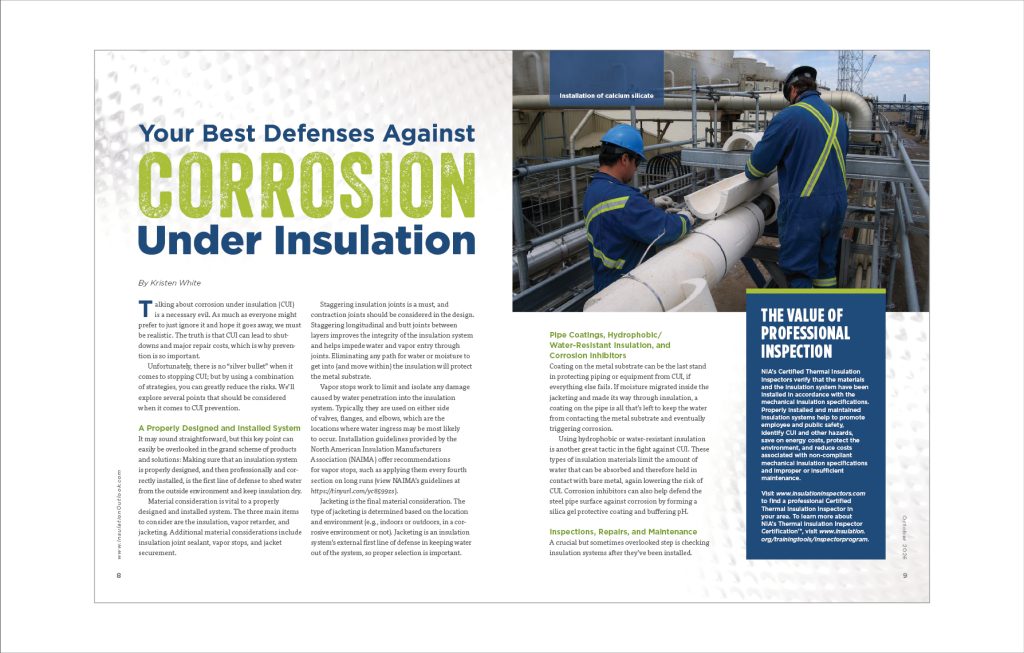
Talking about corrosion under insulation (CUI) is a necessary evil. As much as everyone might prefer to just ignore it and hope it goes away, we must be realistic. The truth is that CUI can lead to shutdowns and major repair costs, which is why prevention is so important.
Unfortunately, there is no “silver bullet” when it comes to stopping CUI; but by using a combination of strategies, you can greatly reduce the risks. We’ll explore several points that should be considered when it comes to CUI prevention.
A Properly Designed and Installed System
It may sound straightforward, but this key point can easily be overlooked in the grand scheme of products and solutions: Making sure that an insulation system is properly designed, and then professionally and correctly installed, is the first line of defense to shed water from the outside environment and keep insulation dry.
Material consideration is vital to a properly designed and installed system. The three main items to consider are the insulation, vapor retarder, and jacketing. Additional material considerations include insulation joint sealant, vapor stops, and jacket securement.
Staggering insulation joints is a must, and contraction joints should be considered in the design. Staggering longitudinal and butt joints between layers improves the integrity of the insulation system and helps impede water and vapor entry through joints. Eliminating any path for water or moisture to get into (and move within) the insulation will protect the metal substrate.
Vapor stops work to limit and isolate any damage caused by water penetration into the insulation system. Typically, they are used on either side of valves, flanges, and elbows, which are the locations where water ingress may be most likely to occur. Installation guidelines provided by the North American Insulation Manufacturers Association (NAIMA) offer recommendations for vapor stops, such as applying them every fourth section on long runs (view NAIMA’s guidelines at https://tinyurl.com/yc8599zs).
Jacketing is the final material consideration. The type of jacketing is determined based on the location and environment (e.g., indoors or outdoors, in a corrosive environment or not). Jacketing is an insulation system’s external first line of defense in keeping water out of the system, so proper selection is important.
Pipe Coatings, Hydrophobic/Water-Resistant Insulation, and Corrosion Inhibitors
Coating on the metal substrate can be the last stand in protecting piping or equipment from CUI, if everything else fails. If moisture migrated inside the jacketing and made its way through insulation, a coating on the pipe is all that’s left to keep the water from contacting the metal substrate and eventually triggering corrosion.
Using hydrophobic or water-resistant insulation is another great tactic in the fight against CUI. These types of insulation materials limit the amount of water that can be absorbed and therefore held in contact with bare metal, again lowering the risk of CUI. Corrosion inhibitors can also help defend the steel pipe surface against corrosion by forming a silica gel protective coating and buffering pH.
The Value of Professional Inspection
NIA’s Certified Thermal Insulation Inspectors verify that the materials and the insulation system have been installed in accordance with the mechanical insulation specifications. Properly installed and maintained insulation systems help to promote employee and public safety, identify CUI and other hazards, save on energy costs, protect the environment, and reduce costs associated with non-compliant mechanical insulation specifications and improper or insufficient maintenance.
Visit www.insulationinspectors.com to find a professional Certified Thermal Insulation Inspector in your area. To learn more about NIA’s Thermal Insulation Inspector Certification™, visit www.insulation.org/trainingtools/inspectorprogram.
Inspections, Repairs, and Maintenance
A crucial but sometimes overlooked step is checking insulation systems after they’ve been installed. Additionally, regular maintenance is key to protecting the investment of a high-quality insulation system so that it can achieve its objectives over an expected long lifespan. (See “The Value of Professional Inspection.”)
Catching a problem early is easier, and far less expensive, than experiencing a shutdown for major issues; those identified before they become significant problems often require no or little downtime to correct.
Inspection frequency depends on ambient conditions, system complexity, system age, system importance, and system quality. Things to look for include moisture or ice, particularly at low spots in the system or pipes, holes or breaches in jacketing or vapor retarders, loose jacketing or banding, or caulking failure.
Allow a Path for Water to Exit the System
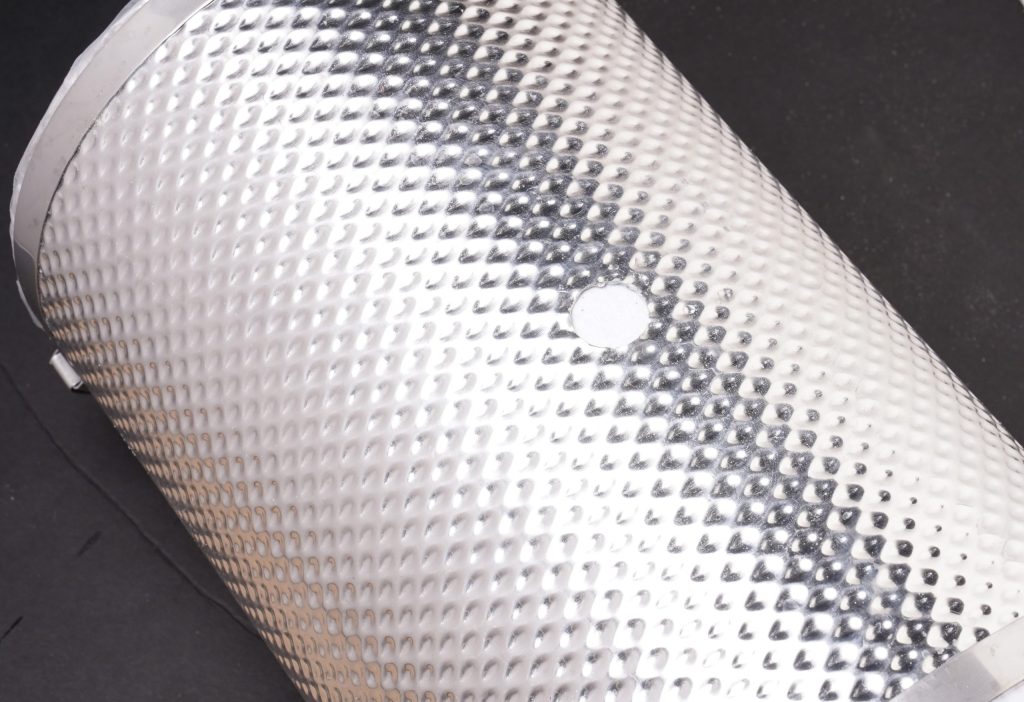
Unfortunately, many experts agree that, over time, water will enter an insulation system at some point in its lifetime. Since water in contact with bare metal is the primary trigger for CUI, it’s a great idea to facilitate drainage. For example, for above-ambient systems, weep holes or drainage ports in jacketing give water somewhere to exit.
Conclusion
When it comes to CUI prevention, the more tools you use to reduce the risk as much as possible, the better. Including as many defenses as time and cost will allow helps to lower the risk of encountering CUI.
Photos courtesy of Johns Manville.