
NIA Contractor Member Insul-Tech Inc. Discusses System Design
This Series Features the Participants of NIA’s
Insulation Project Art Gallery Showcase and Competition
NIA is proud of the professionalism, creativity, and artistry of our Contractor members. To celebrate the craftsmanship of NIA mechanical and industrial insulation contractors, NIA established the Insulation Project Art Gallery Showcase and Competition in 2023. Last year, we again invited all NIA insulation contractors to submit photographs and a brief description of projects representing their most creative and artistic efforts. At our Fall Summit, we posted all the submissions anonymously and attendees voted for the top three projects in terms of number of parts insulated, aesthetics, difficulty of installation, and well-installed application. We will profile the projects submitted, focusing this month on second-place winner (tie) Insul-Tech Inc. We encourage NIA Contractor members to participate in the
next competition and possibly be featured in a future article. The next opportunity to compete will be in 2027, as the Contractor Showcase moves to a biennial schedule.
Project Description and Goals
This $3 million project was new construction of a mission-critical data center on the East Coast. The rooftop layout consisted of 24 outdoor chillers, all with thermal expansion tanks, in-line air separators, and in-line chilled water for HVAC (CHW) pumps, which all had two-piece removable, prefabricated boxes (to be installed on site). Rooftop chiller pipes ranged from 8” to 14″. CHW piping ran down the mains into the facility, branching off into the galleries. Long straights of piping (about 200”) fed CHW throughout the data hall, also served by fan wall units. Construction of the three-story facility took more than 2 years to complete in phases. Insul-Tech’s portion of the work ran 12 months.
Insul-Tech Project Manager Sean McLaughlin explains, “’mission critical’ is a term that is widely used specifically in data centers because the facility itself is so important, in terms of not losing operational capacity… When they say ‘mission critical,’ what they mean by that is the need to have that facility operating 100% of the time, 365 days a year.” He adds, “A lot of redundancy is built into these data centers to ensure that they never lose power, which is necessary to ensure mechanical cooling capabilities are always available.” This last point is where insulation enters the discussion.
In addition to the data halls and equipment, the facility footprint included administrative and office space. So, in addition to helping to ensure data center performance and achieve energy savings, condensation control, and corrosion control, the customer wanted to create an aesthetically pleasing system that would “awe.” McLaughlin explains, “This is their corporate national headquarters, so it is kind of their shining light on the hill… Employees from different regions may go to that facility for a board meeting, and then they may do a tour through the data center. The investments made on color-coded PVC jacketing inside the data center resulted in this facility standing out from many others.”
PROJECT SNAPSHOT
Insulation Contractor:
Insul-Tech Inc.
Industry Segment: Commercial
Type of Plant/Facility:
Mission-Critical Data Center
Project Goal: Construct an Aesthetically Pleasing System to Achieve Energy Savings, Condensation Control, and Corrosion Control
Temperature Range:
Below Ambient
Region: Northeast
System/Application Type:
CHW (Chilled Water for HVAC) Piping, Thermal Expansion Tanks
Insulation System Walk-Through
The first phase involved the main infrastructure for the roof piping (i.e., all of the chilled water mains on the roof), along with the 24 chillers. Inside, McLaughlin says, they “did a full fit out of the third floor, which involved the data halls and the galleries that feed them, all served by fan wall units and air-cooled chillers. UPS rooms were also included with the first phase, as these are critical infrastructure for the functionality of the facility.” Work also included risers that fed the second and first floors, completed in subsequent project phases.
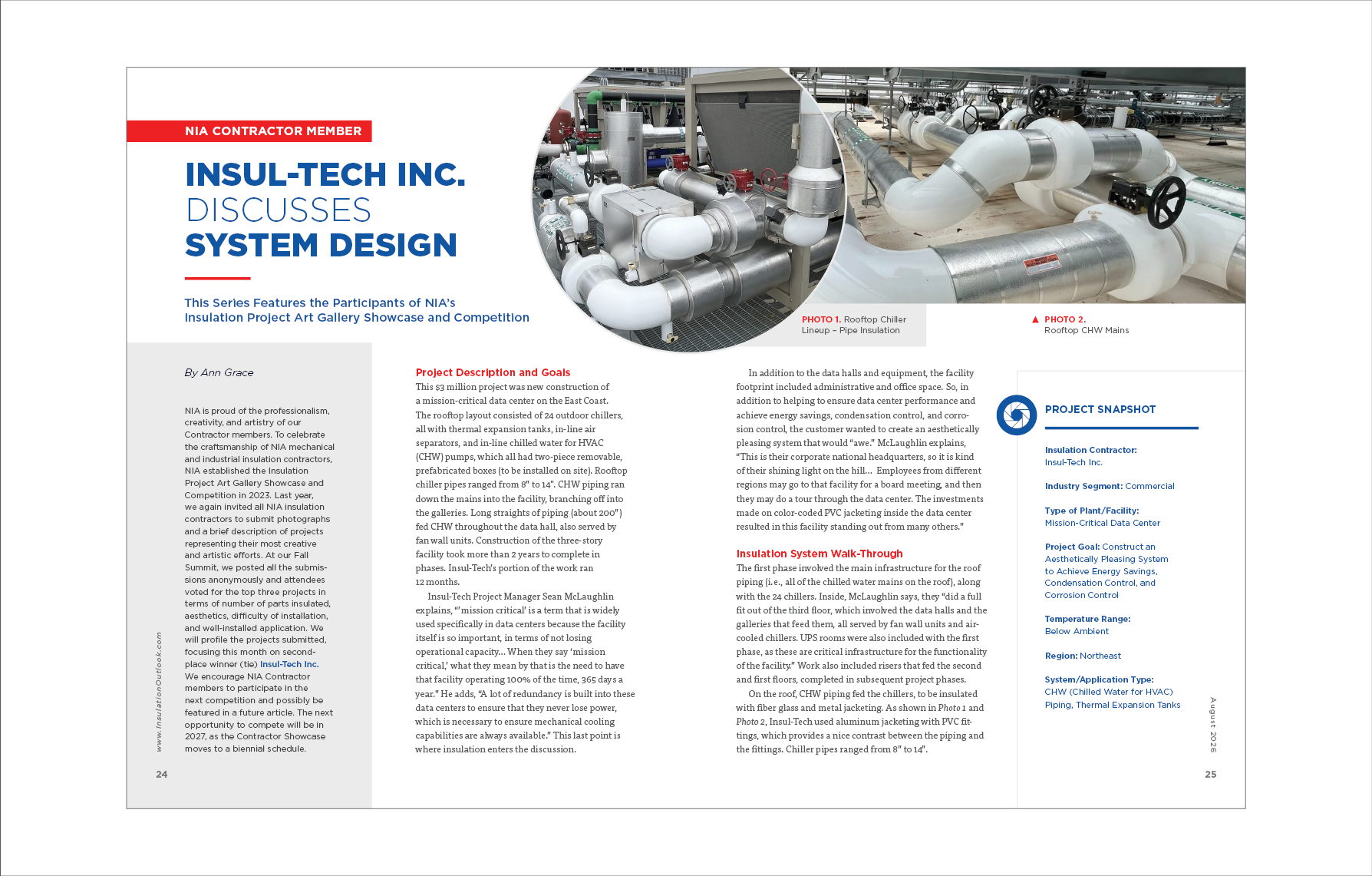
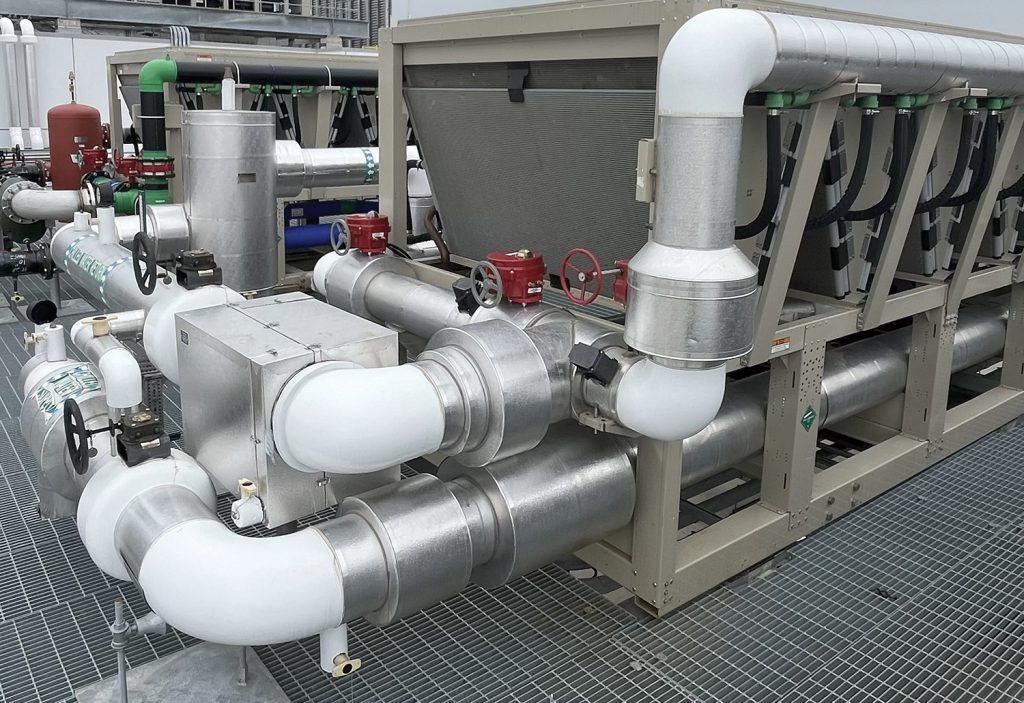
On the roof, CHW piping fed the chillers, to be insulated with fiber glass and metal jacketing. As shown in Photo 1 and Photo 2, Insul-Tech used aluminum jacketing with PVC fittings, which provides a nice contrast between the piping and the fittings. Chiller pipes ranged from 8” to 14”.
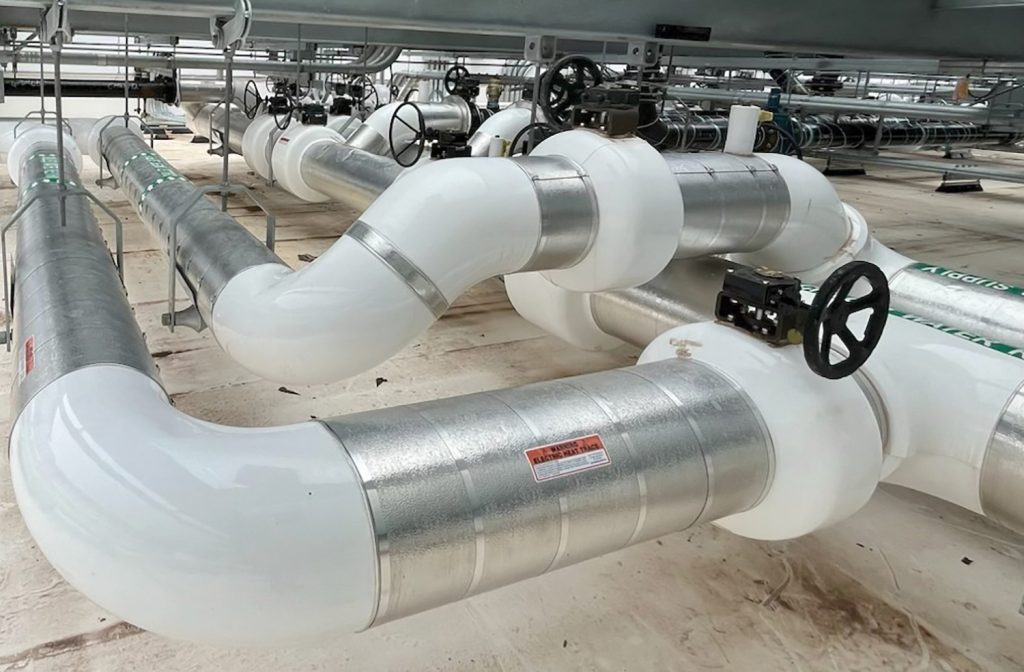
Photo 3 through Photo 10 offer additional views of the rooftop equipment.
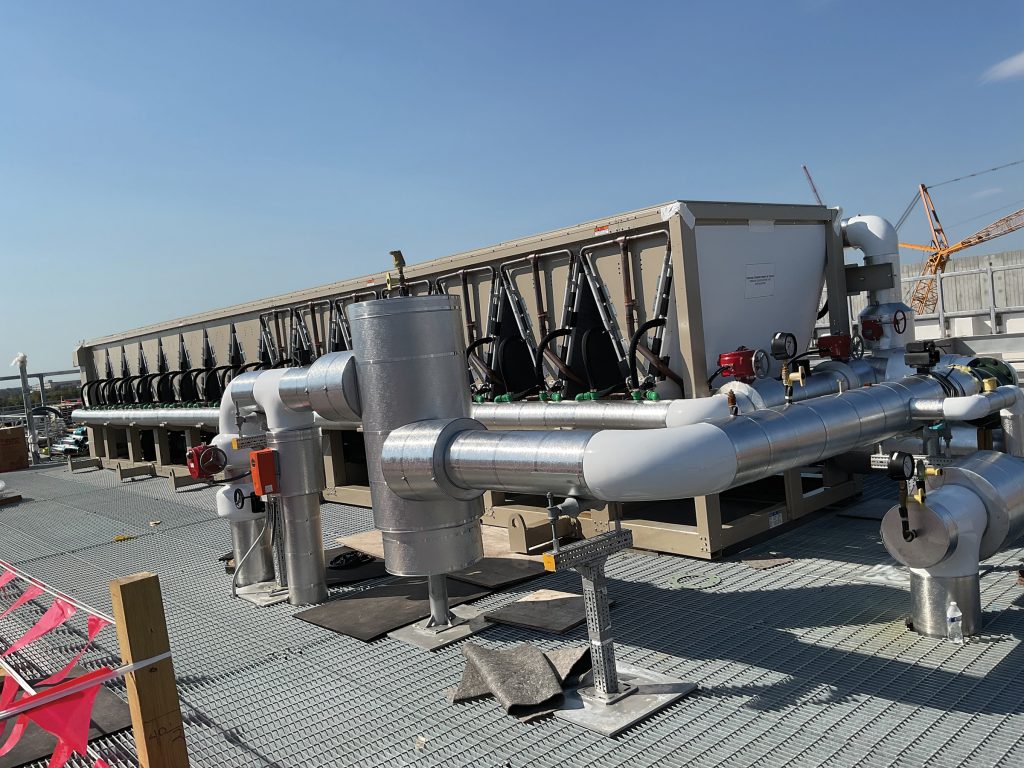
Air-Cooled Chiller/Chiller Piping/Air Separator
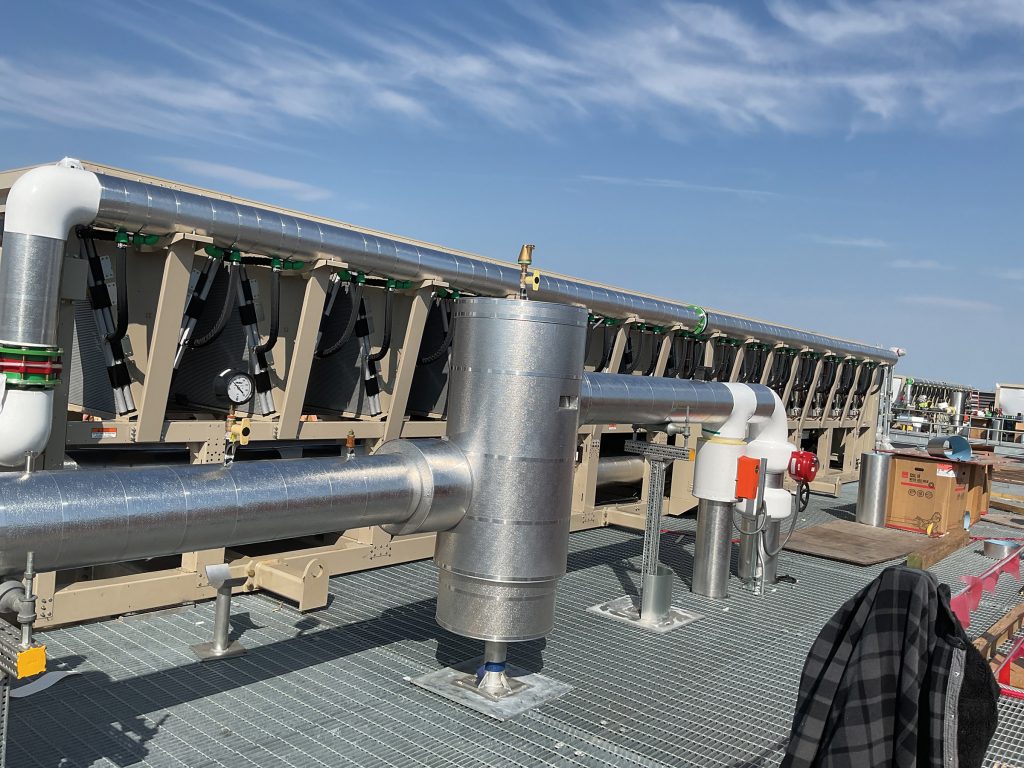
Air Separator/Chilled Water Piping Next to Air Cooled Chiller
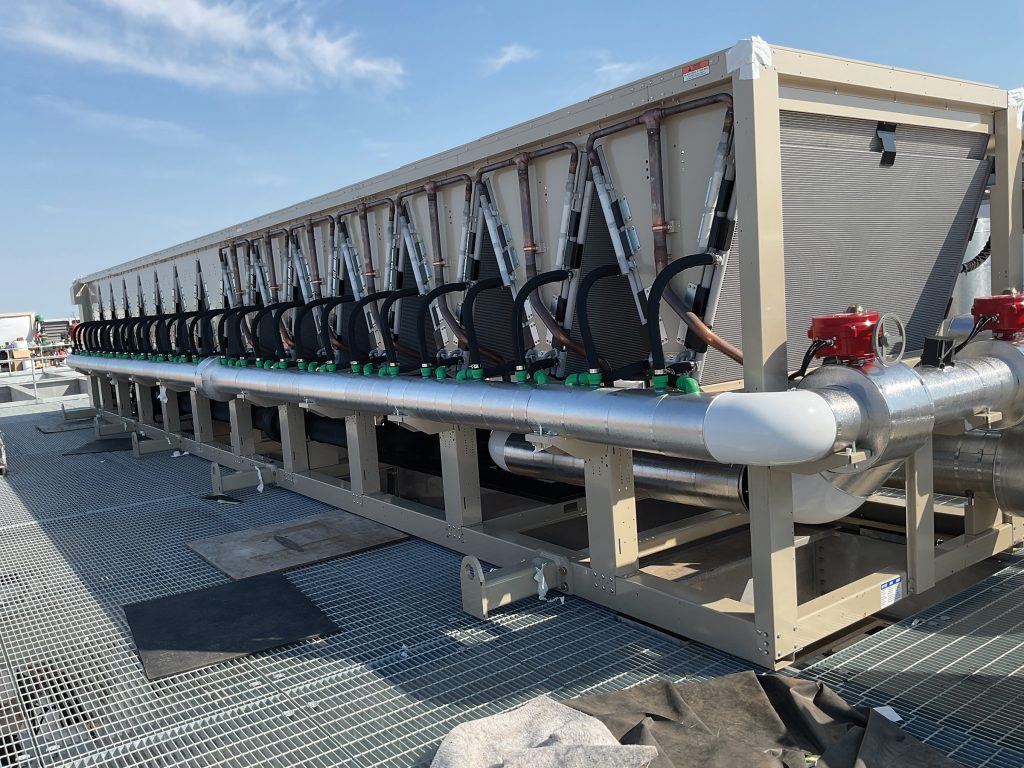
Air-Cooled Chiller Piping
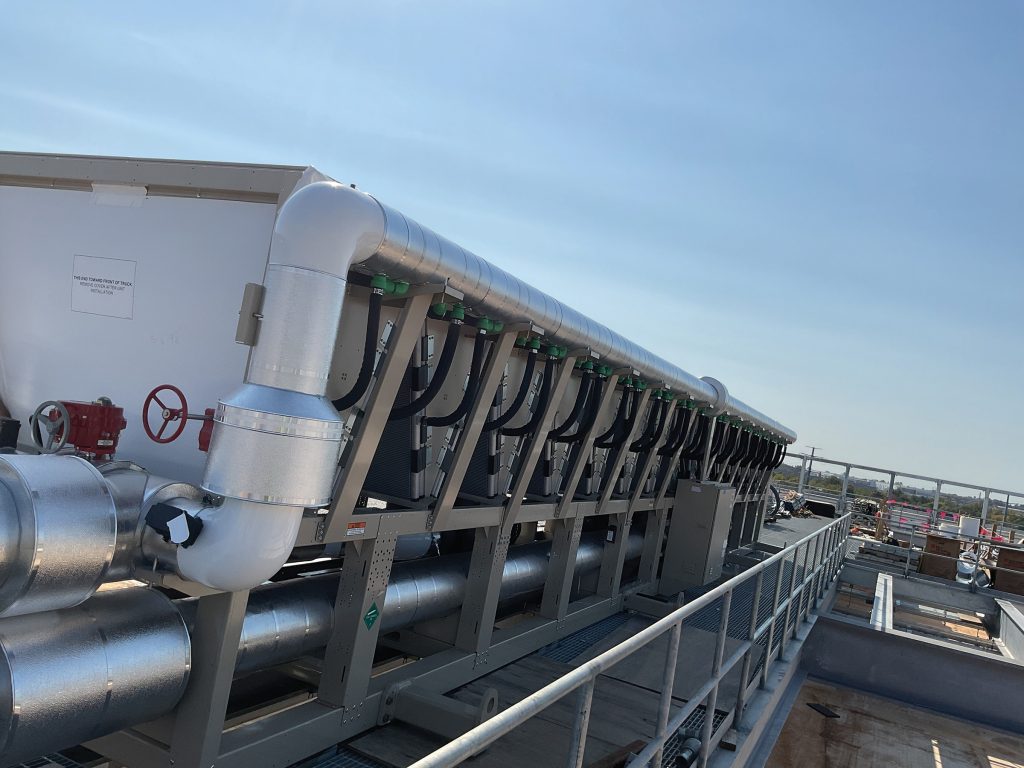
Air-Cooled Chiller Piping
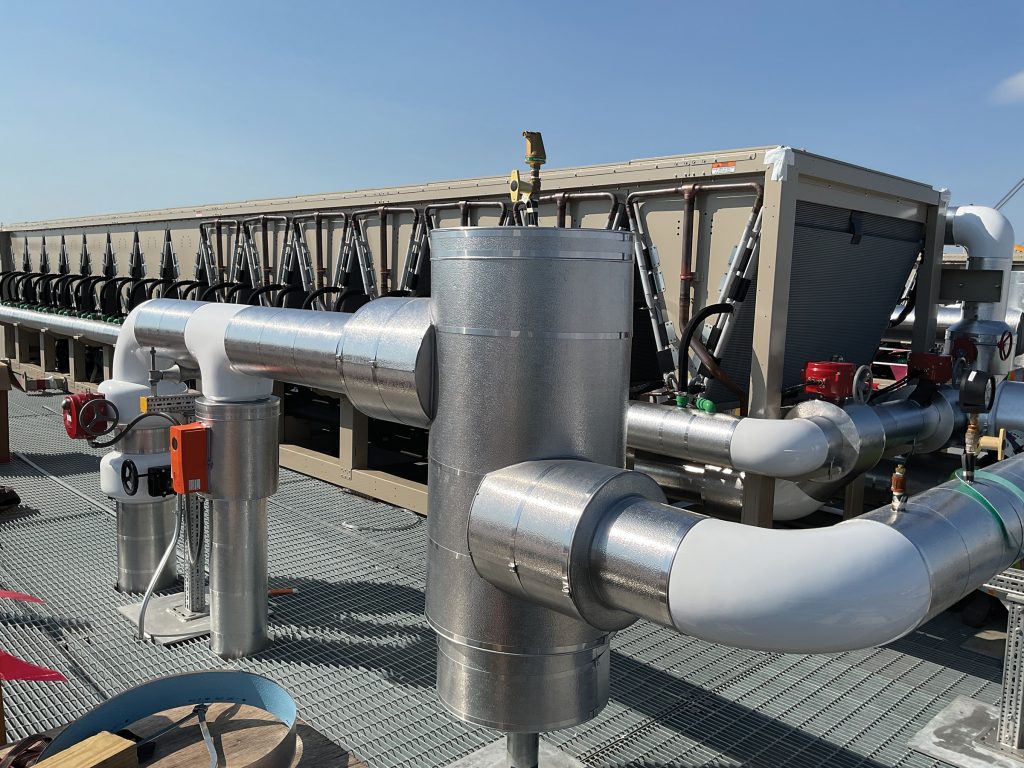
Air Separator/Chilled Water Piping
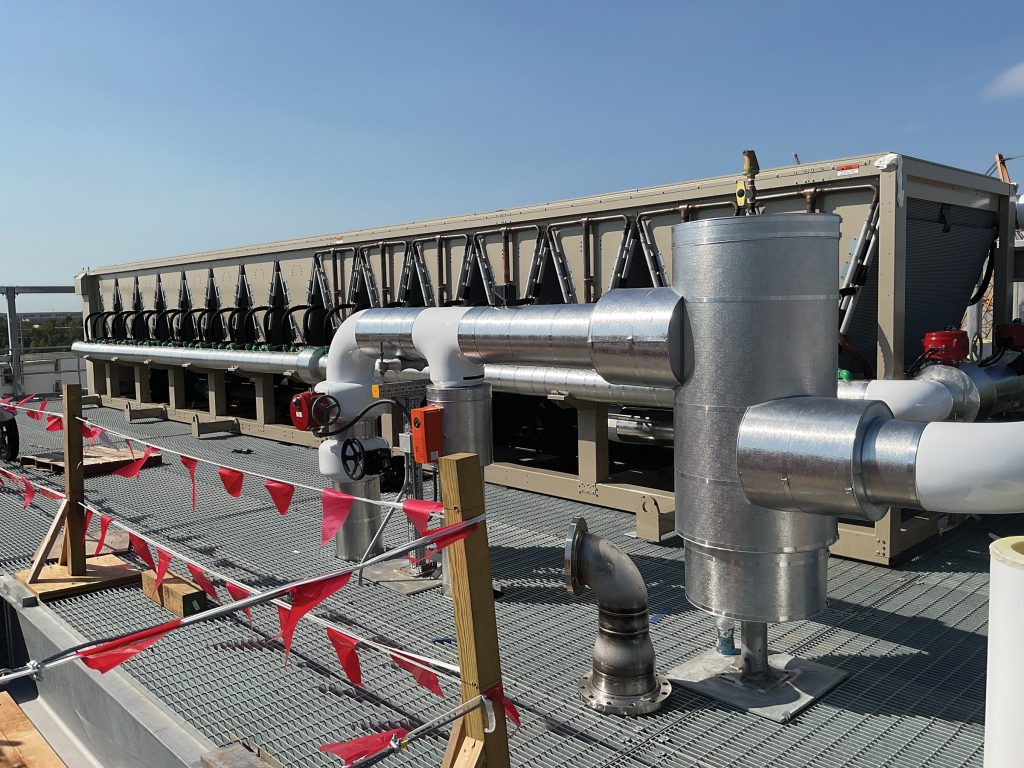
Air Separator/Chilled Water Piping
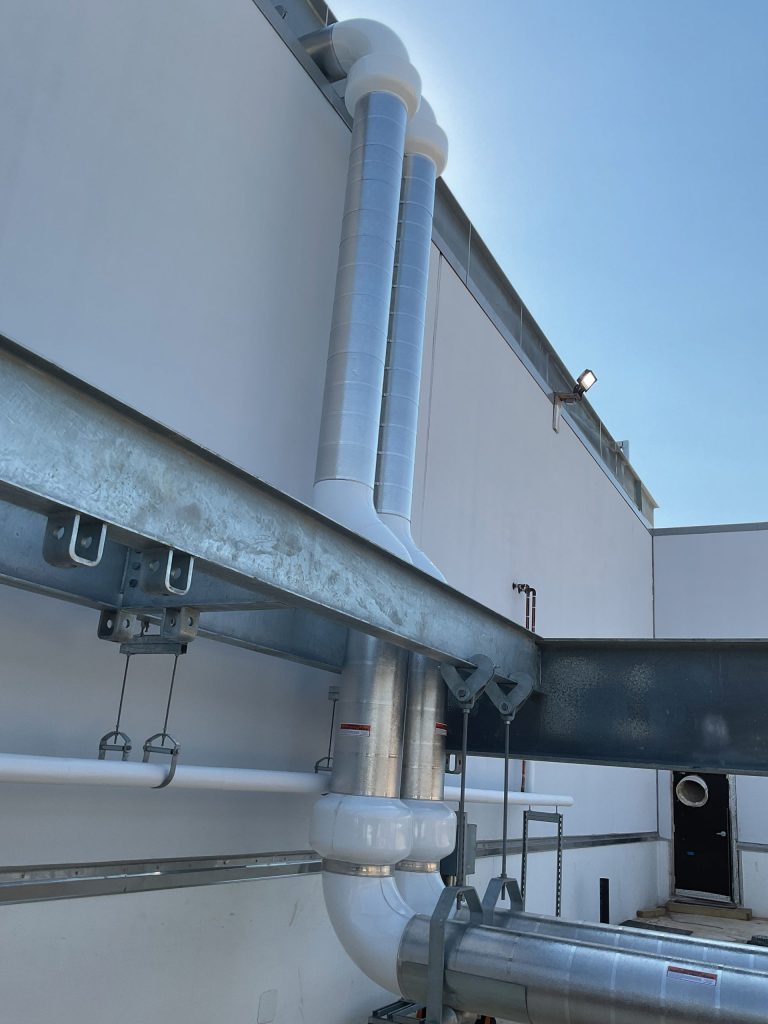
Chilled Water Risers from Lower Roof to Penthouse Roof
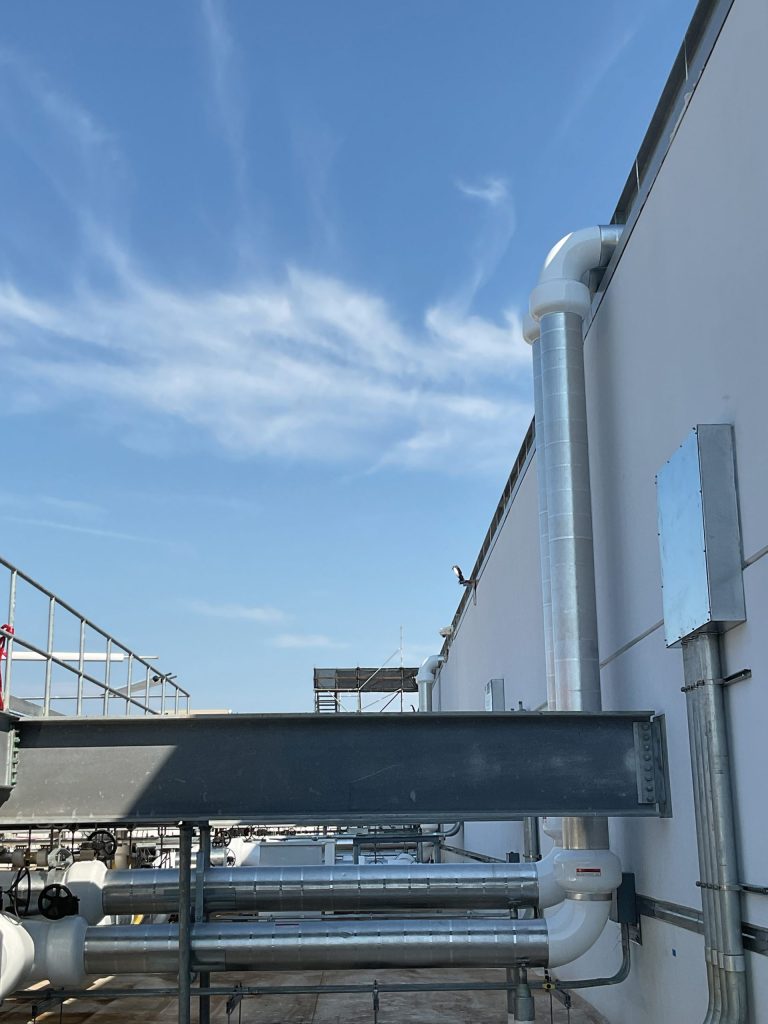
Chilled Water Risers from Lower Roof to Penthouse Roof
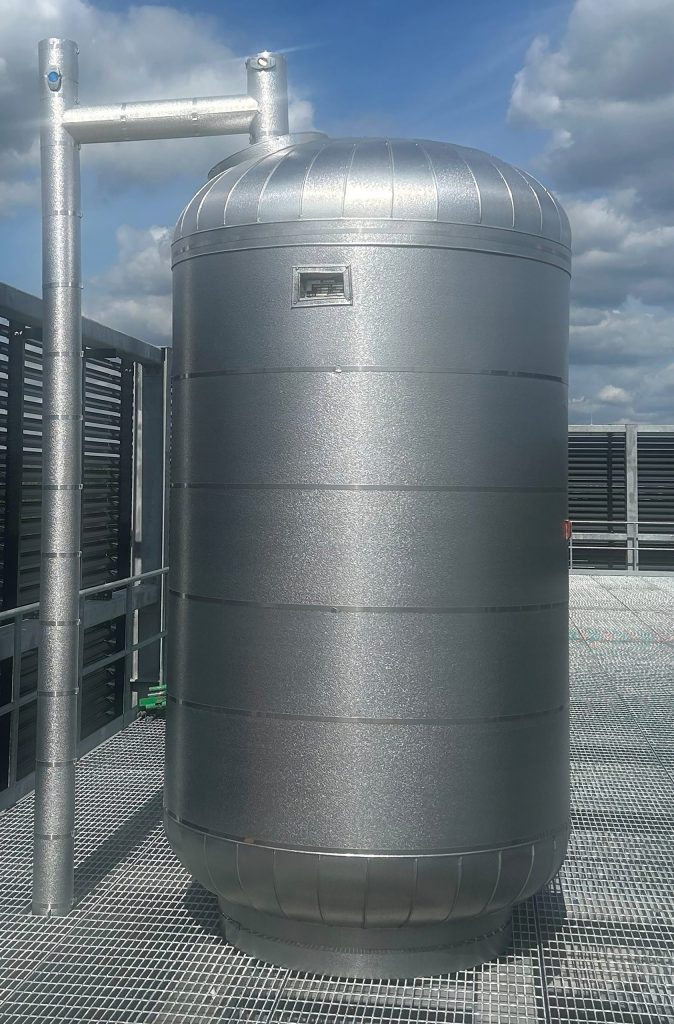
Photo 11 shows insulation on the rooftop tanks—eye-catching in their own way. The tanks showcase Insul-Tech’s crews’ craftsmanship and careful attention to detail: The metal top of each tank is gored, with every piece individually cut and installed in an overlapping manner to protect the tank.
Inside, to create the desired aesthetic, at the design stage, Insul-Tech suggested using color-coded PVC jacketing on CHW pipes. Says McLaughlin, “They knew that they wanted to do something above and beyond your standard white PVC jacket…Oftentimes, inside a building, there’s no jacketing at all because it’s protected from the weather… But for clients that are looking for that wow factor, putting PVC jacketing on the interior piping—specifically, color-coded—really makes it jump out… It’s really going to stand out from what you would typically see in a ‘standard’ data center.”
The facility owner selected the colors, and Insul-Tech gave them historical background on which colors are typically used on chilled-water supply and return piping. The result is shown in Photos 12 through 14. Dark blue is chilled-water supply, and light blue is return. Echoing sentiments expressed by the customer, McLaughlin notes, “You can see, it really stands out. It shines.” Although the colorful PVC jacking added cost, given the tradeoff in appearance, McLaughlin reports, “When the third-floor galleries were completed, and the customer had an opportunity to view the finished product, they were extremely satisfied and knew the investment in the colored PVC was the right choice.”
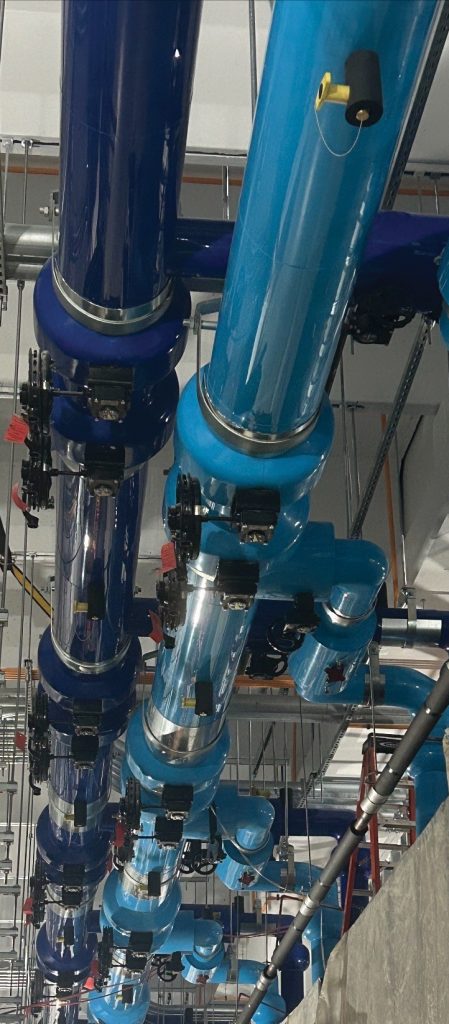
Chilled Water Supply & Return Piping Inside the Galleries that Serve the Data Hall
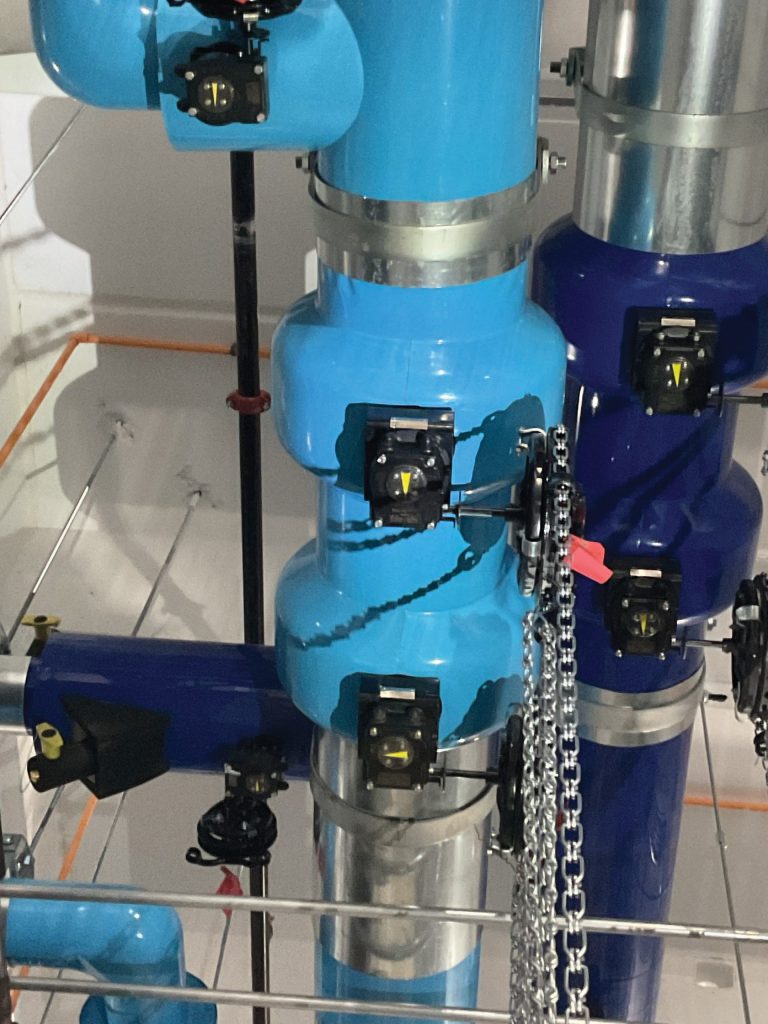
Interior Color-Coded PVC Jacketing: Light Blue Is for CHW Supply, Dark Blue for CHW Return
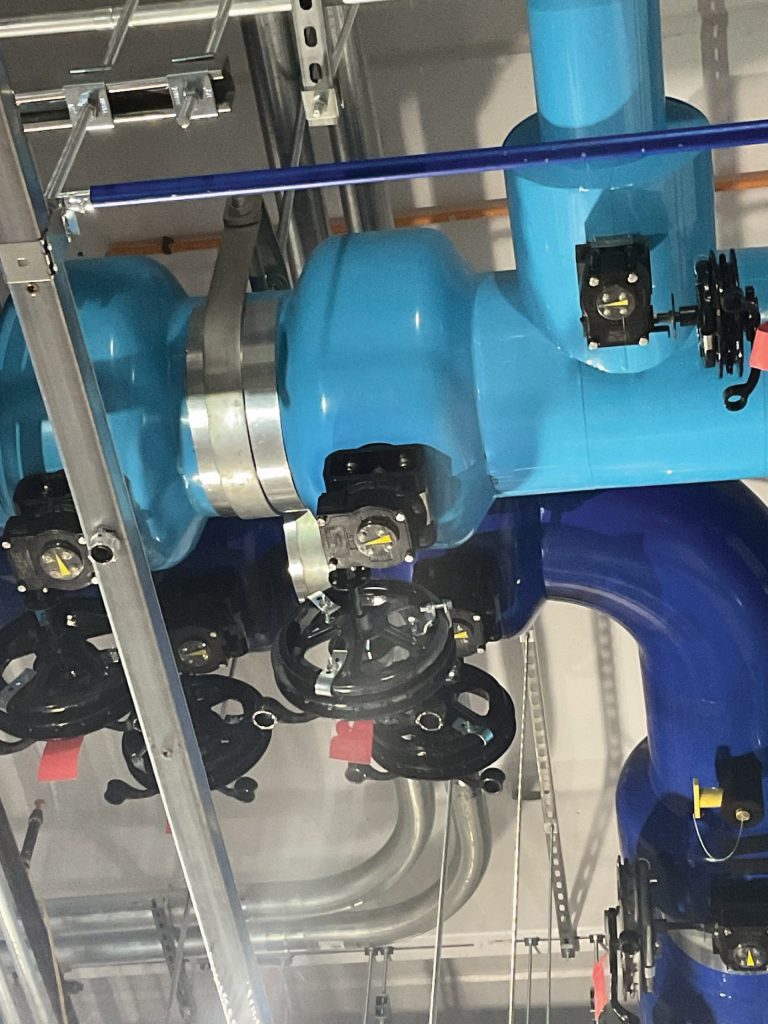
Interior Color-Coded PVC Jacketing
While this customer chose a more expensive solution to meet their aesthetic objective, McLaughlin observes, “I would say cost is probably the biggest factor, in terms of what we end up putting on. We’re always providing different options and products for each project. Most of that is done in the pre-construction phase of bidding the job. Having those conversations with the mechanical contractors and providing them with a functional and efficient insulation project, [while] limiting costs as much as we possibly can, is always our goal.”
Table 1 gives an overview of insulation system components and the materials used, which all aligned with project specifications.
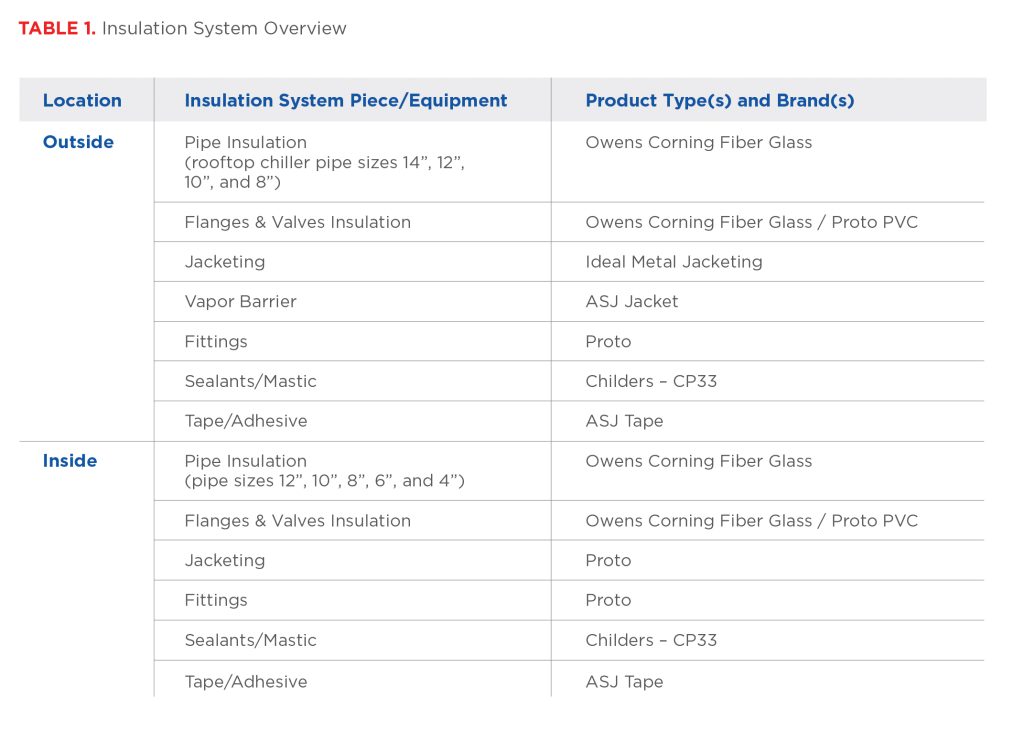
On the roof, aluminum jacketing and PVC fittings were used to provide an additional layer of weather protection, which is a common application for exterior and roof piping. Indoors, aesthetics aside, PVC jacketing offers functional benefits as an extra vapor barrier—providing additional protection if there is a leak inside the building, for example.
Outside and inside, Insul-Tech used insulating products and materials from Owens Corning and Proto Corporation, both NIA member companies.
Challenges
No project comes without challenges, and this data center had its fair share.
Tight Schedule
Insul-Tech had 12 months to meet four phases of aggressive deadlines in an enormous project, including:
- Number of chillers–24
- Estimated total footage of piping on project–54,000’
- Longest straight run of indoor piping–approximately 200’
Ideally, everything would be accomplished sequentially, exactly as planned: All construction materials would be delivered when expected, in the condition required; handoffs from one trade to the next would be seamless and occur precisely to schedule; weather and other conditions out of the insulation contractor’s control would be favorable; and so on. But how often does any contractor enjoy ideal conditions, particularly on a large, complex project? Successful companies identify mitigation strategies to avoid letting delays caused by unforeseen events (or others on the jobsite) compound into greater schedule slippage.
Insul-Tech’s strategy was to accomplish as much as they could up front. McLaughlin gives one example: “We can do a lot, in terms of insulating straight sections of piping that don’t have any valves or flanges or fittings, [which] typically have to be exposed for inspection purposes.” There was no shortage of long, straight piping, a characteristic common to data centers. Says McLaughlin, “Traditionally, you would obviously want to wait until everything is tested, and then you’re making one pass on all the piping, only going through that space one time. But unfortunately, due to the schedule, the time constraints, and the delays
that we experienced, if we didn’t go ahead and do everything we could up front, we would never finish on time.” He adds, “You can get a lot of work done prior to testing… Then, [after testing], we go back and knock out the fittings and the valves.”
Another example is Insul-Tech’s approach to metal work. McLaughlin explains, “depending on the amount of space we have on a job, oftentimes we will set up prefabrication stations… We may have a group of guys spending all day every day simply pre-cutting all of the metal. They might be pre-cutting the rubber that goes on the tanks… [or] building removable pump boxes… We prefab as much as we possibly can… While we’re waiting for the equipment or the piping to get released to us to cover, we have all those parts and pieces in place, and it allows for a faster installation.” What can’t be done on the jobsite is handled in Insul-Tech’s fabrication shop.
Weather
Insul-Tech’s crews worked through all four seasons. In winter, the temperatures fell into the 20s or lower, raising concerns both for workers and the system. McLaughlin explains, “As we get closer to those colder months, there’s always a concern about… piping that has water in it, equipment that has water in it, and the potential for that to freeze. Obviously, when things freeze, they break, and then you have leaks.” That raises schedule issues. At the same time that the general contractor and owner push to get heat tracing and insulation installed, the weather creates working conditions that inhibit progress, such as snow and ice on the rooftops. “The jobsite may open at 6:00 am, but we may not be able to access the roof until 9:00, based on dew and slippery conditions, which results in a loss of productivity,” McLaughlin states. The weather also presents possible safety hazards. Working in extreme cold, crews can lose the feeling in their fingers, or they may be more prone to slips and falls. McLaughlin adds, “working in 20 degree [F] weather for 8 or 10 hours a day… takes a toll on the body.”
Crews also experienced the other extreme. In the summer, temperatures rose to 100°F, with high humidity. Much like the cold, in addition to requiring safety precautions for workers, these conditions raise issues for the system and the project schedule. McLaughlin explains, “with colder water running through the piping, you have concerns about condensation, which can impact our ability to install the insulation. Obviously, we want to put it on dry piping.”
Supply and Demand Strains
With so many data centers under construction throughout the United States, using large quantities of items that require long lead times to produce, equipment manufacturers often strain to keep up with demand. To prevent supply issues from affecting the schedule, McLaughlin says, “sometimes, even if a piece of equipment is supposed to be insulated at the factory, in order to save that additional time and get it out to the jobsite as quickly as possible, [the manufacturer] may say, ‘hey, look, I have this, but we haven’t insulated it yet. Do you want us to send it now?’ And, of course, the answer is typically yes—send it to me as soon as you can.” The upside is that the equipment is available faster. The downside is that the insulation contractor then has insulate it as a field installation.
Project Takeaways
This project offers insights relevant to every role involved in new construction—from facility owner and design engineer to individual subcontractors.
Insulation Is Truly a Craft
Insul-Tech places great value on the craftsmanship of its people and the quality of their work. McLaughlin says, “I was a project manager for a mechanical contractor for almost 10 years before I came over to the insulation industry. And I think for a lot of people that aren’t involved in it on a day-to-day basis, insulation is many times an afterthought… I have a whole new appreciation for the knowledge and the skill that these guys have, not only to provide the insulating properties that the customer’s looking for, but also something that you can stand back from, look at, and say, ‘Wow! How did they do that?’” He sums it up, “It’s not as easy as it looks,” and it certainly deserves more than an afterthought.
Trust Drives Relationships… and Business
This data center was Insul-Tech’s first project with this customer, but the company has a long-standing relationship with the mechanical contractor on the job, W.E. Bowers. In 15 years of working together, they have built a solid rapport and mutual trust.
In turn, Insul-Tech relied on relationships that have proven dependable to them—including NIA partners. Virtually every project offers opportunities to form new relationships and strengthen those that already exist. Following up on those opportunities after delivering a successful project opens doors for new business.
Flexibility Is a Requirement for Success
Just as its partners flexed to provide materials whenever Insul-Tech needed them, the company’s own flexibility likely helped win them the follow-on work in this project. Insulating the long straights of piping when other system components were not yet ready for them may not be the traditional approach, but it kept them on schedule. Waiting until it’s insulation’s turn may save the contractor time, but if it comes at the expense of the larger project schedule, it can cost future business. Bringing in separate, dedicated crews to work on the equipment delivered without factory-applied insulation allowed Insul-Tech to keep the rest of their work progressing as scheduled, which is always appreciated. Because construction projects inevitably present unexpected challenges, contractors who can flex to overcome potential setbacks will be most successful.
Communicate, Communicate, Communicate
One takeaway that comes up time and again is the importance of communication. Sean McLaughlin goes so far as to say, “communication is probably the most important thing to make these projects successful. And that comes from every layer: from the general contractor to the mechanical contractor to the insulation contractors, and then from us to the manufacturers and the distributors.”
A project the size of this one would descend into chaos without communication between individual contractors and the mechanical contractors to confirm scheduling and logistics—e.g., when materials and manpower will be needed on site, where they will go, where and when deliveries can be made—and among the individual trades, confirming who needs to do what, when, for efficient workflow and to keep everyone on the jobsite safe.
Closing Thoughts
Data centers have gone from being “mind-boggling” (as characterized by McLaughlin), in terms of size and scope, to a mainstay application for Insul-Tech. McLaughlin says he remembers walking into a data center for the first time, thinking, “this is the biggest building I’ve ever been in in my life… How are we going to get all this done?” Now, after more experience with these facilities, he has a completely different reaction. “A couple of years later, you walk into a building and it’s… ‘you have 72 chillers on the roof? That’s no problem. We can do that.’ It’s not nearly as intimidating as it was early on.”
About Insul-Tech
Founded in 2003, Insul-Tech Inc. is a family owned and operated commercial and industrial mechanical insulation contractor headquartered in Frederick, Maryland and serving Washington, DC, Maryland, and Northern Virginia. In addition to mechanical insulation, Insul-Tech offers additional services in fire stopping, mold and mildew control, and mechanical insulation energy appraisals. For more information, visit www.insultech-inc.com.
THE PROJECT TEAM
The following individuals at Insul-Tech played a critical role:
Outside Superintendent: John Adkins
Foreman: Cristobal Gomez-Zepeda
Project Manager: Sean McLaughlin
Pre-Construction: Matt Stillitano, Jack Vogt
Accounting: Sabrina Sweeney
Insul-Tech would also like to recognize the following companies* for their efforts:
Metro Supply Company
Owens Corning
Proto Corporation
W.E. Bowers & Associates, Inc.
Bold text indicates NIA member company

NIA congratulates 2025 Contractor Showcase winners
First Place: JT THORPE
Second Place (Tie): Gribbins Insulation & Scaffolding and Insul-Tech, Inc.
We thank all the entrants who helped highlight the diversity and creativity of the mechanical insulation industry, including Jersey Fire Stop, LLC, Performance Contracting, Inc., and Irex Argus Contracting, LP. Watch for future articles with details on more projects.