
Setting the Standard—NIA and AMPP Hold First Meeting of the Mechanical Insulation Standards Committee
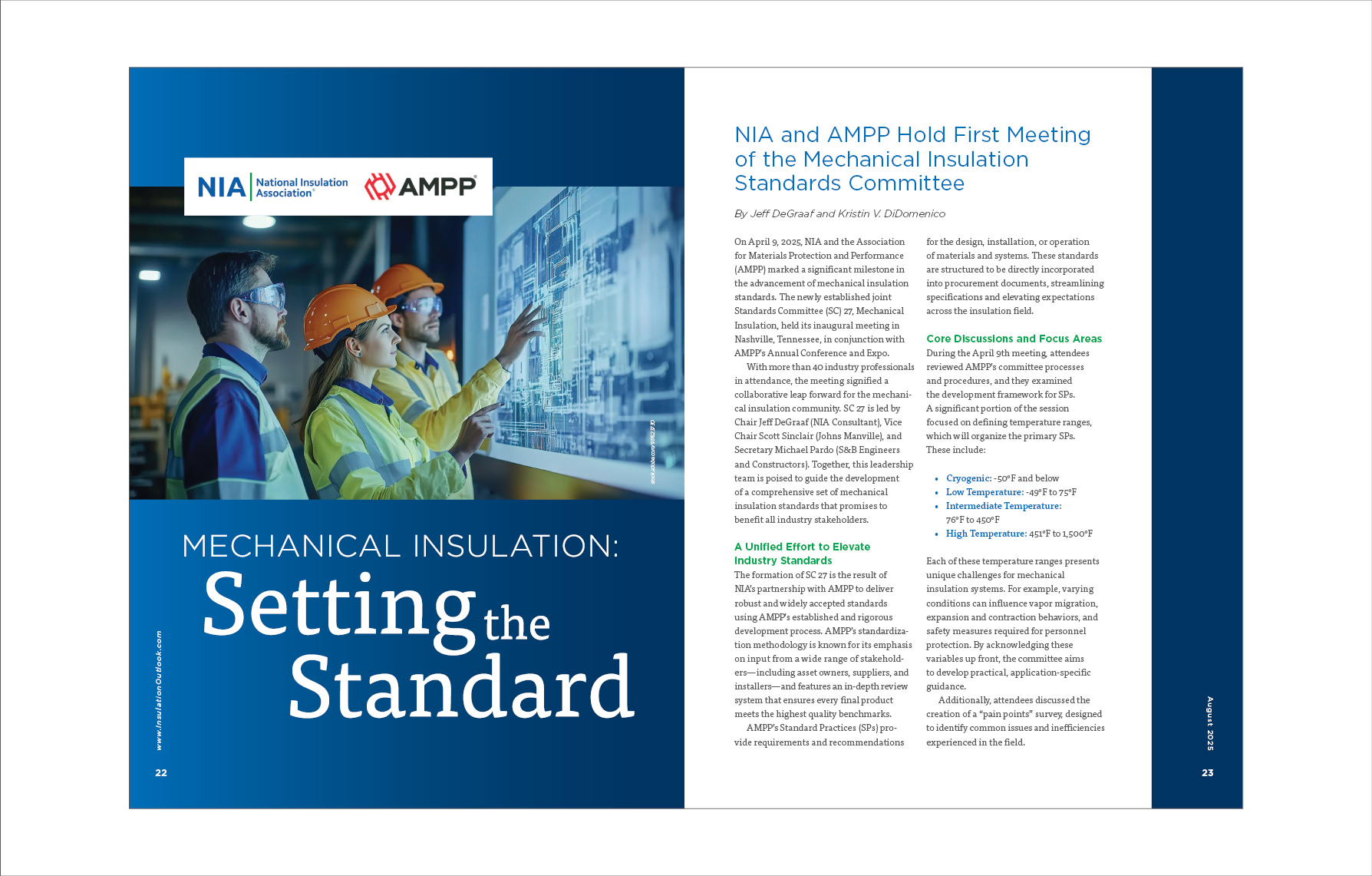
On April 9, 2025, NIA and the Association for Materials Protection and Performance (AMPP) marked a significant milestone in the advancement of mechanical insulation standards. The newly established joint Standards Committee (SC) 27, Mechanical Insulation, held its inaugural meeting in Nashville, Tennessee, in conjunction with AMPP’s Annual Conference and Expo.
With more than 40 industry professionals in attendance, the meeting signified a collaborative leap forward for the mechanical insulation community. SC 27 is led by Chair Jeff DeGraaf (NIA Consultant), Vice Chair Scott Sinclair (Johns Manville), and Secretary Michael Pardo (S&B Engineers and Constructors). Together, this leadership team is poised to guide the development of a comprehensive set of mechanical insulation standards that promises to benefit all industry stakeholders.
A Unified Effort to Elevate Industry Standards
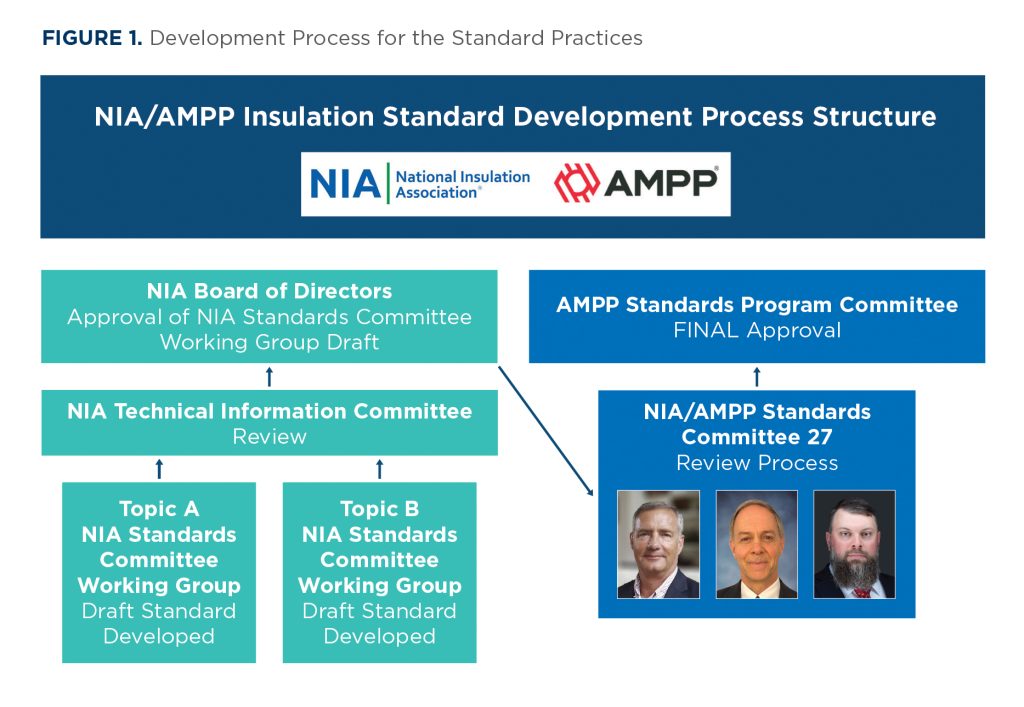
The formation of SC 27 is the result of NIA’s partnership with AMPP to deliver robust and widely accepted standards using AMPP’s established and rigorous development process. AMPP’s standardization methodology is known for its emphasis on input from a wide range of stakeholders—including asset owners, suppliers, and installers—and features an in-depth review system that ensures every final product meets the highest quality benchmarks.
AMPP’s Standard Practices (SPs) provide requirements and recommendations for the design, installation, or operation of materials and systems. These standards are structured to be directly incorporated into procurement documents, streamlining specifications and elevating expectations across the insulation field.
Core Discussions and Focus Areas
During the April 9th meeting, attendees reviewed AMPP’s committee processes and procedures, and they examined the development framework for SPs. A significant portion of the session focused on defining temperature ranges, which will organize the primary SPs. These include:
- Cryogenic: -50°F and below
- Low Temperature: -49°F to 75°F
- Intermediate Temperature: 76°F to 450°F
- High Temperature: 451°F to 1,500°F
Each of these temperature ranges presents unique challenges for mechanical insulation systems. For example, varying conditions can influence vapor migration, expansion and contraction behaviors, and safety measures required for personnel protection. By acknowledging these variables up front, the committee aims to develop practical, application-specific guidance.
Additionally, attendees discussed the creation of a “pain points” survey, designed to identify common issues and inefficiencies experienced in the field.
To access the full meeting minutes, list of attendees, and presentations, visit https://tinyurl.com/2h8ju3mz.
Structuring the Standards: Modular and Practical
A key design principle for the SC 27 standards is clarity and usability in the results. To that end, the committee aims to keep the primary standard practices concise, while addressing the full scope of required actions within each temperature range. These high-level documents will cover applications to pipes, equipment, tanks, and ductwork, and they will accommodate both rigid and flexible insulation types.
In tandem with the primary standards, the committee will develop supporting standards to provide deep technical guidance on individual components of the installation process. This modular structure ensures that each stage—from insulation selection to final installation—is addressed in detail, while remaining accessible.
For instance, one such supporting standard may be dedicated solely to end caps. This document could explore the pros and cons of flat versus beveled designs, recommended distances from flanges or valves, and best practices depending on pipe orientation (horizontal or vertical). By structuring the standards this way, organizations using their own specifications can selectively incorporate the joint NIA/AMPP standard practices guidance to enhance their procedures.
This hybrid approach ensures flexibility and promotes widespread adoption across diverse project environments and organization types.
Industry Feedback: Shaping the Future
Looking ahead, the work of SC 27 will be informed heavily by ongoing engagement with NIA members and the broader insulation community, including the pain points survey discussed during the initial SC 27 meeting. Survey feedback will inform early phases of standards development, ensuring that the resulting documents offer immediate, real-world value to contractors, engineers, and suppliers alike. In June, NIA began surveying its Contractor members to better understand the most pressing field installation challenges. Simultaneously, Associate (Manufacturer) members were polled on common questions or clarification requests they receive from customers and contractors. These insights are critical to prioritizing the most impactful areas for standards development.
To further broaden perspective, NIA is also gathering feedback from engineers, asset owners, and EPC (engineering, procurement, and construction) firms. Their input will help refine specifications and address gaps that may not yet be fully visible from the contractor or supplier side.
Results from these surveys will be published in upcoming issues of NIA News and other official NIA communications.
A Collaborative Path Forward
With SC 27 now underway, the mechanical insulation industry is set to benefit from a comprehensive, thoughtfully constructed set of standards built through consensus and field experience. By combining AMPP’s rigorous standard development structure with NIA’s deep industry knowledge and network, SC 27 aims to deliver guidance that is both technically sound and immediately practical.
As the committee continues its work, contractors, engineers, manufacturers, and facility owners can look forward to standards that improve safety, enhance performance, and promote consistency across the mechanical insulation landscape.
Questions?
For more information about NIA’s insulation standards, please contact Kristin DiDomenico at kdidomenico@insulation.org, or visit www.insulation.org/nia-insulation-standards.