
From Close Call to Safer Workplaces
Improving Safety Culture by Promoting Near-Miss Reporting and Communication
Introduction
Wouldn’t it be nice if we could wave a magic wand and everything safety related within a company would be in complete harmony? That would be great, right? Some things in life are just not that easy. A strong and positive safety culture is one of those things, and it is not built instantly. It develops gradually from consistent behaviors, shared values, and leadership commitment to prioritize worker well-being at every level.
Developing such a culture among mechanical insulation workers can be extremely impactful due to the nature of the work, which presents a variety of physical and health hazards that demand constant attention and proactive safety management. Workers often perform tasks at heights that can include accessing ladders or scaffolding. Falls remain a leading cause of serious injury. The use of sharp tools, fasteners, and metal jacketing increases the risk of cuts and punctures, while contact with high-temperature surfaces can result in severe burns. Some jobs also occur in restrictive, confined, or poorly ventilated areas. These factors can contribute to chemical exposure, oxygen displacement, or respiratory issues.
Health hazards also can be concerning. Insulators may be exposed to fine fibers or dust from materials like fiber glass or mineral wool, which irritate the lungs and can lead to chronic respiratory illnesses. Chemicals such as isocyanates in spray polyurethane foam are known triggers of occupational asthma and, in extreme cases, fatal reactions. In older facilities, the possible presence of asbestos poses long-term cancer risks if not properly controlled. At the same time, temperature extremes—whether excessive heat or freezing cold—introduce risks of heatstroke, exhaustion, frostbite, and hypothermia.
These hazards highlight why strong safety systems and near-miss reporting are vital.
What Is a Near Miss?
One of the most powerful tools for developing this type of culture is the effective reporting and communication of near misses. A near miss is an unplanned event that did not result in injury, illness, or damage but had the potential to do so. Documenting these events provides organizations valuable insight into weaknesses in their safety systems before tragedy occurs.
Unfortunately, many companies do not take advantage of near-miss reporting due to fear of blame, lack of awareness, or the absence of a proven process for capturing these events. By actively encouraging employees to recognize, document, and communicate near misses, organizations can uncover hazards, strengthen preventative measures, and demonstrate a sincere commitment to safety. This article explores how companies can improve safety culture through near-miss reporting and communication, supported by real world case studies that illustrate the benefits of this approach.
Why Near-Miss Reporting Matters
No harm, no foul right? Near misses are often dismissed because they did not result in personal injury or property damage. However, safety professionals widely recognize them as leading indicators of future incidents. For every serious accident, there are often dozens, or even hundreds, of near misses that went unreported. This concept is supported by Heinrich’s Safety Pyramid (Figure 1), which suggests that unsafe acts and near misses far outnumber major incidents, and if left unaddressed, they can escalate into severe events.
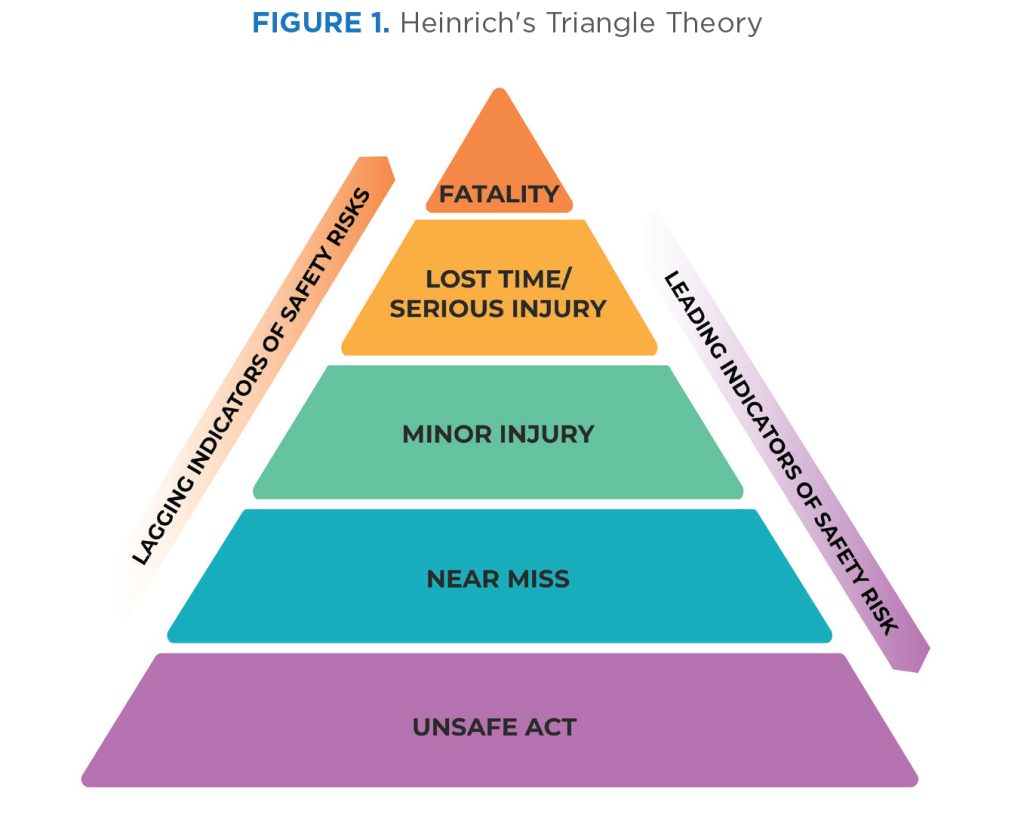
By capturing near misses, organizations gain insight into hidden hazards that otherwise remain undetected until there is a serious event. The goal is to create opportunities for early intervention before injuries or property damage occurs. This type of approach results in being proactive, rather than reactive, and it contributes to a safety culture where employees feel empowered to prevent harm or damage. The company now has a flow of data that they can reference for continuous improvement, which helps refine training, procedures, and equipment. Everyone can be a part of the solution.
Common Barriers to Near-Miss Reporting
Despite the benefits, many organizations struggle to create a culture where near misses are consistently reported. Barriers typically include a fear of blame or punishment. Employees also may worry that reporting will make it look like they are trying to impress their supervisor. Another reason may be a general lack of awareness or training. Simply put, workers may not fully understand what constitutes a near miss, or why it is important.
And let’s not forget that humans in general tend to take the path of least resistance. Difficult reporting processes, complicated forms, or time-consuming procedures discourage reporting.
Additionally, people deserve to be validated or kept up to date with progress. One of the worst things that can happen when people start to contribute their thoughts, observations, and ideas is a lack of feedback. If employees never hear back about reported issues, they may feel their efforts are wasted. They are likely going to think, “Why should I even say something? Nothing ever changes around here anyway.”
Overcoming these barriers requires clear cut strategies and management commitment.
Strategies for Promoting Near-Miss Reporting
Most successes in building a strong, positive safety culture start from the top down. Management sets the tone, leading by example. When management openly discusses near misses, shares lessons learned, and personally acknowledges employees for reporting, it demonstrates that safety is a shared priority. Management must reinforce that near-miss reporting is not about assigning blame but about opening communication and preventing harm.
Employees should have multiple, user-friendly ways to report near misses, such as digital platforms, mobile apps, or even tried-and-true simple paper forms. Some companies use anonymous options to reduce fear of reprisal, especially when introducing a new system. If employees take this option seriously and put an actual note in the reporting bin, and not a candy wrapper or random doodle, it can be highly effective. Providing multiple ways to report allows an organization to cater to its employees. Some may prefer the digital route, while others are “old school” and want to write things down.
Training should define what constitutes a near miss, and why reporting matters. Regular safety meetings, toolbox talks, and awareness training can highlight real-life examples of how near-miss reporting has prevented accidents.
Employees must see that their reports lead to action. Providing updates, sharing corrective measures, and discussing near misses during safety meetings tends to build trust. When workers understand that their input directly contributes to safer conditions, they are more likely to participate.
To encourage participation, instead of punishment, companies should celebrate near-miss reporting. Recognition programs, small rewards, or even verbal appreciation during meetings can motivate employees to continue contributing.
Near-miss data should feed into broader safety management processes. Tracking trends, analyzing root causes, and aligning corrective actions with organizational goals ensures that reporting translates into meaningful improvements.
How Near-Miss Reporting Improves Safety Culture
When implemented effectively, near-miss reporting has a ripple effect across the organization, and it becomes contagious. Trust builds between workers and management, as employees see leaders valuing their input without assigning blame. Open communication takes place, breaking down walls or division between departments and shifts. Proactive problem-solving becomes standard practice, as hazards are addressed before incidents occur. Continuous learning is embedded into the culture, creating an adaptive and resilient organization.
Ultimately, near-miss reporting shifts the mindset from just scraping by with basic compliance-based safety to a continuous improvement approach, taking safety beyond the standard. Employees feel empowered to be part of the solution, rather than just reacting when something unfortunate happens. To be most successful with this, expectations have to be communicated clearly and set right out of the gate.
How to Implement a Near-Miss Reporting System
Establishing a near-miss program has tangible benefits that include reduced injuries, prevention of potentially fatal accidents, and stronger employee engagement. When near-miss reporting becomes embedded in daily operations, safety evolves from a compliance obligation to a shared organizational value. Here are steps to implement a near-miss reporting system.
- Establish Clear Goals
Before launching a near-miss reporting system, clearly define what a near miss is, why it matters, and how employees can report one. Setting clear expectations up front helps ensure everyone understands the purpose and importance of the program. - Develop a Structured Reporting System
Create a simple reporting form that captures key details, such as the date, location, description of the event, and potential hazards. Designate who will be responsible for tracking near misses, investigating incidents, and implementing corrective actions to address identified risks. - Hold a Meeting to Make an Announcement
If you have a safety committee, present the program to them first and explain what constitutes a near miss and why reporting is critical, and emphasize that the goal is prevention, not blame. Review the reporting process together to ensure everyone is aligned. If the company doesn’t currently have a safety committee, consider establishing one. - Make Reporting Part of Your Routine
Incorporate near-miss reporting into regular safety committee meetings. Discuss near-miss incidents as a group, document the improvements made, and use these discussions to evaluate and refine your reporting process over time. - Promote a Culture of Awareness and Support
Encourage a “see something, say something” mindset. When someone reports a near miss, thank them and acknowledge their role in preventing potential accidents. Regular recognition and encouragement help build trust and foster a proactive safety culture.
Conclusion
Promoting the reporting and communication of near misses is actually one of the most effective and easy ways a company can strengthen its safety culture. It shifts the focus from being reactionary to incidents after they occur to preventing them altogether. By creating an environment of trust, simplifying reporting processes, and demonstrating that employee input leads to real change, organizations empower their employees to be active participants
in safety.
So, magic safety wand aside, a true culture of safety is not just about avoiding harm; it’s about encouraging open communication, trust, and continuous improvement. By practicing near-miss reporting, companies can move closer to the ultimate goal: ensuring every worker returns home safe, every day.