Category Archives: Environmental Control

Insulation industry professionals are naturally interested in the latest news and trends in saving energy because insulation is a proven energy saver, and an easy way to reduce energy expenses and preserve the global environment. Many businesses have incorporated insulation, along with other environment-friendly approaches, into their strategic plans. For example, the Subaru manufacturing plant in Lafayette, Indiana, was the first auto assembly plant to achieve zero landfill status: Nothing from its manufacturing efforts goes into a landfill—everything discarded is reused and recycled. Industrial Woodworking Corporation (IWC) recently announced that it has offset 100 percent of its carbon emissions from electrical and natural gas use, management’s air travel, and corporate vehicles through Carbonfund.org’s CarbonFree™ business program. Other CarbonFree partners with Carbonfund.org include Dell, Orbitz, and Lancôme.

These companies are taking voluntarily, proactive steps to reduce the global carbon load through conservation and carbon offsets, and many individuals are following suit. With carbon offsets, individuals or companies pay someone else to reduce, or “offset,” their greenhouse gas emissions because they are unable or unwilling to reduce their own emissions. A popular—and somewhat controversial—example is planting trees to compensate for greenhouse gas emissions. Several websites now allow people to pay money toward renewable energy efforts, such as wind energy farms or solar energy projects, to counterbalance their use of more traditional—and polluting—energy sources.

Here’s how it works:
  • Choose a reputable website that offers carbon offsets that are third-party verified to reduce the equivalent of the necessary amount of carbon dioxide pollution.
  • Calculate your carbon footprint by determining how much carbon dioxide you are responsible for emitting (in your home, car, or on airplane flights).
  • Select a carbon offset product based on the amount of emissions, translated to a dollar amount, that you want to counterbalance with your purchase. You can make the simple purchase online with your credit card.
When choosing carbon offsets, be sure to look for the following factors:
  • Transparency. The offset provider should clearly explain the energy projects it contributes to and offer tangible proof that those projects have a positive impact.
  • Additionality. It is critical that the offset contributions actually prompt an organization to do something it would not have done otherwise.
  • Verification. The most reputable carbon offsets have been independently verified by a credible third party. While there is no clear standard for validating carbon offset projects, the Gold Standard—based on Kyoto Protocol criteria, aimed at reducing greenhouse gas emissions around the world—is widely accepted. (For more information on the Kyoto Protocol and Japan’s new proposal to cut greenhouse gas emissions in half by 2050, please visithttp://unfccc.int/essential_background/items/2877.php.)
  • Project type. The best projects work toward developing alternative energy sources, such as wind or solar energy, to eventually replace more pollution-heavy energy producers.
  • Approach. The group providing the offset also should provide education. It should offer information on how to reduce your carbon footprint before you buy carbon offsets.1

Carbon offsets are a major trend among environmentally conscious public figures, including Al Gore, Leonardo DiCaprio, and Cameron Diaz. At the 79th annual Academy Awards, presenters and performers received 100,000 pounds of carbon dioxide (CO2) reductions from TerraPass’ suite of verified clean energy projects. Celebrity endorsements not only help reduce the carbon footprint of the world’s jet-setters, but they shed some spotlight on this popular new way to improve the environment.

The insulation industry focuses on energy savings every day. Now, that same level of responsibility is possible on a corporate or personal level. To calculate your carbon footprint or learn more about carbon offsets, visit the websites listed in Kyoto + 10: Carbon Credits and the Countdown to Compliance. As part of a broader effort to save energy and provide a greener future for generations to come, this energy-saving trend is definitely aligned with at least one major insulation industry goal.

References
  1. http://www.msnbc.msn.com/id/18659716

Over the past few years, widespread attention has been given to “green” building and sustainability. Sustainability includes, at a minimum, both energy efficiency and recycling.

Industry leaders are addressing this topic much more frequently as interest in it expands. At the American Society of Heating, Refrigerating and Air-Conditioning Engineers (ASHRAE) convention this past January, a seminar and two forums were offered on sustainable design and green topics. ASHRAE plans more programs on this subject in the future.

At the National Insulation Association’s (NIA’s) annual convention in March, two speakers addressed the specific role of insulation in sustainable design. The talks included a look at how thermal insulation can contribute to green buildings, as well as information on Leadership in Energy and Environmental Design (LEED)–certified buildings. The speakers noted that reducing energy use through greater efficiency is not enough: Society also needs to recycle materials to a much greater extent to achieve greater material use efficiency. Within the insulation industry, that means increased use of recycled materials in the manufacture of insulation and more recycling of insulation materials after their use.

Recycling Newspaper Into Cellulose Insulation

Possibly the most successful and well-known recycling effort in the insulation industry is the recycling of old newspapers into cellulose insulation. While primarily used as building envelope insulation, cellulose insulation uses a large percentage of recycled materials—reportedly in the 80- to 85-percent range. According to the Cellulose Insulation Manufacturers Association, in 2004 (the latest year for which figures are available), the industry produced 773,000 tons of cellulose insulation.

Recycling Raw Materials Into Mineral Fiber Insulation

Mineral wool insulation is typically a blend of rock wool and slag wool. Slag is what is left from coke and iron and is the predominant input material to most mineral wool insulation. If slag were not recycled, it would be sent to landfills, further aggravating the landfill problems that already exist. According to the North American Insulation Manufacturers Association’s (NAIMA’s) website (www.naima.org), in the past 10 years, nearly 11 billion pounds of recycled blast furnace slag have been used in the manufacture of slag wool insulation.

In the fiberglass insulation manufacturing industry, recycled scrap glass—mostly from bottles—is used as an input raw material. According to www.naima.org, in the past 10 years about 9.5 billion pounds of recycled scrap glass have been used in the manufacture of fiberglass insulation, making up about 40 percent of the input material. One fiberglass insulation manufacturer claims to have used 3.5 billion pounds of recycled glass during the past 10 years. As with unused slag, if the bottles were not recycled into fiberglass, they would be dumped in landfills.

The 2001 Insulation Outlook article titled “Recycling Fiberglass Insulation Into Commercial Board Products” (see www.insulation.org/articles/article.cfm?id=IO010701) described a fiberglass insulation recycling technology that converted post-industrial scrap material into usable fiberglass boards. In that wet process, post-industrial scrap fiberglass insulation was shredded, mixed with water to make a slurry, and then passed through a “head box” (similar to that used in making paper). There, it was drained on a conveyor chain, soaked with a chemical binder solution, dried, and pressed and cured in an oven into 4- or 5-foot-wide boards with a finished density in the range of 3 to 10 pounds per cubic foot (lbs/ft3).

This valiant effort to recycle post-industrial scrap was successful in making a quality product, but because of start-up problems, as well as marketing and sales issues (recycled products did not have the appeal and acceptance then that they do today), investors finally shut down the operation and auctioned off the equipment. Once the facility was shut down in 2002, most of the scrap fiberglass insulation material from the operation went to a landfill.

Recycling Fiberglass Ceiling Panels

Scrap fiberglass can be used for more than just fiberglass board products. One commercially successful reuse is as an input ingredient for fiberglass acoustical ceiling tiles. At least one manufacturer of these tiles—Armstrong World Industries based in Lancaster, Pennsylvania—uses old fiberglass ceiling panels, a form of acoustical insulation. This keeps the old ceiling tiles out of landfills and puts the material to good use.

The company’s website (www.armstrong.com) states that since the start of its recycling program, it has recycled almost 11 million pounds of fiberglass ceiling tiles into new fiberglass ceiling tiles. The website also asserts that the company has reduced CO2 emissions by 11.2 million kilograms, saved 12.3 million gallons of potable water, reduced landfill waste by 24.5 million pounds, reduced electrical energy use by 34.3 million kilowatt-hours (kWh), and reduced virgin raw materials by 245 million pounds. These numbers should inspire other successful insulation recycling programs within industry.

Armstrong has undertaken a number of recycling projects. A supermarket chain is recycling 2 million square feet, or 600 tons, per year through the company’s recycling program, for example. In Florida, an office park being refurbished is recycling 25 tons of old acoustical ceiling panels, turning them into new ceiling panels. The new ceiling panels have 79-percent recycled content.

A New York City corporate headquarters for a large pharmaceutical company, which is being renovated, is in the process of recycling 160,000 pounds of old fiberglass ceiling panels into new ones.

Recycling Plastic Foam Insulation Materials

Another company, Rastra (www.rastra.com) recycles plastic foam insulation, such as polystyrene, into structural building blocks used for houses and other buildings. It makes insulated concrete forms (ICFs) from cement and post-consumer plastic foam. Rastra claims to have 85-percent recycled content (by volume) in its block product. The high percentage of polystyrene content by volume gives the ICFs a higher R-value than regular concrete block, which in turn increases the overall wall R-value. Its standard steady-state R-value per inch is reported to be 1.73, giving each 14-inch-thick block an R-value of 24.2. The manufacturer claims that the effective R-value is considerably higher—as high as 46 in the Arizona desert—due to daily temperature swings.

Rastra reportedly is recycling almost 200 tons per year of plastic foam insulation material at its Albuquerque, New Mexico, plant and will soon be opening a second plant in Columbus, Ohio.

The Future of Recycling Insulation Materials

The manufacture of mineral wool and fiberglass insulation is energy intensive. Any materials that can be recycled, without requiring the melting of input materials, can save large quantities of energy otherwise used to melt and fiberize the materials. The manufacture of plastic foam insulation materials, while not energy intensive from a thermal perspective, is material intensive in terms of using petrochemical feedstock (such as chemicals made from crude oil). Prices of natural gas, crude oil, coal, and nuclear fuel have tripled in the past 5 years. As these prices continue to increase, recycling becomes even more attractive financially.

With growing concerns about global warming—which results from the release of CO2 into the atmosphere—recycling is a way to reduce energy use for the manufacture of construction and building materials. When recycling of insulation materials is combined with the increases in energy efficiency realized by thermal insulation in buildings and industrial processes, the contributions to a more sustainable society can be enormous. In the next 5 years, new insulation recycling projects likely will be developed and commercialized. The insulation industry will increasingly contribute to a more sustainable society, which will increase its value to the world.

That is good for business!

Figure 1

A recycling technology once converted discarded fiberglass insulation into acoustical and thermal insulation board products.

Figure 2

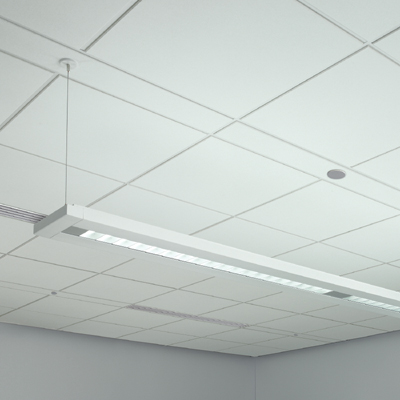
Ceiling panels like these can be made from older, recycled fiberglass ceiling panels.

Figure 3

Through the Save Energy Now (SEN) program, the Department of Energy’s (DOE’s) Industrial Technologies Program (ITP) helps industrial plants operate more efficiently and profitably by identifying ways to reduce energy use in key industrial process systems. The ITP cosponsors these assessments through a competitive process. The DOE promotes plant-wide energy-efficiency assessments that will lead to improvements in industrial energy efficiency, productivity, and global competitiveness, while reducing waste and environmental emissions.

This case study looks at the Bayer Corporation, which is the largest subsidiary in the Bayer Group, with some 23,200 employees working at more than 50 locations in the United States. The Bayer Polymers1 New Martinsville, West Virginia, plant has 16 production units and employs 950 workers. The plant produces more than 1.2 billion pounds of chemical intermediates, polyurethane materials, food-grade hydrochloric acid, and iron-oxide pigments each year.

The Bayer Corporation’s plant-wide energy assessment focused on the technical and economic evaluation of existing utility systems. The assessment also identified areas—such as insulation, boiler, steam, compressor, and motor-driven pump systems—that could benefit from modifications and upgrades. Improvements in these systems, as well as their accompanying energy and cost savings, can be replicated in other industrial plants. In this case, the DOE contributed $87,000 of the total $181,000 for the assessment, which took place in the spring of 2001. The project evaluation process was unique in that the company had obtained very favorable rates for electricity, even by West Virginia’s favorable standards in the industrial sector. Even so, the company found strong economic justification for several projects that would reduce either electricity or fossil fuel consumption.

The projects, when complete, will reduce the amount of fossil fuel that is burned and leaked, saving the company an estimated 236,000 million British thermal units (MMBtu), or an estimated $1.16 million annually, based on an average cost of fossil fuel. Certain other projects will save the company 6.3 million kilowatt-hours (kWh) of electrical energy. All of the projects are potentially applicable to other chemical manufacturing facilities, and most of the projects have potential applicability to other industries.

Assessment Approach

The plant-wide energy-efficiency assessment focused on the technical and economic evaluations of existing energy systems in the plant utilities that could benefit from equipment modifications, leak reduction, heat recovery, improved control systems, additional insulation, and burner adjustments.

The systems that were evaluated included those using significant quantities of natural gas (NG), electrical power, and chemically treated water. Reducing production of nitrogen oxide (NOX) and carbon dioxide (CO2) was also a high priority. The assessment team consisted of the Bayer Corporation’s director of utilities and maintenance, the manager of utilities, and a member of process engineering. The review was a joint effort of these management experts and an assessment team from West Virginia University (WVU). The Bayer team prepared a list of energy-efficiency concerns and discussed them with the WVU team. During the summer of 2001, the WVU team made regular site visits to collect necessary energy-use and management data at the plant. The assessment focused on boiler-system operation, insulation needs, steam leaks, steam-system condensate, compressed air, and motor performance.

The WVU team then conducted a detailed analysis of the data, which focused on component-level specifics (heat losses in pipes, flanges, tanks, cooling towers, and valve spool pieces specific to each boiler). The WVU team issued a report in July 2002 describing the analysis and several proposed projects. The utility management staff noted high-priority items (steam and compressed gas leaks) with less than 1-month payback and acted on those immediately.

Impressive Results

To ensure that all project goals were met, the Bayer team wanted to: 1) identify significant energy savings and attractive payback, and 2) proceed based on environmental criteria. The company is interested in reducing the production of NOX and CO2, which is frequently an outcome that accompanies energy conservation projects. The Bayer plant operates with a 25-megawatt electric load and is the second largest user of NG in the state. The total annual cost for imported utilities is more than $15 million. The Bayer team recognized that even a small improvement in the efficiency of the plant’s main energy consumers—boilers and large pumps—could create a significant savings.

The plant-wide energy-efficiency assessment identified several attractive projects based on the above criteria. Figure 1 provides a list of five projects that Bayer plans to submit internally for implementation. For each project, the table indicates expected project costs, estimated annual savings, and expected payback periods. The greatest annual energy savings will come from boiler burner replacements, increased condensate return, and a portion of Project 5 that reduces the number of NG leaks (discussed below).

Projects Identified

The following discussion provides details of the selected energy-efficiency projects developed during the plant-wide assessment. Because of the similar basic utility processes used in chemical plants, all of the projects are highly applicable to other chemical plants. In addition, these projects seek to improve common utility systems (boilers, steam, compressed air, and motors), so the projects are replicable in many other industries.

Project 1—Burner Replacement

The plant-wide evaluation of boiler operations found that the NG-fired burners in four boilers, as well as the combined NG- and hydrogen-fired burners in two boilers, were not the newer, high-efficiency designs. These designs produce a controlled, slow-burning, low-temperature flame that produces less NOX and CO2. Using a newer burner could increase efficiency by 2 percent. Replacing the burners would yield an energy savings of 74,800 MMBtu per year (MMBtu/yr) and an 8.46-million-pound annual reduction of CO2.

Project 2—Condensate Return

The WVU analysis showed that by increasing the amount of condensate returned to the boilers, the company would pay less for makeup water, save NG in the initial heating of the makeup water, and save the chemical and treatment costs for the makeup water. There would be a small savings from discharging less water into the sewer system. Increasing the condensate return may require separators or filters to remove contaminants and additional piping. Increasing the condensate return from the present 30 percent, or 30,000 pounds per hour (lb/hr), to 75 percent, or 75,000 lb/hr, will produce an overall energy savings of 66,600 MMBtu/yr and a 7.53-million-pound annual reduction of CO2.

Project 3—VSDs on Pumps

The utilities department at the Bayer plant provides cooling tower water to various designated users. The cooling towers’ performance depends on the weather and the needs of the users. At any given time, no more than 60 percent of the users connected to each cooling tower station are operating. Because the 12 motors used in the four cooling towers (three per tower) are all at constant speeds, maximum flow is continuously supplied to all users regardless of individual needs. The plant assessment analysts knew that variable speed drives (VSDs) could adjust flow based on demand and save money by reducing electrical energy consumption and electrical demand charges. The VSDs would provide smoother control; softer starts; and reduced noise, component maintenance, and friction heating of the coolant. Providing 12 VSDs to the towers to control six 75-horsepower (hp) motors and six 200-hp motors would yield total electrical energy savings of 4.64 million kWh annually (a rough but conservative estimate) and a 10.2-million-pound annual reduction of CO2.

Project 4—Compressed Air System Optimization

A limited assessment of the compressor system at the Bayer plant identified one partially loaded compressor that frequently vents up to 500 standard cubic feet per minute of compressed air. This venting occurs when the inlet throttle of the compressor attempts to balance the system supply to the actual plant demand. The WVU team recommended replacing this 800-hp centrifugal compressor with a 400-hp reciprocating compressor. The new compressor would supply the required compressed air flow, but at nearly half the rated power, and no compressed air would be wasted. This should yield total electrical energy savings of 1.53 million kWh annually and reduce electrical demand charges. The reduction in electricity usage will reduce annual CO2 emissions by 3.34 million pounds.

Project 5—Four Low-Cost Projects

The following low-cost projects each will provide a payback for the plant in just 1 month or less:

  • Insulating steam system components, including pipe saddles, flanges, boiler end covers, and lines where needed
  • Repairing steam leaks in overhead lines
  • Adjusting the fuel-to-air ratio in Boiler 7 for a 1-percent efficiency improvement (based on combustion efficiency tables)
  • Repairing compressed gas leaks (air, NG, and nitrogen)

Repairing the NG leaks alone will save approximately $321,000 per year. The second greatest savings—$70,000 per year, or 14,300 MMBtu/yr—will come from insulating the steam system components. The four low-cost projects together are projected to prevent 95,000 MMBtu/yr of lost heat energy and reduce CO2 emissions by 11 million pounds annually.

The DOE’s SEN program has completed more than 200 energy assessments—including this one for Bayer—and has identified energy cost savings of $485 million. The program will complete more free energy assessments in 2007. Through SEN, the DOE’s ITP helps industrial plants operate more efficiently and profitably by identifying ways to reduce energy use in key industrial process systems.

This article has been reprinted with permission from the U.S. Department of Energy (DOE). To learn more, visit www1.eere.energy.gov/industry/saveenergynow.

Figure 1

Those who regularly work with thermal insulation know that given the high cost of energy today and the high cost of dealing with corrosion under insulation (CUI), properly installing and maintaining insulation is of utmost importance. However, at any industrial facility—whether it is a power plant, an oil refinery, a pulp and paper mill, a chemical plant, or a food-processing plant—facility management faces many challenges every day, and insulation maintenance gets mixed in with all the rest. As a result, insulation problems often fall to the bottom of the list. This is because, for management, the primary objective is to keep the facility operating and producing whatever it produces (electricity, heating oil, gasoline, ethylene, paper, food, etc.), and the link between insulation maintenance and production may be hard to see.

How can management be made to understand the importance of properly maintaining insulation so that it functions the way it was originally engineered? What can be done to get management to budget the money needed to maintain the insulation properly?

Start With the Basics

It is critical to go back to basics and answer the question, “What is the purpose of the insulation on the pipes and/or equipment?” As emphasized in the National Insulation Association’s (NIA’s) National Insulation Training Program (NITP), that purpose could be one or more of the following:

  • Condensation control (for below-ambient service temperatures)
  • Energy efficiency
  • Freeze protection
  • Personnel protection
  • Process control and efficiency

Sometimes overriding all of those is the need to mitigate CUI, a costly problem that can lead to plant shutdown if not addressed. Once the purpose of insulation at your plant is understood, it is a lot easier to understand the link between insulation maintenance and plant productivity.

Wasted Energy From Missing or Damaged Thermal Insulation

In the May 2005 issue of Insulation Outlook, an article titled “How Many Barrels of Oil Can Mechanical Insulation Save?” estimated that if all damaged or missing insulation at U.S. oil refineries was repaired, replaced, or reinsulated, the equivalent of 585,000 barrels of oil per year could be saved. (See www.insulation.org/articles/article.cfm?id=IO050505 for more details.) This savings equates to two-thirds the estimated average output of the Alaska National Wildlife Refuge, if it was opened up to development and was operating at full production. Although these figures are only estimates, the conclusion is certain: The energy waste that results from missing or damaged insulation on an industrial facility can be huge when considered collectively for all of North America—or for the entire world.

An Insulation Survey

Management often thinks insulation lasts forever. If metal jacketing does not look damaged or degraded, people often assume that the insulation is performing well. If the metal jacketing and the insulation beneath it are damaged on only 5 percent of the pipes, management is often willing to overlook it. The reasoning behind this is that if 5 percent of the insulation needs replacement, the heat loss is just 5 percent higher than it would be otherwise. They assume 5 percent is not worth worrying about.

Most people tend to think linearly. Unfortunately, heat loss is not linear. Thermal insulation can last a long time, but it does not last forever.

With an insulation survey, one can take an inventory of the condition of the insulation and those areas that need replacement. Clearly, there needs to be a systematic way of taking this inventory. (See www.insulation.org/training/ieap for information on NIA’s Insulation Energy Appraisal Program, which teaches a standardized approach to conducting insulation energy appraisals.) Further, if either energy efficiency or process control is a role for the insulation, then the appraisal gives a method of quantifying the results in British thermal units (Btus) of energy saved per year and thereby calculating dollars of energy saved per year. By taking each scope separately (such as a pipe of a certain size and temperature), one can quantify the amount of any energy loss and the dollar value of that energy loss.

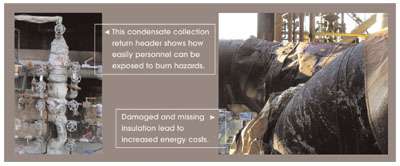
Brian Niemi of Dupont Engineering Services (DES) conducts insulation appraisals for various clients. At one chemical plant, DES identified approximately 11,000 details (places requiring insulation replacement or repair), with a total area of 45,000 square
feet. This included many valves and flanges that had been left uninsulated, resulting in enormous unnecessary heat loss and safety hazards (due to the high temperatures, which can cause burns). The total estimate to replace this insulation was about $2.2 million, or $200 per detail, including costs for removal and disposal of old insulation, new insulation materials, labor to install, scaffolding where necessary, and other ancillary costs.

Since this facility normally spends only $300,000 to $400,000 annually for insulation maintenance, the $2.2-million estimate was more than the facility owners were prepared to spend at one time. Consequently, DES prioritized the details in terms of heat loss (a function of the process temperature, the area of the detail, and the condition of any existing insulation). Facility management was then able to focus on the work that would save the greatest amount of energy before moving on to the details, which would give slightly less bang for the buck. While it would have been ideal for all 11,000 details to be addressed immediately, the reality is that the facility owners did not have sufficient resources, such as an on-site maintenance crew, and they did not have access to all areas at the same time. By prioritizing the work, facility management got all of the work done over time.

In one chicken-processing facility, DES surveyed the insulation on pipes that handled liquid fat, which would clog the pipes if it solidified due to low temperatures. Clogged pipes had posed a problem at the facility in the past. In this case, DES recommended that a heat-trace system be added to the pipes, with sufficient insulation thickness to limit heat loss and maintain the chicken fat in a liquid state. The economics were straightforward: Replace the insulation with new insulation, and keep the plant operating without interruption. The consequences of insulation failure were simply too great to allow it to happen.

Niemi notes that in some facilities with extensively degraded insulation, DES may recommend a high compressive strength insulation as a replacement for lower compressive strength material. For example, where horizontal pipes are frequently stepped on, resulting in damage to a softer insulation with thin aluminum jacketing, DES may recommend the use of either calcium silicate or expanded perlite insulation with thicker steel jacketing. DES’ energy analysis details the energy savings that result from this insulation system upgrade.

CUI vs. Energy Savings

Many industrial facilities—particularly oil refineries and petrochemical plants located near the ocean or a sea, or in areas where it rains a lot—suffer from both CUI and energy waste when insulation becomes damaged. When insulation systems age or become damaged, the caulk sealant cracks and the metal jacketing can open up gaps where rainwater—which may contain salt—intrudes. If the insulation is an absorbent type and the service temperature is relatively low (below 300°F), then CUI can result. The heat loss from wet insulation may be as much as 10 times that for dry insulation. This can be a constant battle at older facilities because the caulk used to seal metal jacketing embrittles with time, and the metal jacketing itself may get dented, opening gaps and admitting water.

To prioritize maintenance work at refineries, petrochemical plants, and chemical plants, owners typically perform a risk assessment of the piping and equipment. These assessments help prioritize the most important items from the perspective of plant operation and/or plant safety. This risk assessment can be used to identify those areas where insulation needs to be repaired or replaced sooner rather than later since problems, such as CUI, can result in a partial facility shutdown or, worse, in a pipe or equipment leak.

To mitigate CUI, many refinery owners apply immersion-grade coatings to all piping and equipment that operate continuously at temperatures below 300°F. Some owners also require the use of non-absorbing insulation materials for all service temperatures. While the practice of using non-absorbing insulation is not prevalent everywhere, it is becoming increasingly common at facilities located along the Gulf Coast.

With today’s high energy costs, which make up approximately half the operations and maintenance costs at a typical refinery, maintaining insulation is a matter of economics. However, damaged insulation does not usually stop a facility from running. Operators simply increase the heat input to maintain process temperatures as required. Many Gulf Coast refineries have had to increase the heat input during and immediately after heavy rains to compensate for water absorbed into the insulation at their facilities. One oil company engineer notes that it can take at least 3 days to dry out absorbent insulation following heavy rains at the company’s Gulf Coast refineries. So even for pipes and equipment operating at temperatures above 300°F, where CUI is less likely to occur, energy waste from wet insulation is always a concern with water-absorbing insulation.

Using non-absorbing insulation materials is one approach to preventing wet insulation and CUI. Another approach is to add a chemical inhibitor to the absorbent insulation during manufacturing. Such chemical inhibitors reduce the probability of corrosion by inhibiting the corrosive effects of chlorides from saltwater and other sources. Insulation with chemical corrosion inhibitors is available in the marketplace.

A new technology that helps avoid CUI when using absorbing insulation materials is self-adhering laminate jacketing—thick tape that comes in 36-inch widths to match the pipe insulation width. The jacketing can be effectively sealed to itself with overlaps along the lap joints and with a minimum of 4-inch-wide, self-adhering tape—of the same material as the jacketing—applied at butt joints, junctions, and penetrations. Self-adhering laminate jacketing requires minimal caulk sealants and is available in weather-resistant, chemical-resistant forms. Since it uses only a thin-coated aluminum foil as opposed to aluminum sheet, laminate jacketing also uses much less aluminum, which has skyrocketed in price over the past few years. The laminate jacketing is flexible and dent-resistant. Since the adhesion of the material to itself is so tight, this new technology promises to be an effective way of keeping water from intruding into absorbent insulation materials on above-ambient applications.

How Do Power Plants Handle Insulation?

Electric power plants’ number one priority is to produce electrical power at full capacity. More than half of U.S. power plants are fueled with coal, a relatively inexpensive fuel compared to heating oil or natural gas. It is almost always pulverized first; these plants are therefore called pulverized coal (PC) plants. Approximately 20 percent of U.S. electrical power comes from nuclear plants, which also use a relatively inexpensive fuel—usually enriched uranium. The role of insulation in these nuclear plants is to keep the operation running in a cost-effective, clean, and safe way.

Replacement or addition of insulation at power plants is usually part of a larger project, not part of an ongoing maintenance program. For example, when a plant adds certain air-quality control systems (AQCSs)—either scrubbers or selective catalytic reducers (SCRs)—boilers must be converted from operating at positive pressure to operating at negative pressure. This is done by using large suction fans to blow the polluted flue gases through the AQCS. First, the lagging and insulation must be removed. (The insulation is generally discarded, but the lagging may be reused.) After the structural retrofit, new insulation is installed onto the boiler sidewalls. This is typically a mineral fiberboard like the original insulating material. However, in some cases, the fiberboard is replaced by a pneumatically applied mineral fiber with a wet, uncured binder that can be more quickly blown and adhered to the irregular surfaces of the sidewalls before the lagging is reinstalled. In either case, the insulation is new.

PC power plants will continue to be retrofitted with new scrubbers and SCRs until all are compliant with the Clean Air Act. In the process, the boilers typically require structural reinforcement and insulation retrofit. This leads electric utilities to reinsulate boilers with insulation that will endure in the expected environment of high temperatures, vibration, and fly ash. It behooves utilities to assure that boiler insulation performs over time.

While there is some evidence of deteriorated mineral fiber insulation on boiler sidewalls, power plant owners can avoid many future problems by specifying the systems correctly in the first place. For example, fly ash gets all over everything at a PC power plant. Over time, it can get into the mineral fiberboards from the back side and saturate the boards. The weight of the fly ash, combined with boiler vibration, can accelerate insulation degradation. An effective way to avoid this problem at PC power plants is to add aluminum foil laminate on the hot side of the mineral fiberboard. Adding the foil increases the material costs, but extends the life and performance of the insulation boards.

Pipe insulation at PC power plants is usually indoors and so does not have water to soak up except when insulation jacketing is hosed down to remove the buildup of fly ash on the lagging and jacketing. In those cases, utilities try to prevent problems by ensuring that the jacketing lap joints are facing down and the seams are caulked.

Maintenance of Below-Ambient Applications

There are a variety of different types of ducts, pipes, and equipment that operate below ambient temperature. The primary purpose of the insulation in these cases is to prevent surface condensation and reduce energy use. The cost penalties of surface condensation vary from application to application, but having condensation within the insulation can be severe. For example, in typical indoor commercial heating, ventilating, and air-conditioning (HVAC) applications, condensation can get into electrical equipment, run onto floors creating a safety hazard, or damage building materials. Wet insulation, in turn, performs poorly, possibly leading to condensation on the surface of the jacketing and energy waste. It can also increase the load on mechanical cooling equipment, possibly resulting in a compressor getting overloaded and burning out. In industrial applications, condensation may corrode the carbon steel onto which it drips, increasing maintenance costs. Overall, water condensation will create all sorts of costly operational headaches that the facility owner should make an effort to avoid.

Porous insulations, such as mineral fiber insulation, can be used on below ambient applications as long as they are covered with a low-vapor-permeance jacketing, referred to as a vapor retarder. It is prudent to use these systems on air-handling ductwork down to a moderate temperature of about 50°F. A drawback to this type of insulation system is that, over time, holes or other imperfections may develop in the jacketing and could allow water vapor intrusion that then condenses on the cold surface, resulting in wet insulation. Since such holes can easily be patched with self-adhering tape, periodic inspections should be conducted to identify and repair these spots before condensation problems develop.

For chilled temperatures below 50°F, such as chilled water pipes, and/or for a relative humidity (RH) above 90 percent, a more robust system—either from an overall low water vapor permeance perspective or a wicking capability—is required. A lower permeance jacketing should ideally be a zero-vapor-permeance material (called a vapor barrier) that is extremely well sealed to itself to prevent any water intrusion. These zero-permeance jacketing materials include both sheet plastic and a self-adhering laminate. For wicking capability, the wicking type of fibrous pipe insulation can provide performance free of vapor condensation problems on chilled water lines down to about 40°F in less than extreme humidity conditions. Both types of systems, however, must be well maintained to avoid water condensation problems.

When well maintained, closed cell foams, which have low vapor permeability values, are well suited for below-ambient systems with minimum maintenance problems. The thicker the insulation, the lower the vapor permeance (vapor permeance equals vapor permeability and thickness). In general, these closed cell foams perform well with chilled water systems and high relative humidity. However, all seams and butt joints must be well sealed. Breaks in the seals and gaps in the closed cell foam insulation material will allow water vapor to intrude; this water vapor, in turn, will condense. This condensation may take more time to develop than with a porous, fibrous insulation material, but with a constant high vapor pressure, it will eventually result in water accumulation in the insulation. This will compromise its thermal performance and lead to the types of condensation problems already mentioned.

For outdoor applications where weather protection is required and/or for very high vapor pressure differential indoor conditions, these closed cell insulation materials perform best when combined with a zero-permeance vapor barrier (as opposed to a vapor retarder). In an actual application, if such a vapor barrier jacket is used, it must be sealed completely to prevent water intrusion or water vapor condensation within the insulation. Certain sheet plastic materials and the new self-adhering, laminate jacketing materials—mentioned earlier for high-temperature systems—can simultaneously provide both weather and vapor barrier protection for below-ambient systems.

For extremely high humidity conditions combined with low operating temperature systems, located either indoors or outdoors, a zero-vapor-permeance system with redundancy will perform best. This can be achieved with at least 2 inches of inorganic cellular insulation covered with the appropriate vapor barrier jacketing. The jacketing should have zero vapor permeance, and the 2 inches of inorganic cellular insulation will have near zero vapor permeance. Further, this type of cellular insulation will not absorb water, should it somehow condense against the insulation. Such an insulation system, however, still requires maintenance to prevent moisture condensation over time. The jacketing must be periodically inspected for holes, and the inorganic cellular insulation must be periodically inspected for any physical damage that might reduce its thickness, leading to surface condensation.

Regardless of the insulation type or low-vapor-permeance jacketing, the insulation system for below-ambient applications should be well designed and well maintained. In most cases, if the insulation system is ignored and/or abused, eventually water condensation problems can occur. The penalty to the owner can be water damage to stored materials, building materials, and equipment, as well as mold growth, energy waste, and cooling system overloads.

The Bottom Line

Well-maintained thermal insulation reduces heat loss and saves money. Damaged insulation saves less money, and missing insulation saves no money at all. With crude oil at about $65 per barrel, delivered heating oil at $2.50 per gallon, and delivered natural gas at more than $10 per million Btus, every day spent ignoring damaged or missing insulation is another day of paying the high cost of wasted energy.

Two years ago, crude oil was trading at about $50 per barrel. Since then, crude oil has sold for as much as $77 per barrel, and now gasoline is selling for a record average price of $3.20 per gallon. People keep waiting for energy prices to drop, but even when prices drop for a few months, they jump up again to an even higher level than they were previously. This is no time to waste energy. Thermal insulation maintenance is easy and inexpensive when compared to energy prices. Those in the insulation industry need to help the managers of industrial facilities understand the economics of insulation.

Whether the motivation is to reduce energy use, to prevent CUI, or to maintain boiler temperatures, when it comes to thermal insulation and its maintenance the old saying, “Pay now or pay later,” is appropriate. The cost of not maintaining insulation correctly is too great for facility owners to ignore.

In an increasingly competitive global marketplace, few things remain constant. Business leaders who recognize this succeed by adapting quickly to market forces to gain the competitive advantage in their industries. During the more than 40 years former chief executive officer (CEO) Jack Welch spent at General Electric (GE), he focused on reducing inefficiency to gain the competitive advantage. This management strategy has been embraced by many modern-era executives. However, accomplishing that competitive edge may take a wide variety of different approaches by today’s plant managers. Some might subscribe to the “slash and burn” approach to make this quarter’s financials appear strong. Forward-thinking managers might seek out more strategic, long-term answers.

Large companies, as well as individual facilities within strong, successful companies, are all faced with unique challenges. The different management styles employed are usually quite apparent. Often, the focus—or lack thereof—is evident at the main gate. The outward appearance of a large manufacturing plant sends a loud message to visitors, employees, and the entire community about just how committed its management is to safeguarding the stakeholders’ value.

A refinery manager once lectured his entire staff after a serious incident had occurred in the facility. “We should all consider it a privilege that the neighbors permit us to operate in their backyard, and we should do everything in our power to safeguard that privilege,” he said.

The roles of the plant maintenance engineer, operations engineer, and facility energy coordinator are all critical. But often the goals of the maintenance, operations, and engineering groups are not in lock-step with one another because the demands on each group are always changing. The utilities engineer, energy coordinator, and operations supervisor know what the real opportunity cost of not maintaining the equipment in a safe, reliable, and energy-efficient condition would be. These positions greatly influence the bottom-line performance of a profitable plant. Reduced process unit throughput due to boiler or steam-system unreliability directly affects the performance of the entire plant. Facilities’ Energy Intensity performance accounts for 50 to 55 percent of the annual operating expenditures in a typical 160,000-barrel-per-day (b/d) refinery.

Every 2 years, the refining industry receives performance data from the latest Solomon Associates’ study. Year after year the data show that, to succeed, an energy management program must be built on a base of solid maintenance practices, and realistic reliability and inspection details. How the various groups work to achieve overall first or second quartile Solomon performance in the areas of energy and maintenance differs from company to company, and also from plant to plant within a specific company. Sound maintenances practices include a “plan, do, check, act” dictum and focus the facility on sustained improvement.

Periodic process-unit assessments play a key role in this program. That approach must become part of the culture to ensure results. The ideal maintenance plan is integrated with the energy goal of the facility; it does not include a “find, fix, and move on to the next emergency” way of thinking. Several plants have actually seen their annual Environmental Integrity Index (EII) scores diminish as a result of aggressive energy programs that featured a significant emphasis on insulation and refractory system improvements. The Sunoco refineries in the northeast United States typically demonstrate plant EIIs in the low 80s, which equates to 80 percent of the allotted “standard energy” consumption permitted. That is pacesetter-level performance.

Sunoco has a well-supported and quite mature insulation program. Since 1999, when the company began doing unit insulation assessments, Sunoco has allocated more than $6 million in its capital energy and operational expenditure (OPEX) budgets to address insulation system deficiencies. That level of spending does not go unnoticed at individual plants. Senior management has come to expect the 80-percent-plus return on investment (ROI) that a typical insulation upgrade project returns.

“Take care of the steel, and it will take care of you” is an old saying many workers trust. This also applies to the insulation and refractory that protects pipe and boiler casings from premature failure. Sam Schell, a boiler specialist and president of Sesco, Inc., says there are three “goods” that come from proper insulation:

  • It is “good” for saving British thermal units (Btus) and dollars.
  • It is “good” for the environment (lower emissions).
  • It is “good” for the plant’s bottom line (profitability).

Maintaining a facility’s infrastructure and achieving a pacesetter-level energy program go hand in hand.

Too often, maintenance and energy-efficiency goals are not aligned and are even offsetting. The article “Whose Line Is it Anyway?” from the December 2005 issue of Insulation Outlook should be required reading for plant managers and facilities engineers. In it, an example of a rubber plant illustrates much of what is deficient in major industrial facilities. The correlations drawn in the article work for just about any type of manufacturing plant.

The ever-increasing energy prices in recent months have been hard to ignore. It is impossible to predict whether oil will ever return to the $25-per-barrel (bbl) level, or whether natural gas will drop below $6 per decatherm (Dth). American industrial concerns are truly being put to a test. They can no longer wait until the government arrives to bail them out of a tight jam.

Each industry must adopt a sound energy program specific to its needs. It would be wise for large industrial process plants to focus on the following factors:

  • Achieving optimal combustion efficiency in heaters and boilers
  • Maximizing process–to–process and process–to–boiler feed water (BFW) heat transfer
  • Minimizing steam and condensate losses, and venting
  • Eliminating flaring of process gases
  • Installing and maintaining improved process-control systems
  • Maintaining and upgrading insulation and refractory systems
  • Monitoring, measuring, and maintaining equipment
  • Targeting a 3- to 5-percent annual energy reduction goal and striving to achieve that goal
  • Researching new technologies
  • Spreading the excitement of meeting set goals to all involved, including employees, neighbors, contractors, vendors, consultants, and stockholders

These goals may seem like pie in the sky to many plant supervisors, but they are not. Solomon Associates advises the entire refining industry of what is required to achieve pacesetter-level performance, and each of these areas of focus is within reach for many plants. It does take education and commitment from the whole plant community, including the maintenance area. It also requires a “champion” of sorts to carry the banner forward, especially when money is scarce or other resources are few. Many companies have such a champion, but many more lack that level of commitment. In the National Insulation Association’s (NIA’s) National Insulation Training Program (NITP), it is emphasized that keeping the message clear and concise to management and all of the plant population is the task of a program champion.

Insulation may not get the respect it deserves, but it is a simple, cost-effective way to save energy and money. Plant engineers and other facility managers can start by performing a small, focused insulation assessment. There is a good case to be made for installing or maintaining insulation systems at industrial facilities.

Figure 1
Figure 2

Insulation is a powerful resource when designed, applied, and maintained properly; yet the technology is often forgotten or ignored. The National Insulation Association (NIA) recently conducted a survey of more than 160 industrial plants and manufacturing, engineering, and architectural firms. The survey found the following:

  • Most had no idea of the payback period or rate of return for using insulation, and they did not know of a method for quantifying costs versus savings.
  • Many acknowledged that numerous areas of insulation were in serious need of repair.
  • The majority did not understand that insulation has a real environmental “tie-in.”
  • Some did not consider additional insulation “necessary” (they felt their plants were working fine).
  • Many could not relate corrosion under insulation (CUI) to insulation.
  • Most acknowledged their specifications were outdated.
  • Many confirmed that they did not have a dedicated job function that addressed insulation specifications, or anyone on staff who was considered the “insulation champion.”
  • Many did not think of insulation as a “system” that requires any special design review or technical consideration.

The survey confirmed that insulation gets little respect, and it formed the basis for a major industry education and awareness initiative.

Focusing on Benefits

In many cases, the benefits of insulation are invisible, but long-lasting. The technology itself is not mysterious. It may be misunderstood and underappreciated due to lack of knowledge, but calculating its operational benefits and return on investment (ROI) can be relatively simple.

An insulation system does not have moving parts, bells and whistles, computer chips, or fancy gauges—and it is certainly not “sexy”—but it is a time-tested and proven technology that often can provide an annual ROI of more than 100 percent. It may be that insulation is often overlooked, undervalued, and forgotten precisely because its principles are simple and not necessarily revolutionary. Now is the perfect time to start thinking about this valued technology differently.

The citrus industry is a good place to start. This article will look specifically at mechanical insulation systems—those used for piping, equipment, vessels, ducts, boilers, and other similar mechanical equipment and piping applications.

Energy Conservation

Energy is one of the most costly components in managing a manufacturing facility and its processes. Reducing energy consumption reduces cost—a constant objective for most companies and within the citrus industry. If not at the top of the list, it is certainly one of the top ten corporate initiatives, along with safety, quality, shareholder value, and the environment.

Energy is required for both sides of the temperature spectrum. It takes energy to air condition space and/or chill or freeze products, yet energy conservation often is only discussed for applications involving heat. That should not be true for the citrus industry, however.

Insulation can be one of the easiest, fastest, and least costly technologies for reducing energy costs, but quite often it is the last option considered. Some insulation systems were designed for the cost of energy in 1977, rather than in 2007. The ROI with an insulation initiative usually exceeds expectations. Many times the return is realized in less than 1 year, meaning insulation can provide a faster return than many of the fancier and more visible energy-efficiency investments.

It is interesting to review the process for determining the design criteria for insulation on new construction or expansion projects versus the maintenance process, and how priorities are established. In new construction, the primary driver in determining the insulation system is the process. Very seldom are the insulation system and thicknesses examined from an energy conservation perspective. Once the plant is operating, plant management is unlikely to compare actual results to original expectations.

What do plants lose by not maintaining insulation systems in a timely and correct manner? It has been estimated that between 20 and 30 percent of all installed mechanical insulation is either damaged or missing. The citrus industry’s numbers were within or even above that range.

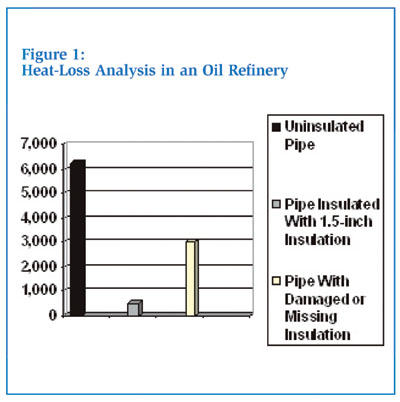
Recently, a heat-loss analysis was completed on the “typical” insulated piping systems within an oil refinery. The analysis illustrated the difference between the worst-case scenario (uninsulated piping), what could be obtained if all piping were insulated, and the case of reality where 21 percent of the pipe insulation was damaged or missing (see Figure 1). Since this analysis was completed, it has been compared to other industry segments—both for hot and cold applications—and determined to be a representative illustration. With 21 percent of the pipe insulation missing or damaged, only 52 percent of the potential heat-loss savings in British thermal units per hour (Btus/hr) was obtained. This is a big number, even if you discount it by 50 percent. Why does this condition exist when it can be corrected to provide a significant return on the capital employed for maintenance?

The typical oil refinery example showed 400,000 lineal feet of piping missing or with damaged insulation, which in turn equated to 5,800 barrels of oil lost per day. At $55 per barrel, that is $319,000 lost per day. These are huge numbers in any industry!

Other examples can be seen in the findings of the Save Energy Now (SEN) program, part of the Department of Energy’s (DOE’s) Industrial Technologies Program (ITP). SEN is part of a national campaign by the DOE to help manufacturing facilities reduce energy and operating costs, and operate more efficiently and profitably. Independent specialists trained to use sophisticated software assessment tools and who have passed a rigorous qualifying exam visit plants and identify immediate and long-term opportunities for improving energy efficiency and bottom-line results. Mechanical insulation is one of the many opportunities examined. (To learn more about the SEN program and see the outcome of one such energy assessment, please visit www.insulation.org/articles/article.cfm?id=IO070703.)

Here are a few mechanical insulation statistics derived from the SEN energy assessments:

  • 51 percent of the reports specifically mentioned insulation.
  • 63 percent of the insulation opportunities referred to “missing, damaged, or uninsulated areas,” while 37 percent referred to insulation upgrade or improvement opportunities.

Of the insulation references in the reports:

  • 81.5 percent were classified as near-term opportunities.
  • 14.8 percent were classified as medium-term opportunities.
  • 3.7 percent were classified as long-term opportunities.

Savings from insulation were, in many cases, identified in dollar terms—some approaching $1 million per year. Other ROI opportunities could be realized in fewer than 4 months.

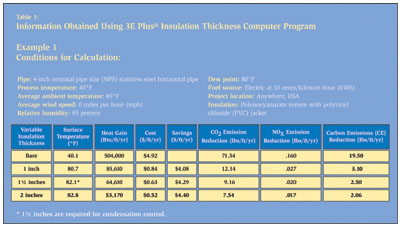
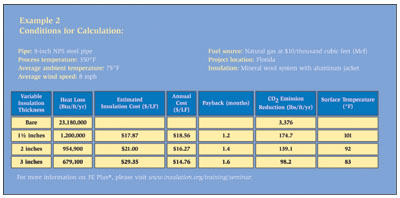
The specific mechanical insulation tool that was used by the SEN program assessment specialists was the 3E Plus® Insulation Thickness Computer Program from the North American Insulation Manufacturers Association (NAIMA). Figures 2 and 3 provide two examples of information obtained using the program.

Energy conservation, with the use of properly designed, installed, and maintained mechanical insulation in the citrus industry—for a hot or cold application—is an opportunity that should not be overlooked. It is an investment that may have few rivals from a return perspective.

Figure 4 provides a graphic overview of the cost of energy compared to the cost of insulation and to the total cost.

Process Control

For process control, mechanical insulation is typically “engineered” into the process. Whether dealing with a fluid, air, or gas, the goal is to leave Point A at one temperature or pressure and arrive at Point B at another, or to be stored at a given temperature. Fluctuating temperatures can cause significant problems in manufacturing quality and productivity, so insulation is a major component of the equipment and manufacturing design process. However, designers do not always understand the various insulation systems available, the mechanics required to determine the correct insulation system, or material properties for specific application. Often, the insulation system or thermal value is determined by what worked in the past. In the industry, this is referred to as “dusting off the old specification.” Unfortunately, the reality is that insulation systems are rarely engineered.

Recently, the wrong old specification was pulled from the shelf and a hot insulation system was specified for a −100°F application. This is a disaster waiting to happen—a perfect opportunity for others to take advantage of the wrong specification in the bidding process.

The knowledge base of mechanical insulation systems at the engineering, architectural, and facility-owner level over the last 15 to 20 years has decreased. This is a by-product of the corporate world’s drive for profits, as well as right-sizing and multitasking objectives. The insulation field is not attracting specialization in the engineering, architectural, or maintenance arenas. This reduced knowledge base has led to the under-utilization or improper use of mechanical insulation in many applications.

With process design, selecting the right insulation system and determining the correct insulation thicknesses and values for the design conditions can be critical to the manufacturing process. This is especially true in the citrus industry, which requires design criteria that will:

  • protect against bacteria development;
  • address work areas that are subject to continual washdown;
  • insulate piping and equipment subject to dual operating purposes;
  • prepare for internal and external inspections, such as those performed by the Food and Drug Administration (FDA); and
  • provide freeze protection.

Figure 5 shows one of the design graphics or “plates” from the Midwest Insulation Contractors Association (MICA). This is an integral part of the insulation design guide contained in MICA’s National Commercial & Industrial Standards Manual.

One problem in the citrus industry (and others) is that insulation systems that have been designed, selected, and installed are not being maintained in a timely and proper manner. With improperly maintained insulation, process temperatures and pressures take more energy to maintain. This can affect throughput and costs. A simple but effective example of this is the air-conditioning system in a house or office: If the duct insulation is damaged or missing, the air-conditioning equipment cannot perform as designed.

Process control, quality, and product throughput are major considerations in the citrus industry. Properly designing, installing, and maintaining mechanical insulation systems should be an integral part of both the initial design and operational maintenance management plans.

Condensation Control and Mold Prevention

Moisture is an enemy. If an insulation system is not properly designed to maintain the surface temperature above the dew point, condensation will develop. This is a real-world problem that—if not corrected—can lead to other problems. Examples of this include work hazards, due to moisture on the floor, and the development of mold.

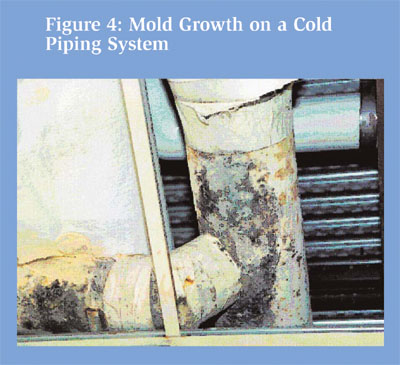
Mold is a serious problem in the work environment. Insulation cannot stop mold from developing. However, it certainly helps eliminate moisture due to condensation, which must be present for mold to develop. Prevention is less costly than cure. If the insulation system is not designed, installed, and maintained correctly to prevent condensation under realistic adverse conditions, condensation can occur. This problem should be addressed in an aggressive, timely manner.

Figure 6 is an example of mold growth on a cold piping system in an uncontrolled utility space.

Moisture Intrusion and Corrosion Under Insulation (CUI)

Moisture intrusion in an insulation system can lead to many problems. By spending some money early on, in a managed approach, one can avoid spending a lot of money later in a reactionary mode.

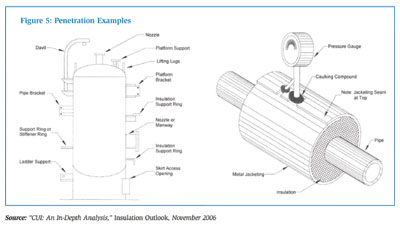
How does moisture penetrate an insulation system? The primary moisture sources are rainwater, water from a washdown, piping leaks, and water from condensation within the insulation system (especially on dual operating systems). The most likely areas of intrusion are at penetration points, such as gauges or attachments (see Figure 7). If either the integrity or exterior of the insulation system is not installed and maintained correctly, moisture will more than likely penetrate the system. The rate of moisture migration and/or wicking varies depending on the insulation system, the temperature of the operating system, and other conditions.

Moisture intrusion can negatively affect all aspects of the insulation system. Thermal values can have a direct impact on process control, energy cost, condensation control, safety, and the potential of mold development—not to mention the potential for CUI.

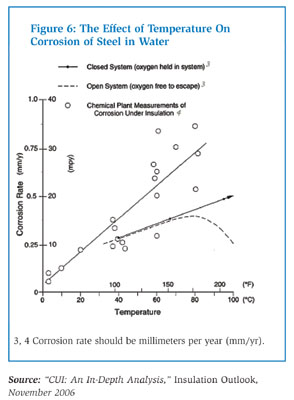
CUI is not new, and in many circles it is well understood; yet it costs industry millions of dollars annually. Unfortunately, the citrus industry is included in those statistics. It is generally accepted that carbon steel operating between 25°F and 300°F is at the greatest risk. Corrosion occurs at those points of water entry into the insulation where the temperature is below 300°F, and the piping and equipment are idle. Stress cracking of stainless steel under insulation is primarily manifested by a combination of water and external sources of chlorides. Carbon and stainless steel corrode because moisture is present. Insulation can provide an annular space or crevice for water retention with full access to oxygen and other corrosive media. Insulation material may wick or absorb moisture, and increase or accelerate the corrosion rate. With the right conditions, CUI is possible under all types of insulation.

If insulation does not directly cause corrosion, could maintaining the integrity of the insulation system minimize CUI and save money in the long term? To answer that question, life-cycle cost analysis should be employed. Without question, removing an insulation system, replacing piping and equipment, and installing a new insulation system is an expensive process. It is possible that an aggressive maintenance program, combined with regular inspections, could be less costly over time.

Reduction of Greenhouse Gas Emissions

Reducing energy consumption by properly using and maintaining mechanical insulation can reduce greenhouse gas emissions currently being released into the atmosphere.

A 1998 study of mechanical and building insulation in commercial buildings, excluding roofing, found that insulation saved 211 billion pounds of carbon dioxide (C02) from being emitted into the atmosphere each year. This benefit is not considered in many applications, but what if it was included in ROI calculations or used in the decision-making processes for a plant? Answers will vary depending on the facility, carbon credits (if applicable), and regulatory requirements. However, the public relations benefit cannot be ignored. Besides, it is the right thing to do.

Personnel Protection

Protecting workers from coming in contact with hot or cold surfaces, and from excessive equipment and other workplace noise, should be a focus of any safety program; yet insulation is seldom, if ever, on the agenda for safety meetings.

The standard is that a surface temperature above 140°F should be insulated for personnel protection, but is this practical and effective? Lowering a company’s experience modification rate (EMR) is a primary objective safety programs. The lower the EMR, the lower the insurance costs. Insulation may not be able to lower the EMR, but it can be an integral part of an accident-prevention program.

The role of mechanical insulation in providing a safe work environment is seldom considered. Far beyond the impact on a company’s bottom line is the direct impact on the well-being of its employees. Can you think of a more important topic or a better reason to think about insulation differently?

Improving the Workplace

Insulation is a major component in improving facility occupant comfort and thus increasing productivity. Many studies confirm that occupant productivity increases when indoor air quality, temperature, and sound are managed within an acceptable range on a consistent basis. Insulation’s thermal and noise-absorption properties thus can provide a real ROI in the workplace.

Sustainable Design Technology

Sustainable design is used more every year. Mechanical insulation’s role is normally included in discussions related to heating, air conditioning, or other equipment. In some cases, the size of the equipment required has been reduced due to the use of increased insulation values. Capital investment is reduced, and the return is increased. That is a winning combination.

Many companies are pursuing sustainable design certification for buildings and plants. This is an effective way to measure success in sustainability. However, thinking green and employing that philosophy are just as important, if not more so, than attaining certification. Thinking, promoting, and selling green can be an advantage within an organization, with customers, and certainly within the larger community.

Insulation: A Powerful Technology

The most obvious benefits of insulation are energy conservation and process control. While those are at the top of the list, there are other important advantages to properly using and maintaining insulation. The combined results make insulation a powerful technology. The need and value of a properly designed, installed, and maintained insulation system is more important today than it ever has been. There are educational programs, software tools, and human resources available that can help explore the many benefits that mechanical insulation can provide. Increased knowledge of mechanical insulation can provide, in many cases, an unrivaled ROI opportunity in the new construction and maintenance arenas. It also can help to reduce our dependency on foreign energy sources, protect our environment, and improve our economy.

The citrus industry is a major user of mechanical insulation, yet it is also a prime example of an industry that has not used mechanical insulation to its full potential. By thinking differently about mechanical insulation and the value it can provide, insulation end users in various industries can take advantage of the power of insulation.

REFERENCES
American Society of Heating, Refrigerating and Air-Conditioning Engineers, Inc.—2005 ASHRAE Handbook, Fundamentals I-P Edition, Chapter 26, Insulation for Mechanical Systems • Midwest Insulation Contractors Association—National Commercial & Industrial Insulation Standards, 1999 Fifth Edition • North American Insulation Manufacturers Association—3E Plus® Insulation Thickness Computer Program, Pub. C12128/05 and Software Program • National Insulation Association—Insulation Outlook, November 2006, “CUI: An In-Depth Analysis” • National Insulation Association—National Insulation Training Program (NITP) • National Insulation Association—“The Power of Insulation” and “Insulation: The Lost or Forgotten Technology” presentations • The U.S. Department of Energy (DOE)—Industrial Technologies Program (ITP), Save Energy Now (SEN), Partner Results

Figure 1
Figure 2
Figure 3
Figure 4
Figure 5
Figure 6
Figure 7
Figure 8

Proper use of insulation goes a long way toward saving energy, but those involved in the energy industry know that more efforts are needed to make a lasting impact. Reducing greenhouse gas emissions is one of the key steps to avoiding catastrophic climate change worldwide, yet there are hundreds of coal-fired power plants on the drawing boards in the United States. Seventy-six percent of the energy produced by these plants will be used to operate buildings. Architecture 2030—a non-profit, non-partisan, independent organization established in 2005 and sponsored by New Energy Economy—has shown that buildings are responsible for almost half (48 percent) of all the energy consumption and greenhouse gas emissions annually in the United States; globally, the percentage is even greater.

Stabilizing emissions in the building sector and reversing them to acceptable levels over the next 10 years will be critical. This will hold global warming to approximately a degree centigrade above today’s level. But how can this be accomplished? Architecture 2030 has issued The 2030 Challenge to the global architecture and building community to accomplish this impressive goal. The 2030 Challenge provides the following targets:

  • All new buildings, developments, and major renovations should be designed to meet a fossil-fuel, greenhouse gas–emitting, energy-consumption standard of 50 percent of the regional (or country’s) average for that building type.
  • At a minimum, an equal amount of existing building area should be renovated annually to meet a fossil-fuel, green house gas–emitting, energy-consumption performance standard of 50 percent of the regional (or country’s) average for that building type.
  • The fossil-fuel reduction standard for all new buildings should be increased in the following increments:
    • 60 percent in 2010
    • 70 percent in 2015
    • 80 percent in 2020
    • 90 percent in 2025
    • Carbon-neutral by 2030 (using no fossil-fuel, greenhouse gas–emitting energy to operate)

These targets may be accomplished by implementing innovative sustainable design strategies, generating on-site renewable power, and/or purchasing (20-percent maximum) renewable energy and/or certified renewable energy credits.

These targets are not out of reach. Most developments and buildings can be designed to use only a small amount of energy at little or no additional cost through insulation, proper planning, siting, building form, glass properties and location, material selection, and by incorporating natural heating, cooling, ventilation, and day-lighting strategies. The additional energy necessary to maintain comfort and operate equipment can be supplied by renewable resources, such as solar, wind, biomass, and other viable carbon-free sources.

To learn more about The 2030 Challenge, please visit www.architecture2030.org. Look for a more in-depth article on the challenge in the August issue of Insulation Outlook.

This article was reprinted with permission from Architecture 2030. Edward Mazria, American Institute of Architects (AIA), is a senior principal at Mazria, Inc., an architecture and planning firm in Santa Fe, New Mexico, and founder of Architecture 2030. He is author of The Passive Solar Energy Book, senior analyst for the Southwest Climate Council, and adjunct professor at the University of New Mexico. He speaks nationally and internationally on the subject of climate change and architecture.

Many important factors have changed the landscape of the energy management industry and the use of insulation. These factors include the following:

  • The Energy Policy Act of 2005, which requires all federal facilities to reduce energy consumption 2 percent per year and provides tax deductions to commercial building owners who improve the efficiency of the building envelope
  • Volatility in energy prices, which encouraged the adoption of energy-efficiency technologies and insulation as a strategy to increase profitability
  • Cities and states that have developed programs to reduce greenhouse gases and encourage the use of energy efficiency and insulation

How do building owners and managers, facility managers, and utility professionals keep abreast of the latest energy management strategies? Training and certification are the key elements for success in the energy management industry.

Continuing education is critical for energy engineers and other energy managers, especially with regard to industrial and mechanical insulation. It is very important to understand how to properly engineer, apply, and maintain insulation systems. Insulation training programs can provide professionals across all market segments and job functions with a working knowledge of insulation and insulation systems design. Taking advantage of educational opportunities broadens the knowledge base for end users, and it makes them more effective and successful in their careers.

The Association of Energy Engineers

The Association of Energy Engineers (AEE) was founded in 1977 as a nonprofit professional society that promotes the scientific and educational aspects of the energy industry. In the 1970s, the professions of energy engineering and energy management were new concepts. The AEE helped define the important functions energy engineers and managers perform, playing a key role in the professions’ development. One of the AEE’s first tasks was to create an authoritative journal that would guide energy engineers in applying new energy-efficient technologies and applications. The Energy Engineering Journal was born out of this need; it is edited by noted authority Dr. Wayne Turner.

The AEE recognized that energy engineers need both technical and management skills. Energy engineers need a broad understanding of fuels procurement, commodity and risk management, and organizational and motivational skills. Strategic Planning for Energy and the Environment, also edited by Dr. Turner, was developed to meet this need. To help energy engineers meet the challenges of power reliability and the development of new energy supplies, the Cogeneration and Distributed Generation Journal was launched; it is edited by Dr. Steven Parker.

Today, the AEE’s ever-growing network includes 8,000 members in 77 countries, with local chapters in 69 cities across the United States. The AEE presents numerous training and certification programs to help energy professionals reach their full potential.

Continuing Education Programs

The AEE offers a wide range of training options. Each training course offers continuing education units (CEUs). One CEU equals 10 professional development hours (PDHs). CEUs are important for documenting courses successfully completed. For example, in 2005, 27 states required CEUs as a prerequisite for a professional engineering license renewal. In addition, a certificate of participation is awarded for each course attended. The AEE currently offers several types of continuing education programs, as do other groups. The following are some examples of AEE programs for energy engineers:

  • Live Seminars. A wide range of courses is available in various cities across the United States. Several of these seminars are designed to prepare students for professional certification examinations. Live programs offer an optimum learning environment with ample time to interact with the instructor, as well as other colleagues in attendance.
  • In-House Seminars. Most of the live seminars, including professional certification training programs, also can be presented to employees at a company’s facility.
  • Real-Time Online Seminars (Synchronous). Students can participate in real-time seminars from the office or home using the Internet and a telephone. They communicate through a scheduled conference call with the instructor. The instructor’s PowerPoint presentation is viewed by students via the Internet connection.
  • Self-Study Online Training Seminars (Asynchronous). Students receive a workbook with training materials and examination questions. They complete the training at their own pace and can interact with the instructor and fellow students during scheduled chat sessions. After successfully passing the online examination, students receive a certificate of course completion and are awarded CEUs.
  • 24-7 Online University (Asynchronous). Course material is accessed online 24 hours a day for up to 30 days. Students who pass the online examination can print a certificate of course completion and are awarded CEUs.
  • Conferences and Expositions. The AEE offers three conferences and expositions each year. The purpose of these events is to present the latest technologies and applications from leading experts in the field. The flagship event presented by the AEE is the World Energy Engineering Congress (WEEC). The next WEEC will be held at the Georgia World Congress Center in Atlanta, Georgia, August 15–17, 2007. The conference technical presentations will address the following topics: green buildings; high-performance schools; heating, ventilating, and air conditioning (HVAC) and building systems; measurement and verification issues; and insulation as a high-performance building strategy. The conference also will cover additional topics related to the energy engineer and energy management professional. More information on WEEC 2007 is available online at www.energycongress.com.
Certification Programs

The Certified Energy Manager® (CEM®) credential is widely accepted and used as a measure of professional accomplishment in energy management. It is used industry-wide as the standard for qualifying energy professionals in the United States and abroad. It is recognized by the U.S. Department of Energy (DOE), the Office of Federal Energy Management Programs (FEMP), the U.S. Agency for International Development (AID), numerous state energy offices, major utilities, corporations, and energy service companies.

Those who attain CEM status join an elite group of 6,000 professionals serving industry, business, and government in the United States and in 22 countries abroad. These high-achieving individuals represent a “who’s who” in the energy management field.

The Business Energy Professional (BEP) program awards special recognition to professionals who demonstrate a high level of competence and ethical fitness in disciplines related to business, marketing, and energy management, as well as with laws that govern and affect energy professionals. The goal of the program is to improve energy management by encouraging energy business professionals to participate in continuing education programs.

More information on the CEM or BEP certification programs is available at www.aeecenter.org/certification.

Training Courses Incorporate the Role Of Insulation

Proper use of insulation makes good business sense because it is cost-effective and easy to apply. It provides an unmatched return on investment (ROI) in a short period of time. Energy managers and engineers who understand the proper use of insulation are better prepared to increase savings of both energy and money on each of their energy-related projects. The CEM and BEP programs provide an integrated approach for energy management, including how to properly use insulation and improve building performance.

The AEE is committed to helping energy professionals reach their potential through training and certification. More information is available at www.aeecenter.org.

The U.S. House of Representatives and Senate changed hands as control of both chambers was given to the Democratic Party after the midterm elections in November 2006. As a result, the 110th Congress that began work in earnest in January 2007 was ready to take on energy policy with a renewed vigor and sense of determination.

Fortunately, building-sector energy efficiency is not a particularly controversial energy issue, and it has champions and defenders on both sides of the aisle. In the first weeks of the 110th Congress, energy and energy efficiency were already front-and-center issues. Numerous bills were introduced that could directly or indirectly affect the insulation industry through tax incentives, funding for energy-efficient technologies, green building authorizations, and climate-change legislation. In addition, a new Select Committee on Climate Change was announced, hearings were scheduled, and strong statements from leadership filled the news media. All of this activity occurred before President Bush’s State of the Union address in late January (see “Bush’s Alternative Fuel Use Growth Initiative Represents Over $45 Billion in Capital Investment Over the Next 10 Years”) and the budget release in early February. Members of both the House and the Senate have been staking out their claims on energy issues and working to fulfill campaign promises to change the way the United States uses energy.

Key legislative initiatives of specific interest to the insulation industry already have been introduced in the Congress, with more expected in the coming months. The change in leadership in both the House and the Senate, coupled with congressional commitment to making energy a priority issue during 2007, will provide a tremendous opportunity for energy-efficiency advocates to educate policymakers about the important role that insulation plays in reducing energy use.

Key Legislation That Could Affect the Insulation Industry

Several key bills were introduced in January in the U.S. House of Representatives. These include the following:

  • H.R. 6—CLEAN Energy Act of 2007. The most important move for energy efficiency in the first month of the 110th Congress was when the House Democratic leadership pushed through the final piece of the “100 Hours” legislation, H.R. 6, by a vote of 264 to 163. Introduced by Rep. Nick J. Rahall (D-W. Va.) and others, the CLEAN Energy Act of 2007 seeks to reduce U.S. dependency on foreign oil through investment in clean, renewable, and alternative energy sources. The bill creates a “strategic energy efficiency and renewables reserve” to invest in alternative energy and to accelerate the use of clean domestic renewable energy resources and fuels; to promote the use of energy-efficient products; and to increase research for energy-efficiency and renewable technologies. Sen. Jeff Bingaman (D-N.M.), the chair of the Senate Energy Committee, has announced plans to place the bill directly onto the Senate calendar for consideration and amendment. However, Senate passage of the legislation as written is not assured.
  • H.R. 84—Energy Efficient Buildings Act of 2007. Introduced by Rep. Judy Biggert (R-Ill.), H.R. 84 establishes a pilot program, to be implemented through the Department of Energy (DOE), that will award grants to businesses and organizations for the new construction of energy-efficient buildings or for major renovations of buildings to improve their energy efficiency. The bill authorizes $10 million per year for 5 years to carry out this program.
  • H.R. 85—Energy Technology Transfer Act. Introduced by Rep. Biggert (R-IL), H.R. 85 creates a network of Advanced Energy Technology Transfer Centers that will meet needs and opportunities for increased energy efficiency in both manufactured and site-built homes, including construction, renovation, and retrofit.
  • HR 121-High—Performance Green Buildings Act of 2007. Introduced by Rep. Mike Doyle (D-Pa.), H.R. 121 requires the director of the General Services Administration (GSA) to establish a new Office of High-Performance Green Buildings, which will coordinate all federal offices, as well as a Green Building Advisory Committee. Studies conducted under this bill will include existing and new structures. The bill authorizes $4 million per year for 6 years to carry out this activity.
  • H.R. 539—Buildings for the 21stCentury Act of 2007. Introduced by Rep. Allyson Y. Schwartz (D-Pa.), H.R. 539 increases the amount of deductions for energy-efficient commercial buildings, and it extends the credit from December 31, 2008, to December 31, 2013.

The following key legislation was introduced in January in the Senate:

  • S. 6—The National Energy and Environmental Security Act of 2007. Introduced by Senate Majority Leader Harry Reid (D-Nev.), S. 6 would reduce U.S. dependence on foreign oil and unsustainable energy sources in the following ways: 1) by requiring reductions in emissions of greenhouse gases; 2) by both diversifying and expanding the use of environmentally friendly energy supplies and technologies; 3) by reducing the burdens on consumers of rising energy prices; 4) by eliminating tax giveaways to large energy companies; and 5) by preventing price gouging, profiteering, and manipulating the market.
  • S. 280. Introduced by Sen. Joe Lieberman (I-Conn.), S. 280 requires the DOE to reduce greenhouse gas emissions through the deployment of energy-efficiency measures, including appropriate technologies, by large commercial customers by providing for audits. The program will encourage large users of electricity or natural gas to obtain energy audits by providing incentives.
  • S. 309—Global Warming Pollution Reduction Act. Introduced by Sen. Henry “Hank” Sanders (I-Vt.), S. 309 calls for the stabilization of global atmospheric concentrations of greenhouse gases below 450 parts per million (ppm). It also calls for an 80-percent decrease (compared to 1990’s levels) in global warming pollutants by 2050 by enacting a combination of mandatory reduction targets and incentives that will help develop clean alternative energies.
  • S. Res 30. Introduced by Sen. Joseph R. Biden, Jr. (D-Del.), S. Res. 30 states that the United States should act to reduce the risks posed by global climate change and should foster sustained economic growth. According to this bill, these goals should be accomplished in the following ways: 1) by participating in negotiations under the United Nations Framework Convention on Climate Change with the objective of securing U.S. participation in agreements that advance and protect U.S. economic and security interests; 2) by establishing mitigation commitments by countries that are major emitters of greenhouse gases; 3) by establishing mechanisms to minimize the cost to participating countries; and 4) by achieving reductions in greenhouse gas emissions. Furthermore, a bipartisan Senate observer group should be established to monitor international negotiations on climate change and ensure that the advice and consent function of the Senate is exercised.

While energy is a hot topic on Capitol Hill, it is not alone. The ongoing war in Iraq, health care, ethics reform, and other issues continue to capture the attention of both the Congress and the media. As a result, the future for energy policy in the 110th Congress is unclear. There are sure to be hearings and debate, but passage of new groundbreaking legislation may not occur until next year, or perhaps later. One thing is for certain: For those who are engaged in energy policy on Capitol Hill, 2007 is sure to be an exciting year.

On page 17 of the September 2005 Insulation Outlook, it says: “In fact, no hydropower energy sources require insulation, nor do hydrogen, solar, and wind sources.” This statement from over a year ago reflects the excessive attention going to renewable electric technologies and the misconceptions about solar thermal energy. The following article is the first of a short series on solar technologies and the possible opportunities for the insulation market.

A new, unexpected source of business in the renewable energy arena is solar thermal energy systems. Solar energy? Not since the 1970s has there been such a buzz about solar energy and other renewable energy technologies. Most of the attention has been on wind and photovoltaic solar electric systems. However, for the insulation industry, a growth market could be on the horizon for solar thermal energy systems.

Solar thermal energy systems are very versatile and can deliver temperatures from 100° to 1,000-plus°F. They cost 75 percent less and deliver more energy per square foot than a photovoltaic (PV) system. Since they generate heat for water, air, electric power, and cooling or refrigeration, they need insulation.

Solar thermal collectors are divided into two broad classes: flat plates and concentrators. The following three main types of flat plates exist for heating liquids or air:

  • Unglazed panels: 20°F above ambient temperature for water, higher for air
  • Glazed panels: 100° to 195°F
  • Evacuated tubes: 150° to 250°F

Concentrators use a mirrored surface to focus solar energy onto a receiver much smaller than the reflector to generate high temperatures. Another class uses Fresnel lenses, most commonly for concentrator photovoltaic collectors. Mirrored concentrators require direct sunlight and track the sun in one or two axes. These are the three basic types of concentrators:

  • Parabolic troughs
  • Parabolic dishes
  • Central receivers

Troughs are used for commercial water heating and for electric power, dishes for electricity using Stirling engines or concentrator PV, and central receivers—a field of tracking mirrors focused on a tower—for 50- to 200-megawatt (MW) electric power plants. In parabolic trough electric power plants, the power cycle temperatures are 550°C and 735°C.

Solar thermal systems have a much larger market presence than many know. Concerned about lack of attention for the competitive status of these technologies, several years ago seven national solar energy trade associations and the International Energy Agency (IEA) compiled figures for 2001 that revealed that the installed energy capacity of solar thermal systems worldwide was about 70,000 MW-thermal (MWth). The IEA noted that expressed in watts, this level “is equivalent to three times current wind energy capacity” and almost 70 times higher than PV systems. Michael Rantil of the IEA says, “Worldwide contribution of solar thermal installations to meeting the thermal energy demand for applications like hot water or space heating has been greatly underestimated in the past. With an installed capacity of 70 MWth, solar thermal is one of the leading sources of renewable energy worldwide, and its potential is much, much higher.”

Since 2001, wind has probably doubled in installed capacity, and PV panel sales have risen about 35 percent per year, but from a small base. Solar thermal remains the largest deployed technology, but the United States is lagging far behind Europe and other countries. In Europe, 1.2 million square meters of glazed, flat-plate solar thermal collectors were newly installed in 2003. In comparison, U.S. manufacturers only shipped 52,025 square meters of these medium-temperature collectors that same year. According to the European Solar Thermal Industry Federation, in 2005 Europe installed another 874,258 square meters of collectors (1.2 million kilowatts) of solar thermal energy systems. China was reported to have installed 10 million solar water heaters in 2004, and its solar thermal market is growing rapidly.

What does all of this mean for insulation companies? Growing sales on two fronts. The most solar energy systems installed are thermal ones for heating water. Installation of 1.2-million square meters of solar collectors in Europe in 1 year would represent 300,000 residential systems with an average panel array of 3.7 square meters (40 square feet). A typical 40-square-foot collector system for a residential water heater on a two-story structure would require about 80 linear feet of pipe insulation. Pipe insulation often used in the United States for these systems is closed-cell elastomeric nitrile rubber. And 100,000 new residential water heaters deployed in the United States could require as much as 8 million feet of this type of insulation product. In addition, there would be another 400,000 square feet of polyisocyanurate foam sheet board, typically 1 inch thick, that collector manufacturers use to insulate the back of absorbers in most glazed solar
thermal panels.

The U.S. market for residential water-heating systems has been less than 20,000 systems per year, but with new incentives in place it is poised to grow more rapidly. What solar companies have barely tapped into are opportunities in the commercial, institutional, and industrial sectors for solar thermal systems. Larger system sales will help the solar market grow faster. The federal government is creating a modest amount of demand pull now through executive order requirements that federal agencies meet targets for deploying solar systems. Energy service companies are starting to turn to solar companies in response to solar requests from their federal facility clients. For example, for government facilities, Industrial Solar Technology in Golden, Colorado, has installed several large, flat-plate systems with up to 12,000 square feet of collectors and a 45,000-square-foot trough system. It has also just completed a new 60-ton solar heating and cooling system with 7,000 square feet of parabolic troughs for a community college in Arizona. Capital Sun Group has just gotten contracts for five solar systems, four of them thermal, for the federal government facilities through one energy service company. Also, they have a contract for a solar water-heating system for the Department of Health and Human Services headquarters in Washington, D.C., through another energy service company. This trend will continue and should stimulate more nongovernment commercial-sector growth in sales.

The solar thermal electric power market appears ready to be reborn. Before its financial problems caused it to cease operating, Luz International built 354 MW of parabolic trough electric power plants in California. Constructed from 1984 to 1991, these systems employed more than 27 million square feet of collectors and tens of miles of insulated pipe. Although well proven, the technology languished over the last 15 years until utilities ordered new plants to meet state regulatory requirements supporting solar deployment. Solargenix in Raleigh, North Carolina, completed a 1-MW trough electric power system in Arizona in 2006 for Arizona Public Service Company. In Nevada, Solargenix is now building Nevada Solar One, a 65-MW parabolic trough power station. On a site 1 by 11/2 miles, this solar collector field will use large-diameter steel pipe for thermal energy transport that will be insulated with 1- to 11/2-inch fiberglass and calcium silicate. The amount of insulation in this one project could add up to 4 to 6 linear miles.

The Nevada project was driven by state regulation that established a renewable energy portfolio standard (RPS) that requires utilities to generate or purchase a certain percentage of their electricity from solar energy. For large-scale electricity generation, parabolic troughs are less costly than PV systems, and an easier path to comply with the RPS than working to get consumers to install thousands of residential PV systems. Other states with RPS requirements are Arizona, California, and New Mexico, and trough electric systems will be in the planning stages there as well. The largest solar thermal electric capacity exists in the United States, but overseas sales are beginning as well. In Spain, a 50-MW trough plant is planned and a 45-MW central receiver facility will also be built.

Through a variety of circumstances in the United States, energy policy has not provided solar thermal energy technologies with the same level of market support as PV, which gets the largest share of federal research and development (R&D) funding among renewable technologies. Since it is a mature technology, the R&D needs for flat-plate solar thermal technologies are minimal, but there are still innovations that could help lower costs and speed market penetration. A new era for solar is opening, but a need exists for more aggressive support for solar thermal technologies. Insulation companies, manufacturers, and contractors should seek out solar companies to get on board with what is a growth industry overseas and will become one in the United States. By doing so, they will help this industry gain the attention it merits and stimulate more growth. Subsequent articles will follow in future issues with more detailed information on solar thermal technologies and the market.

Figure 1
Figure 2

Aerial View of Solar Thermal System