Category Archives: Material Selection

It is now more than 2 years since the space shuttle Columbia disintegrated during re-entry to the earth’s atmosphere on February 1, 2003, killing all seven astronauts aboard and, in the process, putting a spotlight on foam insulation.

In the years since the tragedy, the U.S. National Aeronautics and Space Administration (NASA) has sought a solution to a well-publicized problem with the foam insulation on the space shuttle’s external fuel tank. While the shuttle’s insulation problem is no longer headline news, it has not been resolved, nor has it disappeared. If NASA does not find and implement a solution, the space shuttle fleet could be grounded. How did this exciting, highly technological space exploration program come to be threatened by something as seemingly mundane as foam insulation material?

Background

Lockheed Martin is NASA’s fuel tank contractor. The company also spray-applies the polyurethane foam insulation over the shuttle’s external fuel tank. Within the external tank is liquid hydrogen fuel in one cavity (at -427°F) and, in another cavity, liquid oxygen (at -297°F). Both of these temperatures are considered cryogenic. (For comparison, natural gas is liquefied at about -310°F and typically transported and received as liquefied natural gas [LNG] at -260°F.) The foam insulation has a minimum thickness of 1 inch and a design density of 2.4 pcf. In some areas, such as around protruding structural members, it is applied even thicker than 1 inch. Lockheed Martin applies a coating over the insulation to help protect it and to act as a vapor barrier, but a separate vapor barrier sheet has not been applied over the foam insulation—a step usually considered necessary by those in the insulation industry.

A June 2003 article in the publication Florida Today reported that a study of NASA records showed that all 113 shuttle missions flown before the Columbia disaster were damaged by launch debris. It was noted that connectors to the external fuel tank, known as the intertank, shed the most foam. This area also is most susceptible to harboring ice. The article explained that when workers apply foam to the intertank and bipods (which protect the connector between the fuel tank and the orbiter’s nose), they shave the protective coating and poke tiny holes into the foam. The shaving and the holes can provide paths for both gas and moisture to penetrate the insulation. The absorbed moisture can subsequently freeze and turn to ice, which can then cause the foam to pop off during flight. Clearly, foam with ice can be much heavier than pure 2.4-pcf foam and can cause more serious damage to the shuttle orbiter’s thermal shields. In addition, the fuel tank is often exposed to rain and humidity while the shuttle sits on the launch pad waiting for appropriate launch conditions. Before its last flight, Columbia sat on the pad for 39 days during heavy rains.

Accident Investigation

In March 2003, NASA convened a “Shuttle External Tank Technical Forum” consisting of 25 specially selected scientists and engineers from academia, government research centers and industry to study the foam insulation problem and make recommendations.

Then, in June of that year, NASA investigators reported that they found the smoking gun—proof that a piece of foam insulation did, in fact, damage a heat shield. At the Southwest Research Institute in San Antonia, Texas, NASA tested a 1 2/3-pound piece of foam by firing it with an air cannon at a panel taken from another shuttle’s wing. At speeds up to 530 mph, the foam blew a 16-inch square hole into the wing panel. A hole of only 10 inches across would have been enough to lead to the disintegration of the space shuttle upon re-entry.

A year and a half later, NASA officials reported that super-cooled chemicals inside the tank caused ice to form outside as the shuttle prepared to launch and confirmed that the use of 1-inch foam insulation merely reduced the amount of ice formed (rather than prevent ice formation).

The View From One Engineer’s Perspective

Review of the brief history since the Columbia disaster and the prominent role of the spray-applied polyurethane foam insulation raises several questions. First, how can 1 inch of polyurethane insulation adequately insulate a surface at -427°F and prevent ice formation, even assuming that no cracks or voids form?

This author does not have access to the specification of NASA’s spray-applied polyurethane insulation but offers for consideration the American Society for Testing and Materials (ASTM) specification C1029-02 for spray-applied rigid cellular polyurethane thermal insulation, which covers material with a temperature range only from -22°F to 225°F.

ASTM C1029 does not provide thermal conductivity values but does give an R-value of 6.2°F – ft2 °F / Btu for a 1-inch thick sample at a mean temperature of 75°F. Taking the inverse, 1/R-value, gives a thermal conductivity, or K-value, of 0.161 Btu/h ft2 -°F. At a mean temperature of -200°F (approximately what the foam insulation would experience on a -427°F tank in a 75°F environment), the thermal conductivity should be considerably lower.

A broad thermal evaluation yields one possible alternative—a rigid foam insulation that can be used to -200°F, ASTM C578-04, Type XIII polystyrene insulation. While this material probably has a different thermal curve than spray polyurethane, its thermal behavior is also likely to be similar enough to that of spray polyurethane to use as a surrogate. Inputting into the computer program 3E Plus® Version 4.0 (available free from the North American Insulation Manufacturers Association at www.pipeinsulation.org) using the default thermal conductivity values for the Type XIII polystyrene in the program, this author estimated the insulation thickness required to prevent ice formation in a 75°F, 75 percent RH environment with a 5-mph wind (likely an unrealistically mild scenario). This thickness is predicted to be somewhere between 1 and 1.5 inches. Based on these mild weather conditions, it would appear that another 0.5 inch or so of foam insulation would need to be added to the 1 inch NASA currently uses to prevent ice formation under very mild launch conditions.

Re-run the 3E Plus evaluation with more realistic ambient conditions—a cool February morning in Florida, a 50 F air temperature, 80 percent RH, and 0 mph wind—and the scenario changes dramatically. In that case, one would need between 3.5 to 4 inches of foam insulation to prevent ice formation on the skin of the insulation. While these scenarios certainly do not provide scientific proof, they do offer an argument that the foam insulation used on the space shuttle’s external fuel tank may be under designed—at least from a thickness perspective. In particular, the insulation could be underdesigned on the bipod and intertank areas, where pieces of foam insulation have become dislodged during past takeoffs.

But why does ASTM C1029 spray-applied rigid cellular polyurethane insulation have a lower temperature limit of only -22°F, 400 F higher than the -423°F temperature of liquid hydrogen? While I don’t know for certain, I believe that it is likely due to dimensional instability (i.e., it shrinks significantly at cryogenic temperatures). Furthermore, at some cryogenic temperatures, the blowing agent gas would condense and freeze. It is not clear how this has been accounted for. If, as has been reported, Lockheed Martin uses an HFC blowing agent, is it a special HFC blowing agent?

Another question is how NASA has accounted for an increase in thermal conductivity with time, characteristic of organic foam insulations over their first 6 months of life. While Lockheed Martin tests the booster rocket with the cryogenic liquid fuels, it likely does so with foam insulation that is fresh, maybe only a week or 2 old. In contrast, the external fuel tank is typically insulated 6 months or so prior to an actual launch.

The next question, then, is what about the formation of cracks and gaps? Any crack that forms in foam insulation in a cryogenic application can create a direct opening to the cold surface. One such crack, even on a pipe or tank that does not move, can be catastrophic due to the subsequent formation of ice. An ice ball will grow rapidly in a humid environment until the insulation is split and separated from the insulated surface. This is a major reason why LNG pipe insulation—even when it is cellular and has a very low vapor permeance—is covered with a thick, rubber vapor barrier. (A vapor retarder is insufficient for cryogenic pipe insulation applications). Surveying all of the known information, NASA’s fuel tank foam insulation has a coating, but not a separate vapor barrier, applied over it. Can a coating effectively prevent moisture from intruding into foam insulation and prevent cracks from forming in the insulation itself?

The ASTM C1029 value for water vapor permeability is a maximum of 3 perm-inches, which is not a particularly low value (compare this to ASTM C552 cellular glass insulation, which has a water vapor permeability of 0.005 perm-inches, a value that is 99.8 percent lower than that of polyurethane insulation). Further, the water absorption value in C1029 is a maximum of 5 percent, again not a particularly low value (again compare to C552 cellular glass, which has a water absorption value of 0.5 percent maximum, 95 percent lower than that of polyurethane foam insulation).

Lessons Learned

As a result of the investigation into the Columbia tragedy, NASA implemented several changes. As early as June 2003 it was reported (Florida Today) that NASA was redesigning a bipod ramp as a solution to the problem of insulation breaking away from the shuttle’s 15-story fuel tank. NASA itself reported in December 2004 that redesign of the external fuel tank included the addition of heaters at key points to prevent ice formation before launch.

Earlier this year, prior to the launch of the shuttle Discovery, NASA reported that while it was likely that some foam insulation would be dislodged during that shuttle’s liftoff, the pieces would be of insufficient size to damage the shuttle’s thermal shield tiles. Operating under the motto “Return to Flight” since the Columbia disaster, NASA engineers focused on minimizing foam insulation loss during launch and eliminating foam insulation from the bipod connecting the fuel tank to the forward part of the orbiter. Engineers modified several of the tank’s external fixtures so that the foam insulation could be sprayed on more uniformly, without voids, and could expand during launch to keep from dislodging. NASA engineers reportedly ran millions of computer simulations of various sizes of foam insulation pieces being fired at the reinforced carbon heat shields.

In July 2005, NASA reported that they changed the foam insulation a decade earlier, switching from a foam-blowing agent that used an environmentally damaging chlorofluorocarbon (CFC) to one using a more benign hydrofluorocarbon (HFC) blowing agent. The newer HFC-blown foam insulation is a significant change since it is reported to be more brittle than the originally specified insulation material.

The Return to Space

After spending $1.5 billion to fix the fuel tank and implement other safety upgrades, NASA successfully launched the space shuttle Discovery July 26, 2005. However, 2 minutes after liftoff, photos showed a large piece of foam insulation coming off the external fuel tank (although it did not appear to hit the leading edge of the shuttle). NASA estimated the piece to be 24 to 33 inches on one side, 10 to 14 inches on the other, and 2 to 8 inches thick—approximately the same size as the one that critically damaged Columbia 2 years earlier. Although the Discovery landed safely at Edwards Air Force Base in California at the end of a 14-day mission that included in-flight repairs on damaged heat shields conducted by one of the astronauts, NASA suspended future shuttle flights because of risks posed by falling foam insulation debris.

Additional Modifications

Now, NASA is removing the 37-foot “prototuberance air load ramp,” a long foam insulation protrusion designed to smooth airflow over the tank at high speeds and ease vibration to nearby piping and cables. It is believed to be the source of the 1-pound piece of foam insulation that broke off during Discovery’s launch, nearly hitting the orbiter’s right wing. It will be replaced by a new type of foam insulation that will be applied with more exacting techniques, designed to prevent shedding.

Looking Forward

At a news conference on October 14, 2005, NASA officials target a May 3 to May 23, 2006 window for the next Discovery launch. They reported that shuttle workers will likely replace and modify areas of insulation on the external tank where foam broke loose during the July 2005 launch. Program manager Wayne Hale says that a series of tests over the next several weeks will help further clarify the tank issues. “I think we’re beginning to have our hands well around the technical problems that we have and to find the fixes that are going to be necessary to fly again,” he said.

NASA clearly has studied the foam insulation problem extensively and determined that the causes leading to foam insulation breakage include an imperfect surface and overcooling around structural protrusions, such as the bipod area. The imperfection problem is being addressed by greater attention to the application of the insulation and coating, and the local overcooling problem is being addressed by adding electrical heaters to those areas where ice formation has apparently occurred.

Let’s hope we’ve seen the last of the foam insulation problem.
Discussion about renewable energy sources and usage is increasing around the world, especially among industries in the United

States. While coal, oil and natural gas prices soar, and greenhouse gas emissions continue to affect the earth’s climate,

alternatives for power are more attractive than ever.

There are five main renewable energy sources currently proven to provide “clean,” usable energy: biomass, geothermal,

hydrogen, hydropower, ocean, solar and wind. Biomass and hydropower sources top the list, both with relatively high

percentages of current usage—close to 45 percent.

Despite their proven effectiveness and our increasing need for them, the Department of Energy (DOE) Energy Information

Administration (EIA) reports that renewable energy sources are a modest part of our energy portfolio, accounting for only 6

percent of the country’s total energy supply. Although there has been booming growth of solar and wind power usage—both

by about 30 percent—renewable energy consumption reportedly has not budged since 1989, and the EIA expects just a 2

percent increase in usage by 2025.

This flat growth is due not only to the current dependence on fossil fuel power but also to the fact that many renewable

energy resource processes need to be improved and made cheaper to maintain. As fossil fuels continue to have negative impacts

on our society, though, the U.S. government, through many environmental agencies, is putting the pressure on industries to

find “greener” plant processes. Renewable energy is one good consideration, but pros and cons must be evaluated.

For instance, the DOE is providing $44 million this year in State Energy Program (SEP) grants to support and encourage

energy-saving and efficiency goals in every state and U.S. territory, Puerto Rico and the U.S. Virgin Islands

(www.eere.energy.gov/states/).
The SEP saves an average of 41.35 million Btus per year, reducing energy bills by $256 million.


Renewable Energy Defined

The DOE’s Energy Efficiency and Renewable Energy (EERE) office reports that hydropower is currently the largest source of

renewable power, generating nearly 10 percent of the electricity used in the United States.

Hydropower comes from capturing energy created by flowing water—most notably through a dammed river or lake—and

turning it into electricity. The dammed method of hydropower is called impoundment. Diversion methods channel part of the

flow of a river through a canal or penstock and may not require the use of a dam. There are various sizes of hydropower

plants, depending on the amount of electricity needed.

Newer methods of hydropower, called pumped storage, allow water in a lower pool to be pumped to an upper pool during off-peak

hours for storage until peak hours, when the upper water is released through a hydroelectric turbine to create valuable

peaking electricity during times of high demand. However, because pumped storage still requires the use of coal or nuclear

electricity to operate the turbine, it falls in the category of improved economics rather than renewable energy source.

Biomass is any plant-derived organic matter available on a renewable basis, such as agricultural food and feed crops and

animal wastes. According to EERE, technologies use renewable biomass resources to produce an array of energy-related products

including electricity, liquid, solid and gaseous fuels, heat, chemicals and other materials. Biopower technologies are proven

electricity-generation options in the United States, and there are a variety of fuels created from biomass resources: liquid

fuels like ethanol and methanol, and gaseous fuels like hydrogen and methane. Products made from biobased chemicals include

renewable plastics and natural fibers.

Bioenergy ranks a very close second to hydropower in renewable U.S. primary energy production, accounting for 3 percent of

the primary energy production in the country. The EIA reports that bioenergy used to rank number one but has declined

gradually over the past several years.

Hydrogen is the simplest and most plentiful element in the universe; however, it does not occur naturally as a gas on the

Earth. Instead, it is combined with other elements, as in water, which is a combination of hydrogen and oxygen (H2O).

Hydrogen is also found in many organic compounds like the “hydrocarbons” that make up many of our fuels: gasoline, natural

gas, methanol and propane. Hydrogen is produced from these sources through the application of heat: from bacteria or algae

through photosynthesis, or by using electricity or sunlight to split water into hydrogen and oxygen.

EERE states that even though hydrogen is high in energy, an engine that burns pure hydrogen produces almost no pollution. The

space shuttle is a perfect example. NASA has used liquid hydrogen since the 1970s to propel the shuttle and other rockets

into orbit. In addition to the rocket engines, hydrogen fuel cells power the shuttle’s electrical systems, producing a clean

byproduct—pure water, which the crew drinks. A fuel cell is like a battery that is constantly replenished by adding

fuel to it. It never loses its charge.

Hydrogen potentially could be used to power vehicles or run turbines or fuel cells to produce electricity. This locally

produced electricity could be used for normal electrical power requirements in buildings, supporting computers, lights, HVAC

fans and pumps, and air conditioning compressors. Many believe that once we determine how to produce hydrogen economically,

it will hold the best promise for powering our industries and homes.

EERE explains that geothermal energy is the heat from the Earth, which is clean and sustainable. Resources of geothermal

energy range from shallow ground to hot water and hot rock found a few miles beneath the Earth’s surface, down even deeper to

the extremely high temperatures of molten rock, called magma.

Geothermal hot water near the Earth’s surface can be used directly for heating buildings and as a heat supply for a variety

of commercial and industrial uses. Geothermal direct use is particularly favored for greenhouses and aquaculture. Although in

this country most geothermal resources are concentrated in the West, geothermal heat pumps can be used nearly anywhere.

With ocean water covering more than 70 percent of the Earth’s surface, it is potentially one of the largest available sources

of renewable energy. EERE reports that the oceans contain two types of energy: thermal and mechanical. Each day, the oceans

absorb enough heat from the sun to equal the thermal energy contained in 250 billion barrels of oil. As the sun warms the

surface much more than the deep ocean water, the temperature difference stores thermal energy. The conversion of ocean water

to electricity also produces desalinated water.

Mechanical energy is created from the power of ocean waves and tides. The total power of waves breaking on the world’s

coastlines is estimated at 2 to 3 million megawatts. There are many ways to extract this energy and turn it into electricity,

including similar methods to damming a river.

EERE describe solar technologies as using the sun’s energy and light to provide heat, light, hot water, electricity and even

cooling for homes, businesses and industry. Photovoltaic (PV) solar cells directly convert sunlight into electricity. We

already use a simple version of this energy to power watches and calculators. More complex systems can light houses and

provide power to the electric grid.

Solar hot-water heaters use the sun to heat either water or a heat-transfer fluid in collectors. A typical system will reduce

the need for conventional water heating by about two-thirds. High-temperature solar water heaters can provide

energy-efficient hot water and hot-water heat for large commercial and industrial facilities.

Wind energy can be captured to generate electricity, charge batteries, pump water or grind grain. Electricity can be

generated from wind turbines with two or three propeller-like blades, mounted on a rotor, that turn a generator—much as

a propeller can fly an airplane. The turbines are usually placed on high towers to take advantage of stronger, less

turbulent, wind.

Wind turbines can be used as standalone applications or they can be connected to a utility power grid or even combined with a

PV (solar cell) system. Research advances have helped drop the cost of energy from the wind by 85 percent during the last 20

years, providing greater incentive for government funding of this fuel source.


Practical Uses of Renewable Energy for Industries

The DOE’s Industrial Technologies Program (ITP) has created a variety of programs to aid in industrial process improvements.

For instance, through its Industries of the Future program, ITP is partnering with the most energy-intensive industries to

effectively plan and implement a comprehensive research and development (R&D) agenda. These vital industries—aluminum,

chemicals, forest products, glass, metal casting, mining, petroleum refining and steel—are responsible for the majority

of industrial energy consumption and represent the greatest opportunities to increase efficiency.

As an example, according to EERE, the U.S. chemical industry is the world’s largest, accounting for more than 26 percent of

global chemical production (over $450 billion per year) and nearly 30 percent of all U.S. industrial energy consumption. ITP

Chemicals hopes to help that industry achieve a 30-percent reduction in energy, water use, and toxic and pollutant dispersion

per unit of output by 2020 through cost-shared, precompetitive R&D projects that meet industry needs and help achieve

national goals for energy and the environment.

So which of the renewable energy resources will most likely affect and benefit the operation of industries in the United

States? The EIA’s “Annual Energy Outlook 2005” notes that “Despite strong growth in renewable electricity generation as a

result of technology improvements and expected higher fossil fuel costs, grid-connected generators using renewable fuels…are projected to remain minor contributors to U.S. electricity supply.” The EIA adds that renewables other than

conventional hydropower are projected to provide approximately 3.2 percent of total U.S. electricity generation by the year

2025.

According to EIA senior economist, Office of Integrated Analysis and Forecasting, Thomas W. Petersik, the slow growth of

renewable energy is due to a number of negative factors that naturally come with renewables’ processes. He explains that

renewables produce amounts of energy per unit volume that are too small, are too distant from transmission lines and

electricity consumers, and are too expensive to convert to electricity to compete with fossil fuels for grid-connected

electricity supply.

Petersik adds, “Intermittent renewables, that is, solar and wind power, suffer from uncertainty in availability—cloudy

or windless periods—no solar power at night, for example, and the general certainty in most instances that winds will

be diminished during summer peak hours. Moreover, least-cost renewable energy sources tend to be in relatively short supply,

so that once initial quantities are used, costs for additional use could rise substantially. Finally, renewables can also

present environmental challenges, such as chemical contaminants for geothermal, or dangers to fish or birds for

hydroelectricity or wind, respectively.”

That said, however, Petersik counters that in a minority of instances, EIA projections and market observation indicate that

renewables can be competitive and contribute to U.S. electricity supply—including industries—through the grid or

other method. He explains that biomass fuels such as wood sources, or geothermal or hydroelectricity resources, are known to

be very reliable.

“Where renewables can compete successfully,” says Petersik, “they offer opportunities for least-cost electricity supply,

thereby lowering U.S. industry energy costs and helping them remain competitive, providing domestically supplied energy and

domestic employment, often times also adding environmental benefits—such as cleaner air. In those instances, by

offering lower cost competitive energy supplies, renewables also substitute for fossil fuels, thereby contributing to

competition and reduced price pressures on fossil fuels in all markets.”

Petersik predicts that off-grid solar power, despite its tendency to be notably more expensive than grid power, may become

cost effective in “remote” locations—sometimes even within cities—”where the cost of extending a distribution

line to supply a small amount of very valuable power exceeds the relatively lower cost of solar photovoltaic (PV)

battery-supported PV unit,” he explains. He reports that biomass, particularly forestry and wood wastes, has provided the

U.S. pulp and paper industries low-cost fuel for electricity generation for decades. These same energy crops could provide

future electricity supplies even though “biomass gasification technologies are costly and not yet commercial—and face

significant challenges from fuel contaminants—and transportation of biomass fuels from field to generating plant

remains expensive,” he adds.

If the United States were to turn more aggressively to renewable energy, Petersik believes that biomass and wind power appear

to be the most likely sources, with geothermal power as another likely contributor for some additional supply in California,

Nevada and a few other Western states. He says there is also evidence that conventional hydroelectric

power—historically a major contributor to U.S. industrial success—might be able to contribute a significant

proportion of new U.S. renewable electricity supply. This could be done primarily by adding generators to existing dams and

hydroelectric facilities and renovating and upgrading obsolete turbines, generators and associated equipment—all

without building new dams and, in some instances, without diverting additional water. But while hydropower has significant

reliability and availability in most parts of the country, it also faces cost, environmental and alternative-use challenges.

The EIA is not a policy agency and does not set goals or advocate for them; however, Petersik summarizes, “EIA estimates and

projections all indicate that renewables can and will contribute to meeting U.S. electricity supplies, but that, like most

everything else, if the nation chooses to rely much more heavily on renewables, we will need to be willing to pay for them

and be willing to accommodate their presence in our communities.”


Related Opportunities for the Mechanical Insulation Industry

According to Gordon Hart, a consulting engineer for ARTEK Inc. with more than 25 years in the thermal insulation industry,

some renewable energy processes show promise for the insulation industry. For starters, he explains that creating biomass

power requires the use of a chemical plant—converting soybeans to diesel fuel, or corn to ethanol. As already

demonstrated in today’s chemical plants, their high-temperature operations and inclusion of large numbers of pipes and

equipment would require thermal insulation.

Solar voltaic energy shows the most promise in housing insulation and therefore shows minimal potential for industries.

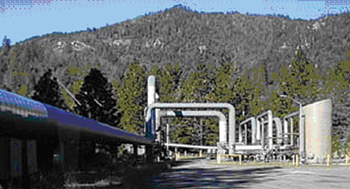
Geothermal power, on the other hand, is proven to require insulation. Hart explains that geothermal “is already harnessed at

The Geysers Plant in northern California and requires the use of lots of insulation. That electrical power plant collects

geothermal-generated steam from beneath the hills and uses it to power low-pressure turbines, which in turn power electrical

generators. The plant has an overall capacity to generate 850 MW of electrical power, about equal to the capacity of a large

coal-fired plant. There are a large number of steam ‘wells’ and each of these is connected with insulated piping to larger

collection piping. (Shown in Figure 1.) Without effective insulation on the collection pipes, such as in the photo, the

process wouldn’t work.”

However, Hart explains, The Geysers Plant only provides about 4 percent of the state’s electrical power needs. The only other

major geothermal opportunity in this country is probably in Yellowstone National Park, which would require obstructing the

crowd-drawing aesthetics of “Old Faithful,” America’s oldest national park attraction.

Hydroelectric power is the oldest form of electrical power generation and an important form of renewable energy, says Hart.

Of the large number of existing hydroelectric power stations in the United States, the largest is the Hoover Dam, located

downstream of the Grand Canyon on the Colorado River, and the source of Lake Meade.

“As a hydroelectric power station, this magnificent engineering structure can generate its rated 2,000 MW of electrical

power when the lake is full,” reports Hart. “Unfortunately, the U.S. Interior Department can’t keep Lake Meade full due to

drought, steady growth in southern California since it was completed in 1935, and more recent spectacular growth in and

around Las Vegas, Nevada. You can’t use all that water and generate 2,000 MW of electrical power at the same time.”

Even more importantly for the insulation industry, hydroelectric power plants do not require the use of insulation. In fact,

no hydropower energy sources require insulation, nor do hydrogen, solar and wind sources.

Although opportunities for our industry in renewable energy technologies are limited, all is not lost, says Hart. “Renewable

energy will only be economical if fossil fuel prices remain high or continue to increase past their current levels. If that

happens, then it will become increasingly cost effective for users of fossil fuel energy to use it as efficiently as

possible. When they do, mechanical insulation will become increasingly important. Mechanical insulation typically has a

simple payback of less than 2 years: on high-temperature piping and equipment, it is as short as 1 month. When dealing with

thermal energy, mechanical insulation is simply the most cost effective means of increasing energy efficiency.”

So, although the mechanical insulation industry probably will not derive much direct benefit from the growth of renewable

energy technologies, Hart believes the same economic factors fostering the growth of renewables also will foster the growth

of the mechanical insulation industry. And if the trend for increasing fossil fuel prices increases, he says, our industry’s

future still looks very bright.

Figure 1

Just like the annoying little ghosts and goblins in the popular 1980s movie “Ghost Busters,” those pesky and sometimes

daunting-looking, all-shades-of-green mold and mildew can be hard to get rid of—a job for an experienced professional

with the right equipment.

A mold-remediation specialist can be a great friend to a business, helping to avoid potentially millions of dollars in

damage and restoration costs. When it comes to dealing with mold, ignorance is not bliss and “common sense is not always

common,” says Bill Begal, president of Begal Enterprises Inc., fire and water restoration specialists located in Rockville,

Maryland. Although a mold buster like Begal will be happy to help a business get back on track following an incident, he has

some advice to help businesses avoid making that urgent phone call for remediation.

Prevention Helps Keep the Fungus Away

The best tool in the fight against mold and mildew is prevention, Begal explains, and the best methods include having an

educated building maintenance crew and chief who do regular building walk-throughs and receiving regular visits by a

mold-remediation specialist.

Begal says that a weekly or bimonthly walk around the building to look for signs of trouble is worth every bit of time it

might take the building maintenance person. He explains that the building professional or crew are the people who know a

building the best. “They know how it leaks, how it breathes. They know the areas that have problems,” or, at least, they

should. Better yet, he adds, they should be given a maintenance budget to be able to handle problems as they arise, to deal

with them right away.

Begal even suggests that building personnel take pictures of the areas most likely to develop issues so that there are

before and after shots in case of a disaster or accident. Areas where mold is most likely to develop are any places where

moisture is most prevalent, like in restrooms, kitchen areas, roofs, near drainage pipes, near and around heating,

ventilating and air-conditioning (HVAC) units, etc. An industrial plant would also have to consider areas and pipes affected

by extreme heat or cold or high humidity. (For a complete checklist, see Figure 6.)

Mold specialists should be on the contact list—and a regular visitor—of every commercial or industrial building

maintenance crew manager, Begal emphasizes. Many restoration technicians do not know what to do. Following an incident, he

explains, “It takes knowledge and cooperation between the building staff and the technicians. I want an opportunity to walk

the building when the building is in its normal environment, not only after a disaster.”

The best complement to prevention is education. As the saying goes, “knowing is half the battle,” and that remains true

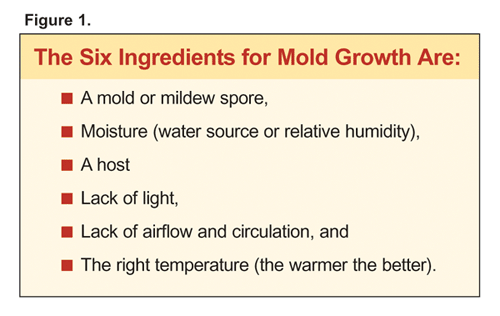
when it comes to knowing the six main ingredients for growing mold (see Figure 5). Once a mold spore enters an area, it needs

a host—any material that is cellulose. Then, it will grow and spread where there is a lack of light, lack of airflow and

circulation, proper temperature—the warmer the better—and moisture or a supply of water, including humidity.

Begal explains that an uneducated maintenance professional might turn a carpet/air blower on a wet wall or ceiling,

thinking that will fix the problem. However, a wet wall could indicate a much deeper issue, like wet insulation, and wet

ceiling tiles could involve asbestos in older buildings. Blowing asbestos into the air could create a real catastrophe,

especially for the building tenants who breathe in the contaminated air. Then, the business faces lawsuits on top of the cost

of the damage.

When maintenance staffs understand what creates and promotes mold and mildew growth, they will be better able to keep it

at bay and better prepared to address a situation or accident when it arises.

Quick Action Is Best Fix for Mold

Although Begal clarifies that not all mold is bad—think of penicillin—some mold is very bad. Once any of the

tens of thousands of possible molds is noticeable in a building, taking immediate action is the key to preventing further

damage and higher restoration costs. In his 10-plus years of experience in doing restoration, Begal claims that the worst

mistakes building maintenance professionals can make are to ignore the issue because they believe it is small or trying to

implement a “quick fix.” Again, the better a maintenance professional knows a building, the quicker he or she will notice

something wrong and be able to deal with it before it becomes a larger issue.

“If something smells, or if something is dripping or leaking, don’t just throw a bucket underneath it or a coat of paint

on it. A lot of times if you see ceiling tiles that are damaged or wall paper beginning to peel…
when it is humid or moist, so what’s causing that? The ceiling tiles are not going to get discolored all by themselves,”

explains Begal. “A lot of times, what you see is just the tip of the iceberg.”

If it is a small incident, Begal provides an example of how to respond. He says, “If you’re dealing with an ice-maker line

that breaks in a building, you cut out the wet drywall, you remove the wet insulation, and you clean the metal backs between

the walls.

You notice there is a little bit of mold on the backside of the other wall: You cut that out, you dry it, you clean it,

and you put it back up. Not a big deal. Sometimes you can do it over a weekend.”

Begal relates that it is important to realize that mold and mildew can begin to grow in as little as 24 hours and usually

after 36 hours. It largely depends on the naturally occurring environment where the building is located. A building in

Arizona will have a different mold growth rate than a building in Tampa, Florida.

But regardless of where they are working, it is Begal Enterprise’s policy that if they are involved in a renovation

project caused by a flood, and no action was taken during the first 24 to 36 hours, they cannot use the carpet blower. Using

a carpet blower can introduce positive air into the environment, promoting mold growth and blowing “infected” air around.

Instead, they use a machine that generates air, called an air scrubber, where all of the air passes through a

high-efficiency powered air filtration system. Anything bigger than 0.3 microns, which includes most dust and mold, gets

caught in the series of filters.
It is all about acting quickly and removing the key ingredients for mold survival.

No Moisture, No Mold!

Any material that is cellulose or provides a “comfy” and dark area for mold and moisture to spread and grow would make a

great host for mold growth. “In my experience, insulation, regardless of R-value, provides so many different areas for mold

spores to hang out and to grab onto,” says Begal. All areas including the insulation should be inspected for moisture. Then

the source of the moisture needs to be determined as well.

Begal adds that insulation gets much of the brunt of the damage following an incident or disaster and is often overlooked.

Just because a wall is dry, that does not mean the insulation behind it is not soaking wet. On top of that, insulation is not

easily reparable. Begal says that it can be a very tedious process to unwrap all of the insulation above a ceiling, dry it

out and re-wrap it. It is obviously important to use an insulation expert who can recommend the best insulation system for

the affected area.

Moisture can come in many different forms, and even humidity can nurture mold growth. But what people may not realize is

that there are three different types of water: clean, gray or black. Clean water is from any fresh water source, like rain.

Gray water is found in dishwashers and clothes washers. Black water is sewage water or water with decaying matter in it, also

surprisingly found in sprinklers that are not regularly flushed out.

Maintenance staff should keep good track of areas in their buildings that are prone to high moisture, especially if the

water source is gray or black and if a host is present.

When To Call in the Mold Busters

As noted, visible evidence of mold can indicate a much larger and deeper issue. If maintenance staff are not sure they can

fix the moldy area by themselves—no matter how small or large the problem appears—the best thing to do, says Begal, is to

call in a mold-remediation specialist to evaluate the situation. Specialists can give a summary of the damage and suggest

what needs to be renovated by their team of professionals versus what the building maintenance team can fix on their own.

Begal offers an example, “You could have an office building that on Saturday morning of a long holiday weekend the toilet

overflows and continues to run. You come in Tuesday morning and what started on the twentieth floor now has things wet all

the way to the seventh floor. So there is a lot of exploratory work that has to be done on all floors.”

Exploratory work is especially important following a natural disaster like a hurricane. Strong winds, changes in air

pressure and beating rain can all alter the structure of a building, especially if it had a previous weakness such as a crack

in the stucco or a hole in the roof. Anytime moisture enters a building, the most important ingredient for growing mold is

introduced.

Begal’s team investigated potential damage to a roof caused by last year’s hurricanes. “Nobody thought that there was

anything wrong with it,” he recalls. “But one little corner had pealed up, and after doing some spore sampling, we found out

the whole roof was sopping, sopping wet. And no one would have thought that the change in pressure would have been enough to

just slightly lift it, throw it off it’s normal setting. The whole roof had to come off.”

Remediation specialists wear many hats. Sometimes they are called in after a fire or flood to mitigate the loss and

prevent things from getting worse. Sometimes they help with cleanup efforts or with the insurance process. Other times, Begal

adds, he is even brought in to provide a competitive bid on a job—to confirm the necessary scope of work or cost, for

example.

Mold busters can even give direction and counsel on emergency-preparedness planning to help building crews know what to do

if a situation does arise. “We’re not just the guys you hate to call because you had a loss happen. Let us be a part of your

advance team and let us create a better association. And know that when something does happen, you’re going to be properly

prepared,” Begal says.

If your building team cannot perform a renovation, though, there are a number of criteria to consider before hiring a

company or individual to eliminate the mold.

Choosing the Best Professional for the Job

There are many different schools and courses offered to help anyone who is interested become “certified” as a mold and

remediation specialist. Unfortunately, though, informs Begal, they are not all accredited by the same association or group.

And mold is not regulated, like asbestos and lead, as a hazardous type of material because mold is everywhere—you can’t

get rid of it all.

“People who say they went to the Billy Bob School of Mold Remediation…
Well great, but who’s Billy Bob, and who taught him, and why is he the right guy to talk to?” laughs Begal. “Or I could even

make my own certificate, but what does that mean?”

You also do not necessarily want the least expensive or cheapest contractor to take care of the problem, adds Begal. Be a

smart consumer and verify the quality of the company’s work. Ask for referrals. Begal stresses that you would not hire an

employee without doing a background check on him or her.

One good indicator of a true professional or company is if they follow Environmental Protection Agency guidelines. Also,

whether the contractor has been accredited by any organization or school, and if he supports or has a membership in some

industry-known organizations like the Association of Specialists for Cleaning and Restoration (www.ascr.org) or the Institute

of Inspection, Cleaning and Restoration Certification (www.iicrc.org). Begal says “they have some classes and they have

certifications that are recognized within our industry, but again, they’re still not held to a ‘higher authority’. I wouldn’t

discount the education they’re giving; I wouldn’t discount the knowledge that can be learned.”

Begal goes a step further with his clients. He invites them to visit his facilities and witness his operations, which many

have done. He believes this not only builds confidence in his company’s ability to perform the job, but it educates clients

about what to expect if they need to call him for services.

So if your building has a mold issue, and you’re not sure your maintenance staff can get rid of the pesky stuff

themselves, “who you gonna call?” Call a mold buster. “Yeah, I know it’s expensive, and yeah, I know it can be a pain, and I

know it’s not budgeted, but people just don’t understand that if they don’t deal with it when it’s small, or as soon as they

have the opportunity, it just becomes an exponential pain…” Begal summarizes.

Be proactive, get educated about mold, act quickly and develop a working relationship with a local, trusted, experienced

professional: these are the ingredients for fighting mold.

Figure 1
Figure 2
Figure 3
Figure 4
Figure 5
Figure 6

The Manufacturers Technical Literature (MTL) program has come a long way since its earlier incarnation as the iiFile. In the past five years, it has evolved from a bulky three-ring binder to a completely digitized publication distributed via the Internet and CD-ROM, to its latest upgrade as an entirely Web-based information tool. Each year the program has improved, but this year’s introduction to the new MTL Online marks the culmination of feedback from both end users and advertisers.

MTL users will find that the search feature is greatly improved. In the past, a category search returned a list of participating companies from the Buyer’s Guide, regardless of whether the PDF files the company submitted actually fit the category searched. This company-based approach has been replaced by a more accurate file-based search. MTL participants now can choose up to three categories for each file they submit, so that when an MTL search is run you will actually get a list of files that meet your search criteria. This makes the search more intuitive as well as more efficient, enabling you to download the file immediately without clicking once more to the company detail page (unless you want to).

Users will also notice that the company detail page was redesigned. MTL advertisers now have the option of adding a brief company description to appear beneath their logo. PDF files are listed to the right under a prominent heading so users can quickly find and download them. As in the past, links to the company’s website and membership directory page appear with the listing, and the MTL files remain accessible on the membership directory page.

For the first time, non-member companies are welcome to advertise in the MTL, at a 25-percent premium, so end users may notice that these additional companies have a Web address but no membership directory link.

The most significant change this year is the introduction of MTL Deluxe accounts, which allow advertisers to add, replace, remove and otherwise alter their PDF listings throughout the year. Not only does this benefit the advertiser, but the end user will have access to the latest information at all times. A special “new” icon highlights the updated information throughout the MTL.

The CD-ROM version of the MTL was phased out this year to meet the demand for up-to-the-minute company information. CD usage was down and users indicated a preference for the Web version. Without the CD, we are now able to encourage MTL advertisers to sign up for accounts whenever they are ready—with no deadlines. The combination of all improvements has matured the MTL into a truly dynamic program.

Although end users will certainly benefit from all of these changes, MTL advertisers will benefit even more significantly. Not only is the MTL entirely online, so is the advertising process. When advertisers are ready to create an MTL account, they do so completely online?eliminating the need to burn files to a CD and mail them to NIA. The easy and convenient process begins with the creation of a user name and password, which the advertiser uses later to login and make changes to the account. Next, information is gathered about the account holder, account details are entered, an opportunity to upload a company logo is presented, and then PDF information is gathered and uploaded. Finally, the advertiser is presented with the option to pay immediately online or request an invoice. Once NIA approves the listing, the advertiser receives an e-mail notifying him/her of the published listing with a reminder about the link to the “manage my account” feature.

When advertisers wish to make changes to their account, they log in using the company name, e-mail address, and password entered when the account was created. A forgotten password can be e-mailed to the advertiser. Once logged in, the main menu displays a summary of information about the account, such as the account type (basic or deluxe), the page range chosen, the expiration date for the account, etc. Both basic and deluxe accounts contain links from this page to change contact information, password, replace a logo, or change the company description. Deluxe accounts also offer the option to delete or replace an existing PDF, add a new PDF, or change PDF listing information, such as the title displayed or the search terms for the PDF.

The NIA hopes that a variety of Web-based ads will help spread the word about the MTL and continue to expand its usage. We hope that both advertisers and users are pleased with the new MTL online as it fulfills its mission to connect people to the most up-to-date product information available in real time.

To subscribe to the new MTL and MTL Deluxe go to www.insulation.org/MTL/Ads or contact our advertising sales manager, Brendan Campbell at 571.261.2377 or BCampbell@insulation.org. To search the MTL by category, go to www.insulation.org/MTL.

Generally, the principles of condensation control are very straightforward, but let’s consider the consequences of an

insulation system failure in a condensation control application. Insulation, including accessory products such as adhesives,

mastics, caulks, pipe-hanger supports, jackets and coatings, should all be considered as a system. Consideration of the

consequences of a failure should drive the initial design and installation of the system.

The principles of preventing condensation are very simple: Maintain the surface temperature of the insulation above the dew

point, and prevent any intrusion of moisture or moist air into the insulation system (particularly between the insulation and

the pipe being insulated).

These principles are accomplished through proper insulation design (the correct selection of type and thickness),

installation and maintenance. As a matter of fact, maintenance of an insulation system can be greatly reduced if the design

accounts for the environmental conditions that the insulation will encounter. Proper completion of the above steps will

ensure a successful project.

Pipe size, ambient temperature, pipe temperature, wind speed, emissivity of insulation or jacket, location of application,

and most importantly, the relative humidity, must also be considered for a proper design.

Most project specifications will state that the insulation should be installed according to the manufacturer’s

recommendations. Some basic installation guidelines are often given as well. However, if the design engineer fails to

consider the level of difficulty for properly installing an insulation system, particularly under the labor, site and climate

conditions in which the insulation system will be installed—this can play a major role in the failure of the insulation

system. Labor experience, severe weather conditions, logistics and project timetables all must be considered in the

installation step. Failures during installation always result in finger-pointing, but can often be avoided if potential

installation problems are considered in the initial plan.

Periodic maintenance of the insulation system is critical for preventing premature failure of the system and for reaching the

life expectancy of the system. When you consider the lifespan of the insulation system, it is often less expensive to build

more reliability into the insulation system in the beginning than it is to rely on excessive maintenance afterward. This is

especially true for installations in which the required maintenance may not get done, resulting in a premature and costly

system failure.

If the insulation system is designed and installed properly, the worst failure scenario would be condensation formation on

the outside of the insulation in those extreme cases when the actual dew point exceeds the dew point limit of the design. If

the insulation is properly designed and prevents water intrusion, moisture on the insulation surface generally will not

result in a catastrophic failure of the system: It either will be a short-term problem or will be correctable by adding

insulation thickness.

Unfortunately, however, most condensation control application failures do result in catastrophic or complete insulation

system failures. Unlike insulation on hot systems where a failure may only result in excessive loss of energy, failures in

below-ambient systems can have major consequences and are usually easily detected. Even in concealed spaces, the consequences

of condensation control failures usually show evidence quickly, resulting in costly repairs.

Failures are often caused by the inadequate performance of special areas that are difficult to insulate, such as pipe hangers

and valves. Another potential cause of failure is when work needs to be done by another tradesman (i.e., an electrician) and

in the process of doing his work he damages the insulation. The insulation then needs to be replaced.

In some instances, design flaws can result in failures, such as not leaving adequate clearance for insulation to be

installed, or failing to specify the adequate insulation for items such as valve stems/handles. Condensation control

applications require all areas be insulated and sealed properly. The insulation system is only as good as its weakest link.

The typical consequence of condensation control failures is saturated insulation—particularly if the insulation is not

closed-cell or if the jacket protecting an open-cell product has failed. Moisture will contribute to the following

conditions:

  1. Loss of insulation value: One percent weight gain due to moisture results in 7.5 percent loss in thermal efficiency.

    Reduction in insulation value can contribute to further insulation failure, quickly resulting in a total failure of the

    system.

  2. Increased insulation weight: This can cause it to deform and possibly fall from the pipe.
  3. Potential corrosion of pipes.
  4. Mold and mildew on the insulated surface itself as well as surrounding areas: ceiling tiles, carpets, throughout the

    insulation and under jacketing—especially in open-cell insulation. Mold and mildew could potentially affect the entire

    building if they get in the air stream.

  5. Loss of energy and higher operating cost.
  6. Unsafe conditions: Water dripping and accumulating in ceiling tiles or on floors, possibly even forming ice, can

    create slip hazards to the personnel below. Condensation falling onto electrical equipment can cause shock hazards and can

    damage sensitive equipment.

  7. Condensate dripping can also contaminate the product being produced below the piping system.
  8. Unpleasing aesthetics, such as water-stained ceiling tiles, walls and carpets, as well as deformed and discolored

    insulation.

The costs associated with remediation of the above consequences can be very expensive and generally far exceed the cost of

the insulation system. Repairs to the system, especially if the pipes are in concealed spaces of occupied areas, are several

times the cost of the insulation system. If a production facility has to be shut down for any length of time to make repairs,

the cost of lost production can mount up. Product quality may suffer if manufacturing processes are not kept at the correct

temperature, and overall plant efficiency may suffer as well. If the problem exists in a plenum or duct area, indoor air

quality will suffer, causing worker discontent and possible lost time on the job. In many cases, the above costs are brought

out in lawsuits, which can significantly increase the costs associated with the problem.

Moisture intrusion between the insulation and pipes caused by seam failure or saturated insulation can result in the need to

replace the piping. This will result in shutting down the facility to make the repairs. The cost to shut down a facility

multiplies the cost factor.

Some installation techniques that can be used to reduce the chances of a failure or lessen the costs associated with a

failure are:

  1. Prefabricate as much of the insulation as possible under ideal conditions prior to taking it to the job site, either

    at the manufacturer’s site or in the contractor’s shop.

  2. Adhere the insulation to the pipe every 20 feet, creating a water dam—this contains moisture from a failed area and

    prevents its travel to other areas of the system.

  3. Use systems with additional margins of safety, such as closed-cell insulation under a waterproof jacket or mastic.
  4. Use robust jacketing systems outdoors because they are designed for years of service and low maintenance.
  5. Use jacketing systems that adhere to the insulation in order to prevent moisture travel between the insulation and the

    jacket.

  6. Use adequate insulation thickness based on the design dew point. It is better to err toward “too thick” as the added cost

    of the insulation will be a small part of the total cost of the installed system, and will cost much less than if the system

    fails.

  7. Insulate all areas of the system: Remember that the system is only as good as its weakest link. Using accessories

    such as pre-insulated pipe hangers is a good idea—they save time and ensure proper insulation thickness.

Mold and mildew are the new key buzzwords in regards to liability. Insulation systems that limit moisture absorption or have

secondary layers of defense against moisture intrusion will greatly reduce liability for mold and mildew problems. Designers

of schools, hospitals, hotels and public buildings are looking for solutions to the mold/mildew issue. Preventing moisture in

the system will eliminate the issue. Selecting the proper materials, maintaining the material’s integrity at the job site and

correct installation are all key to prevention.

Generally, catastrophic failures can be traced back to seam failures (caused by improper installation) or failure of the

jacketing that protects open-cell insulation, both of which can be minimized in the design stage of the project. Insulation

systems that are easier to install should be a clear choice. Jacketing systems that have safety factors built in should also

be a clear choice. The initial cost of ensuring proper installation can be easily justified when one considers the future job

site labor savings and the increased reliability of the system.

Installing a system that you know will require a great deal of maintenance is a failure in the making. You must consider the

conditions in which the insulation will function when designing a system. For indoor applications, jacketing on the

insulation may or may not be needed, depending on the insulation selected and the expected use. For example, applications

that will experience mechanical abuse or wash-downs should be jacketed. Outdoor applications (e.g., rooftop applications)

will always need to be protected, not only from UV rays but also from other environmental factors. Outdoor applications with

extreme conditions (e.g., coastal or offshore applications) will require more robust jacketing. In many cases, adhesives,

mechanical fasteners and silicone sealants will be required to keep the insulation system moisture-proof. It should be

expected that people will walk on, lean ladders against and generally abuse the insulation system. A sign directing personnel

not to walk on the insulation is not adequate. Jacketing should be selected to be robust and, in the case of damage, easy to

repair.

The reliability of the insulation system should be of key concern in the design phase. As stated above, the primary reason

insulation systems fail is because they are improperly installed. Many design engineers have never seen insulation installed

and underestimate how difficult it is to provide a correct installation. It is the responsibility of the insulation

manufacturer, distributor and contractor to advise the design engineer of systems that are easier to install and are more

reliable in the field, even if the initial costs are higher. Standing behind the old adage, “I gave him what he asked for,”

will not benefit our insulation industry, nor will it build the positive relationship that is needed between the design

engineer and the insulation industry. We should not aim to be considered a manufacturer, distributor or a contractor, but to

be a highly specialized consultant to the design engineer.

The cost of a good insulation system can be easily calculated. The cost of the payback in terms of energy savings can also be

easily calculated. The cost of an insulation system failure can be priceless. Effective condensation control is not a matter

of chance, compromise or cost minimization: From the beginning of a project, it requires communication among all parties

involved—the engineer, the insulation contractor, the manufacturer of the insulation and accessory materials, and the

facility owner.

  
Click Photo to Enlarge

Figure 1

Figure 1

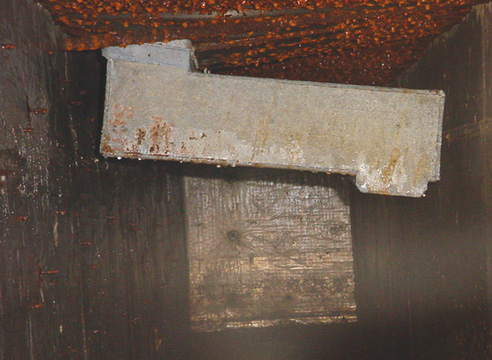
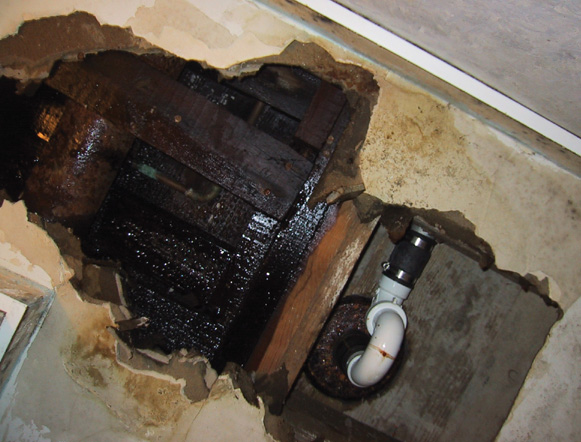
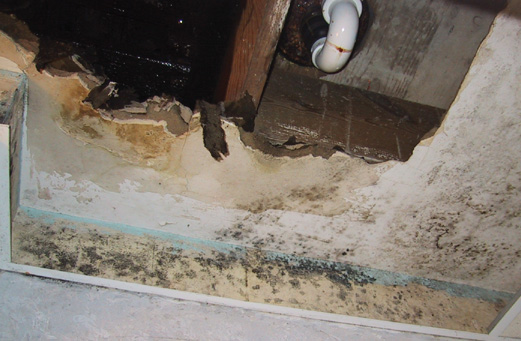
The consequences of condensation failures include mold and mildew, which can potentially

affect the entire building if they get in the air stream.

Figure 2

Figure 2

Figure 3

Figure 3

Figure 4

Figure 4

Condensation control is particularly important in below-ambient applications such as chilled water piping.

Figure 5

Figure 5

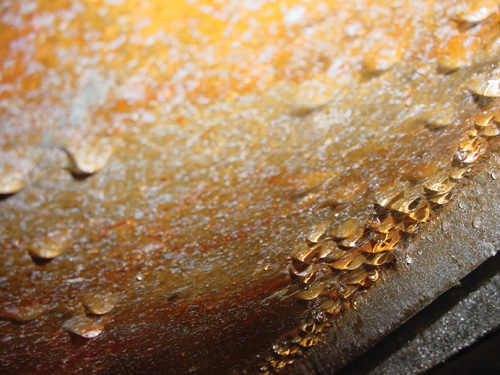
In below-ambient applications, condensation failure can cause unsafe conditions such as the ice on these

pipes.


Green building has become a buzzword of late. Open any trade publication, construction journal or design manual and you’re sure to see some reference to sustainable design. Those who have just begun to pay attention to this market trend may ask, what exactly is green building, and how does it affect our industry?

According to Gary Kuzma of Hellmuth, Obata + Kassabaum Inc. (HOK), a design firm world-renowned for its commitment to sustainable design, "Green building is an environmentally and people-friendly solution to a living and working environment."
Alan Scott, director of consulting services at Green Building Services of Portland, Oregon, echoes this interpretation. "Green building is building that includes aspects of sustainable design with the goal of reducing operating costs and environmental impact," he said.

The Office of the Federal Environment Executive defines green building, in essence, as the practice of increasing the efficiency with which buildings use resources and reduce building impacts on human health and the environment.

Green building elements can range from orientation of the building to minimize solar impact, to high-performance glass, to energy-efficient lighting and on-site cogeneration of power supply. Green building is making the greatest impact in commercial, institutional and multi-family housing sectors. According to Kuzma, director of mechanical, electrical and plumbing engineering at HOK’s Houston office, there has been little impact in the industrial sector as yet.

Taryn Holowka, media contact for the U.S. Green Building Council (USGBC), an organization that promotes environmentally responsible buildings, agrees. "The program was originally created for the commercial sector, and that’s where we’re seeing the most activity," she said.

However, sustainable design influences the insulation industry indirectly, since energy conservation is a large factor in green building. Improving a building envelope’s energy efficiency is a key component to overall energy conservation, and one cost-effective way to do that is to increase the amount of insulation, said Kuzma.

Insulation is one of the tools that can be used to attain energy efficiency. Depending on the client’s project location, insulation can become an even more important factor. Thermal insulation may have more of an effect in a Minnesota winter or a Phoenix, Arizona, summer than it does in a city like San Diego, California, which enjoys mild year-round temperatures, said Kuzma. In most of the United States, increased insulation is a cost-effective way to gain on energy efficiency.

When increased insulation improves thermal performance, it helps a project earn LEED (Leadership in Energy and Environmental Design) credits for bettering the energy efficiency of the building. A project receives credits toward certification if it goes above the industry standard baseline for commercial buildings–ASHRAE Standard 90.1. Apart from the building’s envelope, insulation is also present on ducts and pipes, although the LEED credit is wrapped up in the whole of energy efficiency.

The USGBC’s LEED Green Building Rating System is a voluntary national standard in which construction and renovation projects earn credits toward certification as sustainable buildings.

The original LEED classification applies to new construction (NC); in this scenario the building owner is in control of both core and shell and tenant spaces, and is working to certify the building as a whole. The levels of certification (depending on the number of points the completed project receives) are certified, silver, gold and platinum. Points can be earned for a myriad of accomplishments: for using recycled content materials; for reducing design energy cost by 15 percent or more; for recycling or salvaging 50 percent or more of the construction and land debris waste; or for using materials from local sources.

Other LEED credits include the utilization of water-efficient landscaping (some sites plant drought-resistant trees that do not need watering); incorporating low-emitting paints, carpets and adhesives; and designing the building so that 75 percent of tenant spaces are exposed to daylight.

Altogether, there are more than 50 items in six categories that offer points toward certification. However, earning them can be a challenge–only seven of the 188 LEED-certified buildings nationwide have earned platinum status.

In addition to LEED-certified NC, there are three new programs for the commercial sector. LEED for existing buildings (EB) addresses specifics for existing buildings that are in need of facility and operational improvements. It’s a set of performance standards for the sustainable operation of existing buildings, according to Kuzma. It covers building operations and system operations in existing buildings where the majority of the interior and exterior construction is to remain unchanged.

"The EB program has to do with renovation, not necessarily of commercial interiors, but of HVAC systems, plumbing systems or things other than what the tenants actually see.

"Commercial interiors (CI) addresses specifics of tenant spaces, primarily in office, retail and institutional buildings where there are tenants occupying spaces. For example, a developer builds a building and seeks to bring in tenants to occupy that building. The spaces that are occupied by the tenants are covered by the LEED CI designation," said Kuzma.

Finally, core and shell (CS) basically addresses new core and shell construction, encompassing the base building elements–the structure, the envelope and the central systems like HVAC, plumbing, etc. It recognizes that there is division between the owner and the tenant for certain elements. It’s intended to evaluate building projects where the owner is not in control of the interior design and setup of tenant spaces.

Additionally, the USGBC is currently developing guides for sustainable design that will apply specifically to non-commercial structures such as healthcare facilities, schools and campuses, laboratories and retail locations.

Companies who have implemented green building are seeing benefits in three areas, which Kuzma refers to as "P cubed: People, Planet and Profits." One of greatest benefits is increased employee productivity, thanks to better working environments.

"There have been many studies done in recent years that have shown that buildings with these improved environmental qualities actually result in better people performance. People are sick less, are at work more, and tend to perform better if they’re comfortable.

"If you can improve the productivity of the people that occupy your building, let’s just say arbitrarily, half of a percent in one year, it will more than cover the increased cost of the ventilation effectiveness or improved lighting–the paybacks are almost instantaneous. If you look at the salaries, and their benefits, what people cost versus what buildings cost, it’s dramatically different. People cost so much more. Just making a small impact on improving people performance is huge on the bottom line," said Kuzma. This is one of the biggest selling points of sustainable design for companies who need to be convinced it’s a good idea.

LEED-certified buildings also have a gentler environmental impact, and help to reduce the depletion of natural resources through both construction and their life-cycle phases. Promoting environmental stewardship is very important to many large
companies’ public reputations, and they want to achieve LEED
certification in part to let the public know that they are keeping the environment in mind.

And finally, there’s the bottom line–an important consideration in uncertain economic times and in view of record-high
energy prices.

"If a building is more energy-efficient, costs less to maintain and uses less water, all of which are savings in annual operating costs, which contribute to lower life-cycle costs, it makes financial sense," said Kuzma.

With so many important benefits, what’s stopping people from doing green building? It seems the challenge to getting LEED certified is probably not much different than any other project–providing the best end product within budget and on schedule.

"If there’s any challenge with getting LEED certified, it’s the process. There’s paperwork to fill out, a process that has to be followed. It’s a very process-driven methodology in implementing the sustainable design objectives you feel are important. It’s important to have a team of professionals that have that experience," said Kuzma.

"It used to be that the difficulty or challenge was finding a project team that has the experience with the process of getting certified. But today, that’s no longer the case. There are a lot of people in construction, a lot of owners, a lot of design professionals who are educated and versed in LEED.

"It’s not hard to find a team of people who promote it, or people who are good at it, but it’s even better to have a team who wrote a book on the subject," said Kuzma.

Despite the challenges and notwithstanding the perception of the construction industry as one that’s initially resistant to change, the USGBC reports a high level of interest in its LEED-certification programs.

"The trend is growing very fast," said Kuzma. "Some project types faster than others, some owner types faster than others, some design firms faster than others. Within HOK, it is not a trend. It’s what we consider a standard of care that we try to apply to every project for every client. To me, fundamentally, that’s what it has to be for it to be successful."

In addition to the 188 buildings currently LEED-certified in the United States, another 1,794 projects are registered with the USGBC program and are seeking certification.
"This growth is much higher than we anticipated," said Holowka. "About 5 percent of new commercial construction is green building, totaling 215 million square feet of space." For a program only 5 years old (it was publicly launched in 2000), that’s quite an accomplishment.

Lagging is steel or aluminum finishing material used to cover many types of insulation, especially on large, flat surfaces such as boiler walls, flues, ducts, precipitators, bag houses, selective catalytic reduction systems, air heaters, economizers, scrubbers, wind boxes and fans. Also known as cladding or sheet metal, lagging does not include a vapor barrier, and ranges in thickness from 0.032 inches to 0.063 inches for aluminum, and from 20 gauge to 16 gauge for steel. Lagging, in general terms, is a tailored job of covering the insulated areas to suit the particular installation and its configurations.

What is the purpose of lagging? First and foremost, it is used to protect the insulation it covers and is applied over insulated areas to present a true plane – a flat and even surface. It must be stiffened and fastened on adequate centers to prevent excessive deflection or "oil canning" when hot or cold.

Secondly, lagging is used to provide a weatherproof construction complete with proper flashings, slopes and seals to ensure water runoff without the possibility of ponding or accumulation of water. You might think that this only applies to outdoor installations, but it can also be a problem in indoor installations where companies water-wash their steam-generating boilers and equipment. Water is the enemy of any insulation system, regardless of how it gets there.

Material Specifications

There are three standard types of metals used for lagging: galvanized steel, stainless steel and aluminum.

  • Galvanized Steel* – Galvanized steel lagging is available plain or treated for painting. It can either be a ribbed or flat sheet material and should be specified as being a commercial-quality material and conform to ASTM specifications A924 with a commercial zinc coating of at least 0.90 ounces per square foot.

    *Galvanized is a term long used to describe steel sheets coated with zinc. A galvanized lagging sheet has a shiny-flaked look while the treated-for-painting galvanized lagging will either have a dull weathered appearance or actually be painted with a primer coat.

  • Stainless Steel – Stainless steel lagging is normally provided in type 304 but can be provided in other types. The outside exposed surface of the stainless steel lagging should have a 2B finish. The temper of the stainless steel material should bend in half or back on itself without cracking.

  • Aluminum – Aluminum lagging is usually provided with a stucco-embossed finish. The core material for the aluminum lagging must conform to ASTM Specification B209 and have a cladding of 7072. Ribbed aluminum lagging must have a temper of H 174, and flat aluminum lagging must have a temper of H 154.

Environmental Concerns

As with any product, particular precautions must be taken in the handling and storage of aluminum or steel lagging materials. The finish on both materials is susceptible to atmospheric contamination. It is advisable to take the following precautions:

    1. Store the material inside.

    2. Elevate the material above the ground or floor to allow air circulation.

    3. Always place ribbed sheets, flat sheets or coiled material on end or edge to allow water or moisture to drain.

    4. Material should not be tightly sealed with covers such as plastic. This tends to create a sweating condition that will produce oxide damage. Some ventilation is necessary.

Special attention must be given to coastal projects. It has been found that on coastal jobs, contamination and discoloration can occur from atmospheric condensation between sheets when they are laid flat. You should carry out routine inspections. Sheets should be separated and ventilated if any condensation is found.

Also, where aluminum lagging comes in direct contact with another type of metal such as steel, it is necessary to paint all of these other surfaces with a heat-resistant aluminum paint that has a temperature service limit of up to 350 F. This will prevent galvanic action between the aluminum and the steel.

Structural Concerns

All lagging is attached to a support or structural system by the use of sheet metal screws. A sheet metal screw should be applied on every other rib, regardless of the material involved. On flat sheets, sheet metal screws should be applied on a maximum of 2-foot vertical by 3-foot horizontal centers. Common sense should prevail in the use of screws. Excessive numbers are costly and detract from appearance. The lagging screws are installed properly when they are pulled down tight. A screw is considered loose when you can wiggle the washer with your fingertips.

It is also important to take into consideration the weight of lagging, which is required for calculating structural steel design. Lagging weight is also a consideration in crane sizing for lifting pieces of equipment (i.e., flues, ducts, selective catalytic reactors) to elevation if you intend to ground-install the lagging to the equipment prior to lifting. See the chart below for approximate weights of standard lagging material thickness.

Expansion and Contraction

Expansion and contraction requirements represent a major problem in lagging. Necessary provisions for expansion and contraction must be provided in the lagging design to maintain a neat and proper design when in service. When the lagging is properly installed over insulated areas, it presents a true plane, stiffened and fastened on adequate centers to prevent excessive deflection or "oil canning" when hot (expansion) or cold (contraction).

Expansion and contraction are a function of temperature. As the temperature of the surface (i.e., flue plate) to be insulated and lagged goes up, so does the amount of expansion and contraction that must be incorporated into the lagging system. The higher the temperature, the more attention must be made to the lagging system. This is especially true when a Selective Catalytic Reduction (SCR) system is installed at a power plant to help reduce the plant’s NOx emissions. The SCR system is usually installed between the boiler gas outlet and the air heater. Under normal operation, an SCR system operates with gas temperatures between 600 and 700 F.

Lagging expansion and contraction are absorbed by any combination of the following, with each part carrying some portion of the expansion and/or contraction:

  • The lagging support system.

  • The ribs of the box rib-type lagging because they will allow the lagging to move with the contraction and expansion of the surface being covered.

  • The standing seam between flat lagging sheets.

  • The flashing.

The expansion or contraction is done through the lagging support system being used (i.e., sub-girt, angle iron, stud, pin, Z support or H support system). It is their ability to bend, expand or contract that will contribute to the expansion and contraction of the lagging system.

When using either sub-girt, Z or H-type support systems, it is recommended to use short spans with a maximum of 10-foot lengths wherever possible. This allows the expansion and contraction to be taken within each short support assembly. Small gaps must be left between the short spans of the sub-girt, Z or H assembly equal to the amount of expansion expected in that particular direction. This small gap can be anywhere from an 1/8-inch to a 1/2-inch wide. In no case should the short sections of the sub-girt, Z or H assembly be welded together as this will inhibit the expansion and/or contraction of the lagging.

Use an "S" lap* on the vertical seams of the lagging for hot systems (surfaces above 350 F) such as SCR flue systems, which normally have long vertical walls and a large amount of side-to-side expansion. If the lagging is applied when the unit is not running (referred to as being "cold"), then the straight edge would be jammed completely into the "S" lap. If the lagging is being installed while the unit is running (referred to as being "hot"), then the flat edge would only be partially placed into the "S" lap, leaving a gap or room between the flat edge and the back of the "S" lap. This gap will normally be about an 1/8-inch to a 1/4-inch, depending on the amount of expansion the entire SCR is designed to move from side to side. This gap will allow the lagging to contract back when the unit is shut down and would prevent "oil canning" or buckling of the lagging. The use of an "S" lap would also eliminate the need of stitch screwing of the lagging panels together at the lagging seams. This would also save money and time. Screws are required every 6 to 12 inches.

*An "S" lap looks a little like a Pittsburgh lap. It is formed on a machine on one side of the outer long edge of a rib sheet. (This is best done at a mill or shop.) The other side of the rib sheet is kept straight without any bent edge, as is normally done on a conventional rib sheet. The flat edge side of the ribbed lagging panel would then be placed into the "S" lap of the adjacent lagging panel.

Use an H flashing on the horizontal seams of the lagging for hot systems (surfaces above 350 F) such as SCR flue systems, which normally have long vertical walls and a large amount of top-to-bottom expansion. The H lap should only be screwed to the top sheet. This will allow the bottom sheet to expand or contract within the H flashing.

Surfaces 350 F and below are considered cold systems. The expansion or contraction of a cold system is not as great and, therefore, the lagging can be attached directly to the external stiffeners. This can be done as long as the stiffener spacing meets the required wind loading.

Flat Sheet Versus Box Rib

It is recommended that rib lagging should always be used wherever possible in lieu of flat sheet lagging because it helps in the expansion and contraction of the lagging system. Flat sheet lagging, in most cases, should be used for flashing, round surfaces, elliptical or irregular surfaces such as drumheads, or areas where space prohibits the use of rib lagging.

Here are some reasons for using a rib lagging versus a flat lagging:

    1. The ribs or boxes of the rib lagging will aid in the expansion and contraction of the lagging system. A manufactured standing seam is required for flat sheet and is more labor-intensive than using a rib-type lagging.

    2. Rib lagging is much easier to work with when covering large flat areas. The ribs help to give the material strength and rigidity, which is especially helpful on top surfaces where foot traffic may occur. On top surfaces that are exposed to the weather, rib lagging, if installed correctly, will help prevent water from ponding, or sitting. Ponding water on any lagging surface (rib or flat) will eventually penetrate the lagging system and damage the insulation underneath.

    3. The problem of foiling occurs when the flat lagging is too thin or insufficient in rigidity for the application. Crinkling can occur when pressure is applied to the lagging during installation, for example, in screw locations. Depending on the surface area of application, this can be quite pronounced. This crinkling on the surface of the lagging looks like reused aluminum foil.

    4. Rib lagging is nicer to look at on large flat or round areas than flat sheet. The ribs help break up the surface areas and present a more aesthetically pleasing view, especially from a distance.

    5. Rib lagging can be cut or manufactured to any desirable length (up to 20 feet or longer). Flat lagging comes in either a coil or individual sheets manufactured up to only 10 feet long.

    6. Flat lagging can bend easier than rib lagging due to the temper of the metals.

    7. The pitch of the lagging on top surfaces exposed to the weather should be sloped for drainage at a minimum of a 1/4-inch per foot.

    8. All hanger rods, pipes or other items penetrating the lagging should be provided with cover plates, boot, hoods or flashing made from the same type of metal as the lagging. This will prevent water from penetrating into the insulation and ensure that none of the insulation is visible. Provisions should always be made for any relative movement between the lagging and the penetration.

General Application Techniques

In most cases, erection of lagging follows the sequencing of applied insulation. On outside jobs, it is imperative that the insulation be covered at the earliest possible time, considering present-day insulation materials and techniques (only one or two days behind the insulator).

Generally, the success or failure of a lagging job depends on the basic setup of the job, the soundness of the preparatory work, and the ability of the shop crew to keep material flowing to the erecting crews. Under normal job conditions, a shop crew of two men can keep material flowing for two to three application crews. On the larger contracts, the shop forces must be increased according to the number of installation crews to ensure a completely efficient operation.

Unfortunately, many in the industry are having all of their corner flashing cut and broken into standard 6-inch by 6-inch corners offsite and sent to the job. This means the flat corner flashing will not be custom-fit at the corners at the job. This is not good lagging technique. A prefab corner flashing has the potential to overlap too far over the adjacent high rib and looks aesthetically displeasing. It could also allow water to sit or pond on the top surface areas of the lagging, where there is a trough between the high ribs. The trough is created when the excess overhang of the prefab corner flashing opens a long vertical space between the ribs.

Conclusion

Installing lagging means installing a tailored job for the purpose of covering the insulated areas to suit the particular installation, its configurations, and for aesthetics. You cannot separate the importance of lagging from insulation. Each part of insulation and lagging must work together to ensure a proper working system. Good lagging practices must be enforced in the design of the system and at the job site. Pay attention to all aspects of your insulation and lagging system, and remember that while lagging may be the last thing you do, it should be the first thing you think about when designing and installing an insulation system.

Figure 1

Buckled lagging flashing on a Selective Catalytic Reducation System sidewall.

Figure 2

H flashing.

Figure 3

Penetrations through lagging.

Figure 4

An example of a sheet metal screw that is not screwed down tightly.

Figure 5

“S” lap flashing.

Figure 6

Typical lagging flashing at roof cans.

Figure 7

Weight per square foot for lagging.

We all know what a furnace is and what it does. It takes an energy source in the form of a combustible fuel, or electricity, and converts it into usable heat inside an insulated outer casing. The economics of this process are simple. An efficient insulation allows the fuel source to be used more efficiently, which lowers the costs of operating the process. Selecting the appropriate insulation also makes fine temperature control much easier and helps the furnace manufacturer to achieve the lightest, most compact design. Careful selection of insulation can mean tremendous cost savings.

Microporous insulation achieves its low thermal conductivity by resisting all forms of heat transfer. Heat transfer through materials takes place by a number of different mechanisms or modes; an efficient and effective insulator must address each of these modes in order to achieve the lowest possible thermal conductivity. The most important modes of heat transfer in insulation materials are gaseous conduction, solid conduction and radiation.

Insulations usually contain significant volumes of air in voids. The air in the voids conducts heat by collisions between molecules, allowing transfer of energy from fast-moving "hot" molecules to slow-moving "cold" molecules.

In microporous insulation, the void volume is 90 percent of the total volume of the material, but because the voids are so small, the collisions between gas molecules are eliminated. Effectively, each air molecule is trapped in a box unable to interact with its neighbors. Air under these conditions has a far lower thermal conductivity than free air. This is known as the microporous effect, and is the primary reason why a microporous material has a thermal conductivity lower than that of still air.

Solid conduction of heat is more significant than gaseous conduction, and occurs when atoms in a material are heated and increase their vibrational energy. Interactions with their neighbors pass the energy along chemical bonds from atom to atom through the structure leading to a transfer of energy away from the heat source.

Microporous insulation minimizes solid conduction in several ways. The most important is the low density of the material, with a high ratio of gas to solid. Furthermore, microprous insulation is largely composed of amorphous particles with a low intrinsic thermal conductivity compared to most solids. Finally, the particles are very small and randomly packed, which results in long heat paths through the material along which solid conduction can take place. Heat flux by conduction is inversely proportional to the distance along which the heat has to travel; so long heat paths reduce heat transfer.

As temperatures increase into the hundreds of degrees, the above modes of heat transfer become less important and most heat transfer takes place by direct infrared radiation. It is essential that high-temperature insulation is dimensionally stable and not subject to shrinkage or any other movement at very high operating temperatures.

Microporous insulation is formulated using controlled materials to withstand high temperatures without damage. It can also be used as a backup insulation behind other refractory materials.

The characteristics of mircroporous insulation make it a good choice in furnace design for a wide diversity of applications, from small laboratory furnaces to the very large process furnaces used in manufacturing.

An example of a large-process furnace application is a roller hearth reheat and treatment furnace built by Wellman Furnaces (United Kingdom) for use in an automotive application in the United States. The furnace is 85 feet long and gas-fired.

Inside the furnace, the expensive rollers, which are able to withstand the high operating temperature, are an important design cost consideration. The use of microporous insulation ensured the minimum wall thickness for optimum efficiency. This in turn allowed shorter, less expensive rollers to be used.

Another common application for microporous products is in glass furnaces for bottle manufacture. Because of the constant need to minimize temperature gradients in the molten glass, tailored kits of insulation components are supplied for forehearths, feeder bowls, feeder bowl covers, orifice rings as well as for the general insulation of walls and recuperators for optimized efficiency.

The quality of fit is critical, particularly at corners and penetrations where gaps in the insulation can result in serious heat leakage paths, which reduce operating efficiency and create hot spots on the outer casing.

Good design should not be about using the cheapest components and materials. The most cost-effective solutions include a well-engineered design, quality components and a microporous insulation that provides optimal performance for the specific application.

Removable/reusable insulation for very high-temperature applications calls for special consideration. 500 F is the material manufacturer’s temperature limit for both silicone and polytetrafluoroethylene (PTFE), the primary waterproof coatings impregnated into fiberglass fabric to make removable/reusable insulation blankets. In addition, this temperature is just beyond the point where the organic binders that hold many insulation materials together become volatile and burn out. This is also the point where the tensile strength of fiberglass fabrics and threads is starting to decay rapidly. At 700 F, fiberglass fabrics and threads have lost more than half of their tensile strength. Lastly, above 500 F, metals oxidize much quicker than at lower or atmospheric temperatures.

Temperatures of 500 to 1000 F

Particular care is required when making or installing removable/reusable insulation blankets for temperatures in the 500-to-1000 F range. Silicone- and PTFE-coated fabrics should be kept off hot surfaces where the operating temperatures are above 500 F. Silicone will volatize rapidly and even become highly flammable at temperatures above 750 F. A white silica powder will appear after the organic compound in the silicone has burned off. The silicone burning at very high temperatures will decay the tensile strength of the fiberglass fabric quickly, compromising the overall strength of the removable/reusable insulation blanket. PTFE is a thermoplastic that is very difficult to ignite, and therefore, is much safer in locations where this may be a concern. PTFE will soften at temperatures above 500 F, and even transform to a near-liquid state at between 625 and 650 F. However, PTFE will return to its normal state and yield the same flexible, abrasion-resistant properties when the temperature drops back below 500 F.

Fiberglass fabrics and threads should be reinforced when temperatures exceed 500 F, especially when the operating temperature is above 750 F. Different alloys and wire diameters of stainless steel knitted wire mesh are available to reinforce fiberglass and leached silica fabrics, helping the strength and abrasion resistance of the fabrics and the whole removable/reusable blanket. It is also a good idea to reinforce fiberglass threads with stainless steel staples, hog rings or stainless steel threads when temperatures exceed 750 F. Stainless steel foils with thicknesses of 0.002 inches and 0.003 inches can be used on the hot face and side (gusset) walls in applications such as hydrocarbon services, where wicking into the core insulation must not take place.

One of the most economical products to use as the core insulation is a needled fiberglass felt. This product is made from E glass yarn that is chopped, fully opened and then felted together with thousands of barbed needles into a 1/8-inch to 1½-inch-thick insulation mat. This product is manufactured in densities ranging from 6 to 12 pounds per cubic foot, with a maximum continuous temperature of 1200 F, and spikes up to 1300 F. There are no organic binders to burn out, or shot (non-fiberized material) to fall out in this product. Needled fiberglass felt is often used as the hot face insulation composite with a low-density fiberglass on the cold side for this temperature range, yielding better economics.

Fastening removable/reusable blankets onto equipment at high temperatures is normally done with 304 stainless steel lacing anchors and tie wire. Caution must be taken when fastening the removable/reusable blankets with belting and stainless steel buckles, so as to not allow the belting to get too hot. Many times, the belting is made from the coated fabric material, and if the coating is compromised, the fabric will not last long.

Temperatures 1000 F and Above

When applying removable/reusable insulation blankets at operating temperatures higher than 1000 F, you need to exercise certain precautions. Many of these applications also have high vibration, such as those found on diesel engine exhaust systems or around steam or gas-fired power-generating turbines. Many of these applications operate continuously where the surface to be insulated is between 1000 and 1200 F, with spikes up to 1500 F.

In these applications, knitted stainless steel mesh reinforcement should be used to reinforce any fabric used on the hot face and side walls. In many situations, it is a good idea to encapsulate the entire removable/reusable blanket at these temperatures. At temperatures above 1000 F, either 0.095-inch or 0.011-inch wire thickness should be used when 304 stainless steel is the material choice. Oxidation will corrode through 0.008-inch thickness in a relatively short period of time at these temperatures. 316 stainless steel, Inconel® or monel wire is sometimes used in very corrosive environments.

In the best of environments, fiberglass fabric will retain up to 25 percent of its original tensile strength at 1000 F and should not be used above this temperature. If a fabric is required above 1000 F on the hot face or side walls, leached silica, wire reinforced ceramic, or alumina-boria-silica fabrics are a better choice to help encapsulate the core insulation.

If a coated fabric is required on the cold face, PTFE will hold up better and is safer to use than silicone at these temperatures. The seams should be constructed with stainless steel staples, hog rings or a tested, reliable stainless steel thread. Fastening removable/reusable blankets at these temperatures is normally done with 304 stainless steel lacing anchors and tie wire.

The core insulation for these very high temperatures should be a needle felted, E glass, leached silica, a composite of the two materials, or a ceramic fiber blanket. Ceramic fiber and mineral wool blankets should not be used if the high temperature application vibrates. Ceramic fiber blankets will lose much of their thickness and density when the product’s shot and short fiber shakes to the gravitational bottom of the blanket due to vibration. Mineral wool will also fail due to the binder burning out; then, the vibration will shake the material apart. To be an effective core insulation for removable/reusable insulation, the flexible mat or blanket insulation must also hold up to the extension handling after being in service for extensive periods of time. Not many insulation blankets can perform to this standard.

Figure 1

There are many types of insulation available, making it incredibly difficult to choose. There are fibrous, cellular and granular insulation materials with so many specific materials in each of those categories that it is nearly impossible to count them all. There are weather barriers galore; smooth, embossed, corrugated and a multitude of coated aluminum jacket materials. There are also stainless, PVC, and a vast array of trowel-on, brush-on and roll-on materials. How does one figure it all out?

What method do you use at your facility?

  • Do you use what you used last time?
  • Do you ask the insulation maintenance crew?
  • Do you decide what to use based on temperature? Price?

If you have used or are currently using a method that sounds or looks similar to what is mentioned above you may have obtained an energy-efficient, long-lasting, well-performing system. However, considering all the insulation materials to pick from, combined with all the environments to which insulation may be subjected, the odds do not look very good.

The proper selection of an insulation system is not "one-stop shopping." The solution lies in a word used several times already: "System." Determining an insulation system is a little like a jigsaw puzzle; as each piece must fit properly with its partner or the whole puzzle falls apart. If we take a systematic approach, we think in a scientific, organized way, considering all elements that could affect the performance of that insulation system. This way can you be assured you get the insulation system that is correct for the specific circumstances. Simply put, you should consider:

  • WHAT is being insulated
  • WHY it is being insulated
  • WHERE it will operate
  • HOW much money it costs and will save.

This will help you ask the right questions so you get the "complete picture" of what you are asking the insulation system do plus how, where and why it will be working. Understanding the questions to ask is the first and often most important step to selecting the most appropriate insulation system.

What?

The first thing to consider is what is going to be insulated. Is it piping, tubing, vessels or equipment? Since many insulation materials can be specific to the type of surface being insulated, it is the logical place to start your "system-thinking." Also, understand materials of construction. Is it carbon steel, stainless steel, plastics, alloys, etc.? This not only affects how the insulation system performs but gives you direction as to whether or not you need to consider additional protection for the insulating surface for corrosion protection, etc.

Why?

The next thing to consider is why it’s being insulated. There are several reasons for insulating a surface:

  • Process Control
  • Energy Management
  • Freeze Protection
  • Personnel Protection.

Why is this so important? If the sole reason for insulating the surface is to provide personnel protection or freeze protection, then the insulation thickness would likely be much less than if your reason for insulating is energy management. An example is shown in Table 1 for a 10" pipe in 400 degree Fahrenheit (F) service.

Where?

Now is the time to consider the environment in which the insulation system will operate. Yes, there is a lot to consider, but it isn’t as difficult as it first appears. These aspects can be grouped into four categories.

  • Operating Temperature (steady state, cycling, extremes, etc.)
  • Ambient conditions (temperature, relative humidity)
  • Physical environment (chemical exposure or spillage, abuse potential, etc.)
  • Special Conditions

Operating Temperature

First, what will be the operating temperature of the insulating surface? Be careful and thoughtful here ? do not just think about normal operating temperatures, consider if the system will cycle in temperature or will it have occasional highs or lows.

One chemical facility forgot this possibility. A pipeline operating at minus 40 degrees F was insulated with polyisocyanurate insulation along with an appropriate vapor retarder and weather barrier. However, what it overlooked was the fact that once a year during the planned shutdown, this pipe line is purged for 1-2 days with hot inert gas at 400 degrees F. What happened? The polyisocyanurate insulation was unable to tolerate temperatures this high and it disintegrated. The result was 400 to 600 feet of insulated line that had to be stripped and reinsulated.

Another thought ? is the insulating surface being heat traced or jacketed? If so, you need to make sure the insulation material is rated for the heat the tracing will deliver. Also, you need to note it in the specifications so the party responsible for purchasing and/or installing the insulation system knows exactly what material to purchase. It is frustrating (and probably expensive for you) to an insulation installer to purchase 4"x2" thick insulation material preformed to fit on a 4" schedule 40 carbon steel pipe, only to find it is steam traced and would have required 4.5"x 2" thick insulation!

Ambient Conditions

Next, determine the ambient conditions under which the insulation system will operate. You need to determine the ambient temperature, relative humidity (RH) (if you are trying to design for condensation control), wind speed and sometimes the amount of rainfall. Again, just like understanding operating temperature, think about possible extremes. Designing an insulation system for condensation control at 50 percent is going to fail if the environment occasionally sees 90 percent RH.

Physical Environment

You need to consider and allow for the physical environment so the insulation system will be able to give you good performance over a long time. An insulation designed for its physical environment, properly installed and maintained can easily last 15-25 years and more.

Will the insulation system be located inside or outdoors? Inside locations are not susceptible to high wind and UV rays so weather barriers may not need to be as resilient as in outside service. Also, rain and water exposure is often reduced so, again, weather barriers may not need to be as durable. Be cautious here. Water is insulation’s greatest enemy and comes from a multitude of sources besides the sky. Will the area be washed down or does it contain "deluge" type sprinkler systems that are annually activated for testing? If so, plan on getting as much or more water spray exposure as being located outside.

What is the chemical environment? Will the insulation system be subjected to acids or caustics, splashes or fumes? If so, untreated aluminum jacket materials may not perform well, as they are susceptible to these chemicals. Is the location close to an ocean coast where salt contamination is likely? Protection from its corrosive effects will need to be considered. Will there be flammable or reactive products that could come into contact with the insulation materials through leaks, fumes or splashes? If so, insulation materials that resist absorption may be more appropriate.

What is the potential for vibration? High vibration can cause some rigid insulation materials to deteriorate; a softer, more resilient material may be better. What kind of physical abuse will the insulation system see? Is it close to vehicle traffic or will personnel stand on, crawl over, or have reason to strike the insulation system? More rigid insulation material offers more structural support and often a better long-term performance.

Special Conditions

The final "Where" to consider is the "mixed bag" of special considerations. Will this insulation system or a specific section(s) of the insulation system be subject to routine and periodic maintenance activity? If so, then installing an insulation system specifically designed for removal and replacement may be a better selection than a permanent system that would have to be repeatedly repaired or replaced after each maintenance job.

Does the insulation system have to conform to any specific regulation or requirement such as FDA or USDA requirements? Does the fire code or your insurance regulations limit any materials that may contribute "fuel load" or "flame spread" to the area the insulation will be located?

How?

The final question is, how much do you want to spend? Now this is likely to sound like the most useless question and asked at the most inappropriate time. You want the most inexpensive system that will properly do the job for you and shouldn’t cost be the first thing considered? Well, simply put, if you consider cost first, you run a great risk of initially eliminating insulation systems or individual components of that system that appear expensive but would actually be the most cost effective if other information was considered prior to what it may cost.

Here are two examples why considering cost first is not the best approach.

I was performing an insulation assessment a few years ago for a Midwestern chemical manufacturer. During the assessment I discovered that the facility’s insulation maintenance crew was using all "field" fabricated insulation fittings and in several locations, "field" fabricated fitting covers (Picture 1 & 2). When I asked the site owner why this was being done, they informed me they had considered the cost of preformed insulation fitting and fitting covers and found them to be "considerably" more expensive than the straight stock being used to fabricate the fittings. They had also "confirmed this with the insulation crew." I informed them that custom fabricated insulation fittings and their covers are often necessary and cost effective due to a variety of reasons but their situation fit NONE of those. I showed them that the insulation materials are the smaller percentage of the total installed cost and their decision was actually costing them money and potentially increasing the possibility of moisture damage in later years due to the high number of seams that can be damaged and let water into the system.

In another case, at a Gulf Coast chemical manufacturer, a ground level pipe rack had been insulated with a fibrous insulation and an aluminum jacket weather barrier. According to interviews with the owner, this type of fibrous insulation had been chosen because:

  • the material was considered to be "reasonably priced"
  • it was considered to be "straightforward" to install
  • it satisfied the operating temperature of the product within the piping

These points were emphatically mentioned in just this order, suggesting strongly what was most important to their decision. The owner was correct in everything they thought about, but overlooked some important items.

  • This pipe rack was in an area that routinely had a high traffic and maintenance activity.
  • Although there were stairs and bridges across this pipe rack, personnel routinely took short cuts by climbing directly over the piping.

Because this particular type of fibrous insulation provided minimal structural support for the aluminum jacketing, the result was badly damaged insulation jacketing that no longer provided a weather barrier to water penetration. This severely reduced some of the insulation system’s performance. Because of the Gulf Coast location, this plant ONLY suffered energy cost loss instead of the additional problems of freeze up, process control, or corrosion problems. However, the energy cost loss was more in one year than the insulation system cost.

In both of these examples, an insulation system was chosen with cost considerations being first on their lists. The result was good materials used in a manner that didn’t get optimum results.

The final cost consideration is the question of, how long do you want the system to perform? Will the facility operate well into the foreseeable future, or do you intend to run it two more years until a new unit is started up, and then shut this unit down. These are two very different operating circumstances. In the first case you would want to consider an insulation system that had a good chance of performing well for a long time (10-15 years). In the second case, spending the extra money to insure a good long term performance is likely to just waste money.

Summary

By thinking of insulation and its operating environment as a complete system instead of a bunch of unrelated parts and you have asked and gotten answers to the what, why, where and how questions, you have the necessary information you need to make an informed decision on an insulation system that will do the job intended, last a long time and be cost effective.

For additional help in selecting an insulation system the National Insulation Association has published an "Insulation Materials Specification Guide" and a "Criteria for Choosing Insulation" is available by contacting the NIA at:

National Insulation Association
99 Canal Center Plaza #222
Alexandria, VA 22314
(703) 683-6422
www.insulation.org

The what, why, where and how questions I have discussed in this article are also available in a questionnaire format to help you in your insulation system selection and can be downloaded below.

DOWNLOAD INSULATION CHOICE SELECTOR